
Fig psylla
Pauropsylla buxtoni
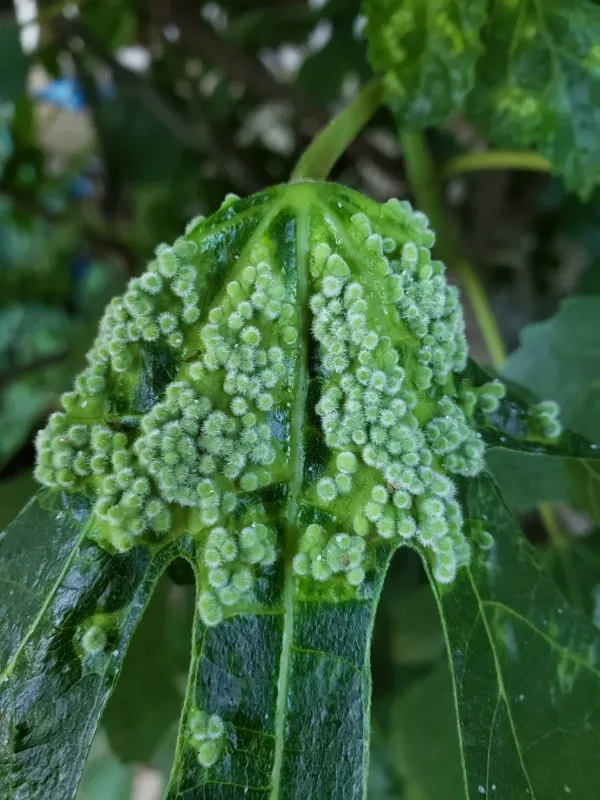
Description
How to identify
The fig psylla (Pauropsylla buxtoni) is a small insect belonging to the family Psyllidae, commonly known as jumping plant lice due to their ability to leap using their hind legs.
The adult insect is brownish in color, which allows it to camouflage effectively against the bark and foliage of its host plant, the fig tree (Ficus carica).
They possess transparent wings held roof-like over their bodies when at rest, and their mouthparts are specifically adapted for piercing and sucking plant tissues.
The immature stages, known as nymphs, are typically flattened and sedentary, often found in clusters on the underside of young leaves or near the buds.
Understanding their life cycle is crucial for effective management, as different life stages require different timing for interventions in the garden or orchard.
What it damages
The primary damage is caused by both nymphs and adults feeding on the sap of the most tender parts of the fig tree, particularly the new shoots and developing leaves.
Constant sap extraction deprives the plant of essential nutrients, leading to stunted development and a significant reduction in the tree's overall vigor.
Infested leaves exhibit severe deformation, curling, and crinkling, which drastically reduces the surface area available for photosynthesis.
Heavy infestations often lead to premature leaf drop, which can compromise the tree's ability to produce high-quality fruit throughout the season.
Furthermore, the physical damage from feeding acts as an entry point for secondary pathogens, potentially leading to bacterial or fungal infections within the plant tissues.
When it appears
The activity of the fig psylla begins in early spring, synchronized with the bud break and the emergence of the first green shoots of the fig tree.
Population levels tend to peak during the warm summer months, as these temperatures accelerate the reproductive rate and the development of new generations.
As autumn approaches and temperatures drop, the metabolic activity of the insect slows down, and they begin seeking shelter for overwintering.
In regions with mild winters, the fig psylla can potentially remain active throughout most of the year, depending on the availability of green foliage.
Monitoring should be most intensive during dry, warm periods, as these conditions are particularly favorable for the survival and spread of the pest population.
Signs of infestation
Visual identification of an infestation starts with observing misshapen, twisted leaves that lack their natural vibrancy and flat orientation.
The presence of honeydew — a sticky, sugary substance secreted by the nymphs — is a major indicator of an active colony living on the plant.
A black, sooty mold usually develops on top of the honeydew deposits, covering the leaves and further interfering with the plant's health.
Upon closer inspection, clusters of nymphs may be found on the undersides of leaves, often accompanied by white, waxy secretions that act as a protective barrier.
Slow growth of terminal buds compared to unaffected branches is another reliable sign that the tree is currently under stress from a psylla infestation.
Control measures
Successful management begins with good horticultural practices, such as the pruning and removal of heavily infested branches to reduce the overall pest load.
Maintaining tree health through proper irrigation and balanced fertilization helps the fig tree recover more effectively from the damage caused by the insects.
Chemical control involving systemic insecticides is often necessary for severe infestations to reach pests hidden within dense or curled foliage.
- Applying horticultural oils during the dormant season to target overwintering stages.
- Utilizing biological controls, such as encouraging local populations of ladybugs or lacewings.
- Implementing regular monitoring schedules to catch outbreaks before they reach critical levels.
Always ensure that any chemical application follows local safety guidelines, especially regarding the pre-harvest intervals for edible fruit.
Taxonomy
- Latin name
- Pauropsylla buxtoni
- Order
- Hemiptera (bugs, aphids, leafhoppers)
- Family
- Triozidae
- EPPO code
- TRIZBX
Discussion
No discussions yet — be the first.