
Paromius longulus
Paromius longulus
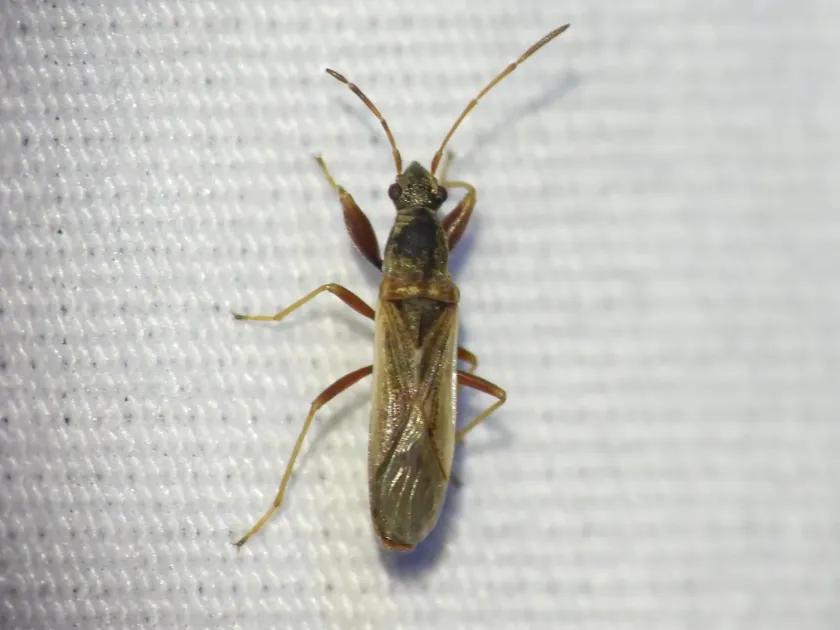
Description
How to identify
Paromius longulus is a species of ground bug belonging to the family Rhyparochromidae within the order Hemiptera. These insects are characterized by a slender, elongated body measuring approximately 6 to 8 millimeters in length, which is typical for this family.
Their coloration ranges from dark brown to black, allowing them to blend seamlessly into soil debris and vegetation. The head is closely appressed to the pronotum, and the antennae consist of four distinct segments, a key morphological feature for identification.
Males often exhibit thickened front femora, which is a structural detail that can be observed upon closer inspection. They possess well-developed wings, making them highly mobile and capable of migrating between fields in search of suitable host plants during the growing season.
Due to their secretive lifestyle, these bugs are often found in the lower strata of the crop canopy or hiding within leaf litter near the soil surface. This makes them difficult to spot during routine field inspections without active searching methods.
Correct identification often requires sweeping the crop with an insect net. Under magnification, the specific punctuation on the elytra serves as a reliable marker to distinguish P. longulus from other similar-looking ground bugs found in agricultural environments.
What it damages
Paromius longulus primarily feeds on cereal crops, including wheat, barley, and oats. In addition to cultivated plants, they are frequently found on various wild grasses, which act as reservoirs and maintain the population density throughout the year.
The damage is caused when the bugs pierce the developing grains within the ear to extract sap. This feeding process leads to shriveled, lightweight grains and a significant reduction in overall crop quality, which negatively impacts the market value of the harvest.
High infestation levels during the milk-to-dough stage of grain development can result in substantial yield losses. The damaged grain often exhibits poor germination rates and reduced gluten content, making it unsuitable for high-quality flour production.
Furthermore, the puncture wounds created by the bugs can serve as entry points for secondary fungal infections. This often leads to mold development, which further degrades the grain and can cause the accumulation of mycotoxins, posing risks to animal and human health.
In years with environmental conditions favorable to the pest, yield losses can reach 15-20 percent. Monitoring programs are essential to detect infestations early and prevent these losses from impacting the farm's profitability.
When it appears
The life cycle of Paromius longulus is strictly governed by ambient temperatures. The bugs typically overwinter as adults, seeking refuge in plant residues, fallen leaves, or the top layer of the soil where they remain dormant during cold periods.
As spring temperatures rise, the overwintered adults emerge and begin feeding on early-season cereal sprouts. This period is critical as it marks the beginning of the initial colonization of the field and the start of the breeding season.
Multiple generations can develop during the summer, causing the population density to peak precisely when the cereal crops are in the grain-filling stage. This timing makes them particularly dangerous to the final production output.
With the onset of autumn and cooling air temperatures, the bugs initiate their migration to overwintering sites. These seasonal shifts are important for agronomic planning, as post-harvest activities can significantly affect the survival rates of the next generation.
Climate factors such as mild winters or exceptionally warm autumns can enhance the survival of the overwintering population, leading to increased pressure on crops in the subsequent agricultural season.
Signs of infestation
The primary method to detect the presence of this pest is by inspecting ears during the early morning or evening hours. Because the bugs prefer to hide behind leaf sheaths or inside the ear, thorough examination is required.
Signs of infestation include small necrotic spots on the grain surface, which are physical evidence of piercing-sucking feeding. In cases of heavy infestation, the entire ear may look stunted or yellowed prematurely compared to healthy plants.
Dark fecal spots on leaves and stems are another indication of an active bug population. Shaking infested ears over a white sheet of paper is a highly effective way to dislodge the insects and confirm their presence in the field.
Localized patches of suppressed or prematurely ripening plants within a field often suggest a localized infestation of P. longulus. Identifying these spots early allows for targeted intervention before the pest spreads across the entire field.
Finding a large proportion of empty grain husks during the harvest season is a definitive indicator that a significant population of the bug was active during the grain-filling period, leading to measurable losses.
Control measures
Controlling Paromius longulus requires a balanced approach combining agronomic practices and, if necessary, chemical applications. The strategy is to keep the population density below the economic threshold of damage throughout the season.
Effective post-harvest stubble management and the elimination of wild grass weeds in field margins are crucial for reducing winter shelters. Implementing crop rotation helps disrupt the life cycle of the pest, making it harder for populations to establish.
When infestation levels exceed the economic threshold, insecticides from the pyrethroid or organophosphate groups are recommended. Timely application during the period of high activity ensures maximum effectiveness of the chemical control.
- Early harvesting to limit the exposure of grain to bug feeding.
- Deep plowing in autumn to bury and destroy overwintering adults.
- Regular monitoring of field edges during the early vegetative phase.
- Tank-mixing insecticides to manage multiple pests simultaneously.
Strict adherence to pre-harvest intervals when using pesticides is mandatory to ensure that the final grain product is safe for consumption. An integrated pest management program helps minimize chemical inputs while protecting crop yield.
Taxonomy
- Latin name
- Paromius longulus
- Order
- Hemiptera (bugs, aphids, leafhoppers)
- Family
- Lygaeidae
- EPPO code
- PARULO
Discussion
No discussions yet — be the first.