
Paromius exiguus
Paromius exiguus
Description
How to identify
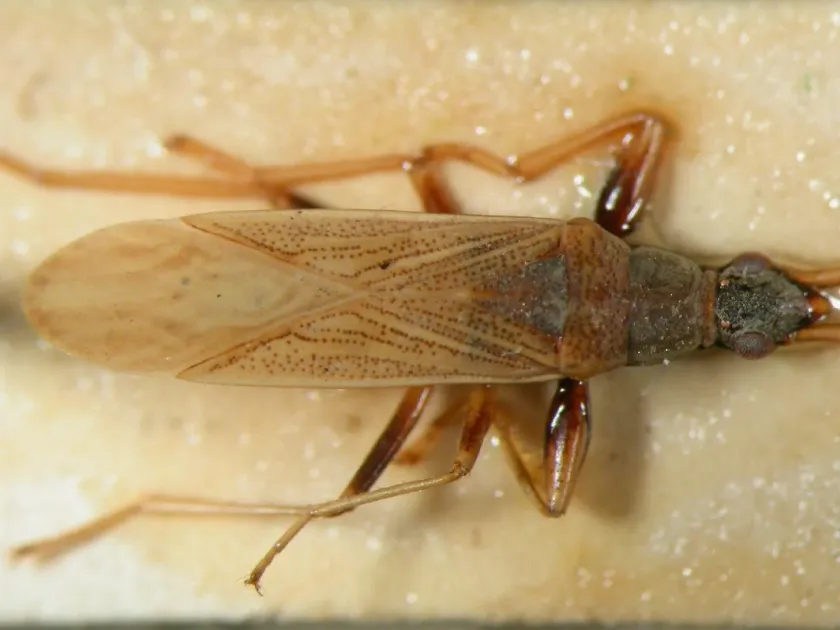
Paromius exiguus is a species of seed bug belonging to the Rhyparochromidae family within the order Hemiptera. These insects are common in various agricultural landscapes and have developed specific adaptations for life in cereal crops.
Adult insects typically range from 5 to 7 millimeters in length. Their bodies are elongated and colored in shades of dark brown to black, providing camouflage against the soil and plant debris where they live.
A key identifying feature is the structure of the pronotum and the hemelytra. The latter often features light-colored markings that serve as a reliable diagnostic trait for field identification under magnification.
The nymphs go through several developmental stages, resembling the adults in shape but increasing in size over time. They prefer a cryptic lifestyle, hiding near the base of the stems during the day.
As a widely distributed insect, it has successfully adapted to the agroecosystem, often utilizing both wild grasses and cultivated grains as primary food sources.
What it damages
The main economic impact of Paromius exiguus is seen in cereal crops such as wheat, barley, and rye. It can damage plants at various growth stages, from seedlings to the grain-filling phase.
The insect possesses piercing-sucking mouthparts used to extract fluids from plant tissues. Feeding on these juices significantly weakens the host plant and reduces its overall vigor.
During heavy infestations, the bug can damage the developing ears of grain. This results in shriveled kernels and reduced yield weight, directly affecting the crop's market quality and commercial value.
Furthermore, the feeding sites created by the insect can act as entry points for secondary infections, including fungal stem diseases that further degrade the health of the cereal crop.
Fields with high levels of grassy weeds are particularly susceptible to damage, as these weeds act as reservoirs for the pest population before they move into the primary crop.
When it appears
Activity begins in the spring as soon as temperatures rise, with the adults emerging from their overwintering sites, which typically include field margins, stubble, and hedge rows.
During the summer, if moisture and temperature conditions are favorable, the population can grow rapidly. The insects develop through multiple generations throughout the growing season.
The peak of their activity usually coincides with the mid-summer development phase of the cereals, making this the critical period for crop monitoring and scouting for potential outbreaks.
As autumn approaches and temperatures drop, the insects begin their migration to more protected environments, including the soil or deep layers of plant debris, to prepare for winter.
Early seasonal detection is crucial for effective management. Agronomists often perform field inspections early in the spring to assess the initial population pressure on the newly sown crops.
Signs of infestation
Key indicators of an infestation include the appearance of yellow spots on the leaves and an overall stunted appearance of the seedlings. Affected plants clearly lag behind in their development.
When examining the base of the plants, one can often find clusters of the bugs. They are sensitive to vibration and will quickly retreat into the soil or under debris when disturbed.
The presence of frass or waste deposits on leaf surfaces near the feeding zones serves as another visual marker of recent insect activity within the crop field.
During the milk stage of grain development, localized "whitehead" symptoms in the ears may indicate that the plant's nutrient transport system has been compromised by the feeding activity.
Standard scouting protocols, such as using a sweep net, are highly effective for estimating the insect density per square meter and determining the need for chemical intervention.
Control measures
Sound agricultural practices are the first line of defense. Proper tillage and the deep incorporation of crop residues help eliminate the overwintering habitats and reduce the population.
Effective crop rotation is essential. Avoiding the continuous planting of cereal crops significantly disrupts the lifecycle of the pest and prevents it from building up in the soil.
Maintaining clean field borders by managing grassy weeds prevents the pest from migrating from surrounding areas into the main production fields during the growing season.
When population levels exceed the economic threshold, the application of systemic or contact-action insecticides is recommended to provide immediate control and protect the crop yield.
Biological control, such as fostering natural predators within the agroecosystem, can also be beneficial in the long term by keeping the pest population at manageable levels.
Taxonomy
- Latin name
- Paromius exiguus
- Order
- Hemiptera (bugs, aphids, leafhoppers)
- Family
- Lygaeidae
- EPPO code
- PARUEX
Discussion
No discussions yet — be the first.