
Paromius
Paromius
Description
How to identify
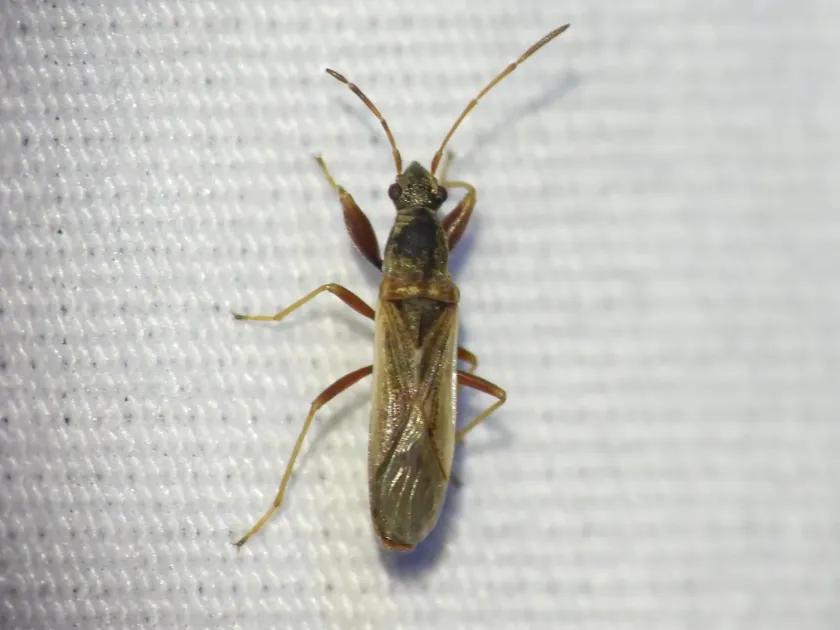
Paromius is a genus of insects belonging to the family Rhyparochromidae, within the order Hemiptera. These insects are small, typically ranging in a brownish to black color, and possess an elongated body structure.
Adults are characterized by well-developed wings and antennae that are divided into four distinct segments. They have relatively prominent eyes, which help them navigate through dense vegetation.
The nymphs resemble the adults but are smaller, lack fully developed wings, and often have a lighter coloration. Their life cycle involves multiple developmental stages, with each molt increasing their body size.
These insects generally lead a cryptic lifestyle, often hiding near the base of plants or under thick plant debris. This behavior makes it difficult to detect them during standard field inspections.
Effective identification often requires using insect nets or specialized pitfall traps, as the bugs tend to avoid direct sunlight and movement during the hottest hours of the day.
What it damages
Paromius is primarily a pest of cereal crops, including wheat, barley, and rye. It may also feed on various wild grasses that act as alternative hosts throughout the growing season.
Both adults and nymphs cause damage by feeding on plant sap using their piercing-sucking mouthparts. They extract nutrients directly from the stems and leaves, which weakens the plant significantly.
Affected areas on the leaves and stems often show yellowing and necrosis. As the insects feed, the plant loses vigor, which can lead to stunted growth and a considerable reduction in overall grain yield.
The damage is particularly severe during drought conditions, as the plants are already struggling to maintain water balance. The additional stress from sap extraction accelerates the wilting process.
Furthermore, the punctures made by the bugs can serve as entry points for secondary pathogens, such as fungi or bacteria, potentially leading to additional systemic infections in the crop.
When it appears
Activity typically commences in early spring as soil temperatures rise, prompting the insects to emerge from their overwintering sites to colonize young cereal fields.
Population density often reaches its peak in early summer, coinciding with the rapid vegetative growth stage of cereal crops. This period is critical for the reproduction of the pest.
Depending on regional climatic conditions, Paromius may produce one or two generations per season. Because generations often overlap, it is common to find multiple developmental stages present simultaneously.
As autumn approaches, the adults begin migrating toward suitable overwintering habitats, such as field margins, hedgerows, and deep litter layers that provide protection against freezing winter temperatures.
Warm and dry seasons generally favor the population growth of Paromius, making it essential for agronomists to monitor fields closely during the latter part of the summer.
Signs of infestation
The primary indicators of a Paromius infestation include localized patches of chlorotic or yellowing leaves that can expand across the field if the pest population is left unmanaged.
Close inspection of the lower stem reveals tiny puncture marks. Over time, these areas may develop necrotic spots or lesions, which are clear indicators of feeding activity by the bugs.
Stunted development of the crop compared to healthy areas of the same field is another secondary sign that indicates significant pressure from the pests.
Because these insects are elusive, searching the base of the plant or sifting through the soil surface around the crop roots is often necessary to observe the bugs directly.
Heavy infestations can lead to premature drying of the crop, which is easily visible from a distance and suggests a loss in the plant's ability to transport water and nutrients to the heads.
Control measures
Cultural control is fundamental, involving thorough post-harvest tillage. Deep plowing of stubble helps bury and destroy overwintering sites, significantly reducing the population for the following season.
Crop rotation is another vital strategy. Avoiding consecutive plantings of susceptible cereal crops in the same area disrupts the pest's life cycle and lowers its reproductive success.
Maintaining clean field borders by removing wild grass hosts helps eliminate reservoirs where the insects can survive and reproduce when the main crop is absent.
- Application of systemic insecticides if the economic threshold of damage is exceeded.
- Utilization of biological control agents, such as entomopathogenic fungi, under appropriate environmental conditions.
- Timely harvesting to remove the food source before the bugs complete their seasonal cycle.
Integrated Pest Management (IPM) practices, combined with regular field monitoring, are essential to control the pest while preserving beneficial insect populations in the field.
Taxonomy
- Latin name
- Paromius
- Order
- Hemiptera (bugs, aphids, leafhoppers)
- Family
- Lygaeidae
- EPPO code
- PARUSP
Discussion
No discussions yet — be the first.