
Apollo butterfly
Parnassius
Description
How to identify
The Apollo butterfly (Parnassius apollo) is a member of the Swallowtail family (Papilionidae). It is a large butterfly with a wingspan of up to 90 mm, featuring white wings with black markings and distinctive red eyespots on the hindwings.
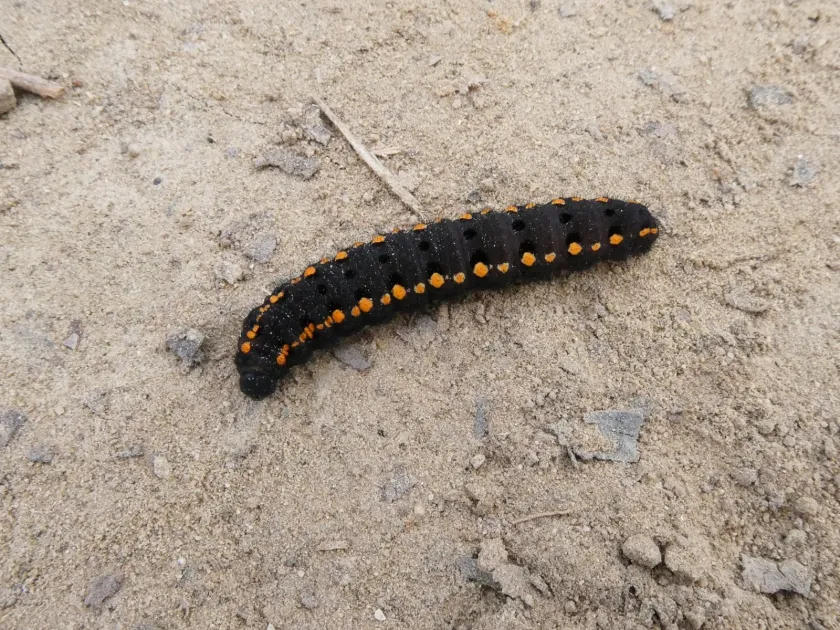
Adults have a robust, hairy body, an adaptation for life in high-altitude or cooler environments. The larvae are velvety black with distinct orange or red spots along their sides.
It is crucial to note that the Apollo butterfly is a protected species in many countries. Its presence indicates high biodiversity and ecological quality of the area rather than an infestation.
The larvae feed exclusively on plants from the Crassulaceae family, particularly Sedum and Sempervivum species.
Unlike common agricultural pests, this butterfly does not exhibit sudden population spikes and is not considered an economic nuisance.
What it damages
The Apollo butterfly does not cause damage to commercial agricultural crops. Its nutritional requirements are strictly tied to wild, non-commercial species of Crassulaceae.
There is no risk of crop loss or degradation of vegetation due to this species. Its larvae feeding behavior does not impact the yield or health of economic plants.
Agricultural monitoring programs do not include the Apollo as a target for control measures because its life cycle is completely separated from agricultural activity.
Reports of "damage" caused by this species are scientifically unfounded and usually result from misidentifying other leaf-eating caterpillars.
Conservation experts emphasize that the Apollo's impact on gardens is negligible and should be treated as a welcome presence rather than a problem.
When it appears
The adult flight period typically occurs from June to August, depending on the latitude and altitude. Butterflies are active during sunny weather, visiting nectar sources.
The species overwinters either as an egg or a young larva. Development is triggered by the arrival of spring and the growth of their specific host plants.
The life cycle consists of a single generation per year. Pupation takes place in a loose cocoon, often hidden among rocks or ground debris.
Larval activity is synchronized with the early spring growth of Sedum species, ensuring that their development is completed before mid-summer.
Migration into agricultural fields is rare and usually represents individuals searching for new habitats or nectar sources rather than colonization.
Signs of infestation
The primary sign of presence is the sight of these striking butterflies in meadows. Finding their dark, spotted larvae on wild Sedum is another indicator.
Feeding marks on leaves are minimal, and because populations are naturally sparse, they never lead to visible defoliation of plants.
The lack of communal silk tents or large frass deposits helps distinguish the Apollo larvae from truly invasive or harmful lepidopteran pests.
Presence of the species should be viewed as a biological indicator of healthy ecosystems rather than a situation requiring any intervention.
Any perceived "signs of infestation" should be carefully verified by an expert to ensure that the species involved is not a protected butterfly.
Control measures
No chemical or biological control measures are required. Moreover, such actions are strictly prohibited in many regions due to the Apollo's protected status.
Integrated Pest Management strategies focus on preserving the habitats where these butterflies thrive, encouraging a balanced ecosystem.
To avoid any accidental impact, farmers should minimize the use of non-selective insecticides, especially in areas bordering wild habitats.
- Maintain patches of wild Sedum to support biodiversity.
- Avoid chemical treatments in areas where the species is known to exist.
- Educate staff and stakeholders on the difference between pests and protected species.
Taxonomy
- Latin name
- Parnassius
- Order
- Lepidoptera (butterflies)
- Family
- Papilionidae
- EPPO code
- PRNSSP
Discussion
No discussions yet — be the first.