
Pennsylvania wood cockroach
Parcoblatta pennsylvanica
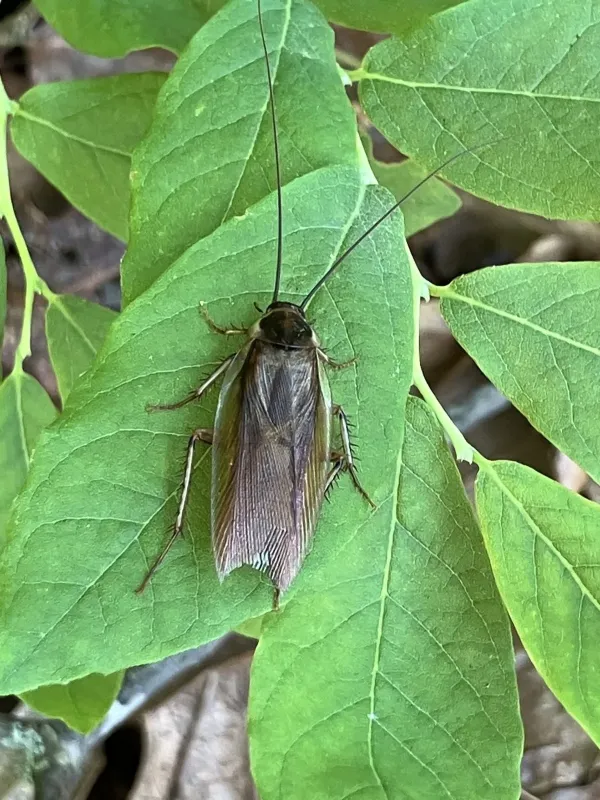
Description
How to identify
The Pennsylvania wood cockroach (Parcoblatta pennsylvanica) belongs to the order Blattodea and the family Ectobiidae. Adults typically reach 20 to 30 mm in length and feature a light brown coloration with a distinctive pale or translucent margin on the pronotum.
Males of this species possess well-developed wings and are capable of strong flight, particularly during dusk and nighttime hours. Females have shortened wings that do not cover the entire abdomen, making them appear stout and flightless.
Nymphs resemble smaller versions of the adults but undergo several developmental stages (instars) while growing. They are wingless and maintain a cryptic lifestyle hidden beneath plant debris, mulch, and decaying wood.
Their primary natural habitat consists of wooded areas, where they reside under bark, in rotting stumps, and within leaf litter. It is crucial to distinguish them from indoor-dwelling species, as they strongly prefer cool, moist outdoor environments.
Unlike common domestic cockroaches, these insects are highly phototactic and are attracted to artificial lights at night, which is the most frequent cause for their accidental entry into houses or greenhouses.
##damage##The Pennsylvania wood cockroach is considered a minor agricultural pest. While they primarily feed on decaying organic matter in natural ecosystems, they may occasionally cause damage to tender plant tissues in gardens and nurseries.
In greenhouse settings, these pests can cause mechanical injury to seedlings by feeding on young leaves and stems. These wounds may subsequently serve as entry points for secondary infections by fungi or bacteria.
Although they rarely cause widespread crop loss, their activity can significantly reduce the aesthetic and commercial value of garden produce. Surface blemishes on fruits and vegetables make them unsuitable for long-term storage or retail.
Occasional damage to ornamental plants can occur when population levels are high near the garden beds. Nymphs are particularly prone to feeding on buds during the early stages of the growing season.
In professional gardening, their potential for damage is often underestimated because they are strictly nocturnal feeders. Their presence generally signals excessive soil moisture and an accumulation of organic litter on the site.
When it appears
Activity of the Pennsylvania wood cockroach typically begins during the warmer months, generally from May through June, once temperatures remain consistently above 15-18 degrees Celsius.
Population density often peaks in mid-summer, coinciding with their peak reproductive phase. During this time, males become highly noticeable due to their propensity to fly toward porch lights or other external illumination.
As autumn approaches, activity wanes as the insects seek suitable overwintering sites. They migrate into deeper layers of leaf litter, beneath tree bark, or into wood crevices, where they can withstand significant sub-zero temperatures.
The life cycle involves an egg stage housed within an ootheca (capsule), which the female deposits in secure locations. Nymphs emerge several weeks later, beginning their developmental progression.
The entire life cycle can take up to one year to complete, which allows the species to maintain stable population numbers even when faced with seasonal climatic fluctuations.
Signs of infestation
The most immediate indicator of their presence is observing adult insects near external light sources at night. A significant increase in their presence on porches or decks often confirms a large nearby population.
Visible feeding damage on the leaves or stems of young seedlings, characterized by irregular or jagged edges, is another diagnostic sign of their nocturnal activity.
Locating oothecae or nymphs under layers of mulch, within compost piles, or beneath woody debris provides concrete evidence of an established local breeding colony.
A faint, musky odor may be detectable in areas where these cockroaches aggregate in high numbers, such as under damp woodpiles or neglected garden boards.
Occasionally, fine black fecal spots can be found on plant surfaces or soil near their daytime hiding spots, marking their recent activity.
Control measures
The primary control strategy involves basic sanitation: regularly removing leaf litter, rotting logs, and other organic debris that provides the moist, sheltered conditions they thrive in.
Reducing moisture levels by improving site drainage and thinning dense vegetation makes the landscape less attractive for colonization.
For greenhouse and nursery protection, installing fine-mesh screens over ventilation ports is highly effective at preventing their migration into the structure during the night.
In instances of high population density, contact and stomach-action insecticides (pyrethroids) can be used to treat perimeter areas, though direct application to crops should be avoided.
- Clear debris and leaf litter from the garden site.
- Position light traps away from sensitive garden areas.
- Use sticky traps to monitor and control nymph populations.
- Apply insecticidal gels sparingly in targeted aggregation spots.
- Keep mulch layers thin and away from the base of young plant stems.
Taxonomy
- Latin name
- Parcoblatta pennsylvanica
- Family
- Blattidae
- EPPO code
- PARCPE
Discussion
No discussions yet — be the first.