
Common wasp
Paravespula
Description
How to identify
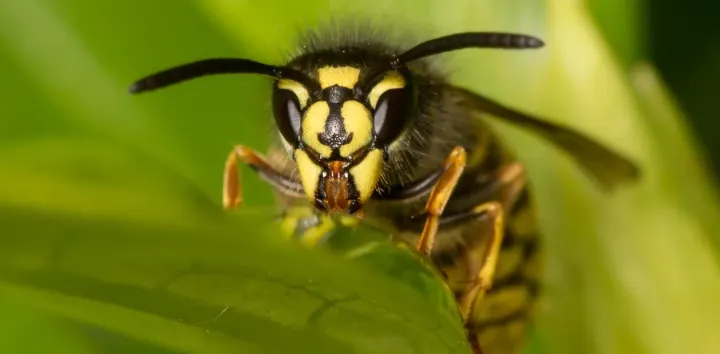
The common wasp (Vespula vulgaris) belongs to the order Hymenoptera and the family Vespidae. It is a highly social insect known for its black and yellow body pattern.
Adult workers are approximately 12–17 mm in length. A key identification feature is the anchor-shaped marking on the clypeus, which distinguishes it from other similar species.
Colonies are founded in the spring by a single queen that has survived the winter. As the season progresses, the colony expands rapidly, creating a large, sophisticated social unit.
These wasps construct their nests using a papery material made from chewed wood fibers mixed with saliva, often located in soil, tree hollows, or building crevices.
Common wasps are known to be aggressive when their nest is threatened, posing a significant risk to humans if the colony is disturbed unexpectedly.
What it damages
The common wasp acts as a significant pest by damaging ripe fruit, with a particular preference for grapes, pears, plums, and apples.
Workers chew through the skin of the fruit to feed on the sugary juices. This process destroys the appearance of the fruit and makes it impossible to sell or store.
These feeding sites serve as entry points for secondary infections, such as molds and various rots, which can rapidly spoil entire bunches or tree yields.
Beyond direct damage to the fruit, their presence in large numbers can interfere with harvesting operations and create an unpleasant environment for farm workers.
Although they contribute to natural pest control by eating some caterpillars, the economic loss to fruit growers in late summer often necessitates active intervention.
When it appears
The lifecycle begins in early spring, when the queen emerges from hibernation to search for a suitable nesting site and raise the first brood of workers.
During June and July, the colony size grows significantly, and workers focus on foraging for protein to feed the developing larvae in the nest.
Late summer and early autumn represent the peak period of nuisance, as the larvae finish their development and workers switch their diet to sugars found in ripening fruit.
By autumn, the queen stops laying eggs, the colony begins its decline, and new queens leave the nest to find a location for winter hibernation.
Understanding this cycle is crucial for effective management, as early intervention before the late-summer population spike is the most successful strategy.
Signs of infestation
The presence of common wasps is usually indicated by persistent activity around fruit trees or vineyards during the ripening season.
Damaged fruit showing hollowed-out cavities and broken skins is the most visible sign of an infestation, often accompanied by the sound of buzzing.
Workers can be seen flying in straight lines back and forth between their foraging area and their nest, which can help in locating the main colony.
- Visible holes and damage on fruit skins.
- Sticky residue on fruit surfaces caused by feeding activity.
- Rotting clusters of grapes or dropped fruit beneath trees.
- Frequent sightings of wasps entering building cavities or ground burrows.
Regular monitoring of garden structures and the perimeter of the orchard can help detect nests before they become a severe problem.
Control measures
Physical protection, such as applying fruit protection bags or fine netting to bunches of grapes, is highly effective at preventing damage.
Setting up liquid bait traps (e.g., sugar water with a small amount of vinegar or beer) helps reduce the number of foraging workers during the peak of the season.
Sanitation is a vital control measure; cleaning up fallen, rotting fruit daily prevents the wasps from having an easy food source that attracts them to the orchard.
If a nest must be destroyed, use specialized insecticidal sprays, but only at night or early dawn when the insects are less active and the entire colony is present.
Always prioritize safety when dealing with wasp colonies by wearing protective gear and, if necessary, hiring professional pest control services.
Taxonomy
- Latin name
- Paravespula
- Order
- Hymenoptera
- Family
- Vespidae
- EPPO code
- PAVSSP
Discussion
No discussions yet — be the first.