
Paratettix
Paratettix
Description
How to identify
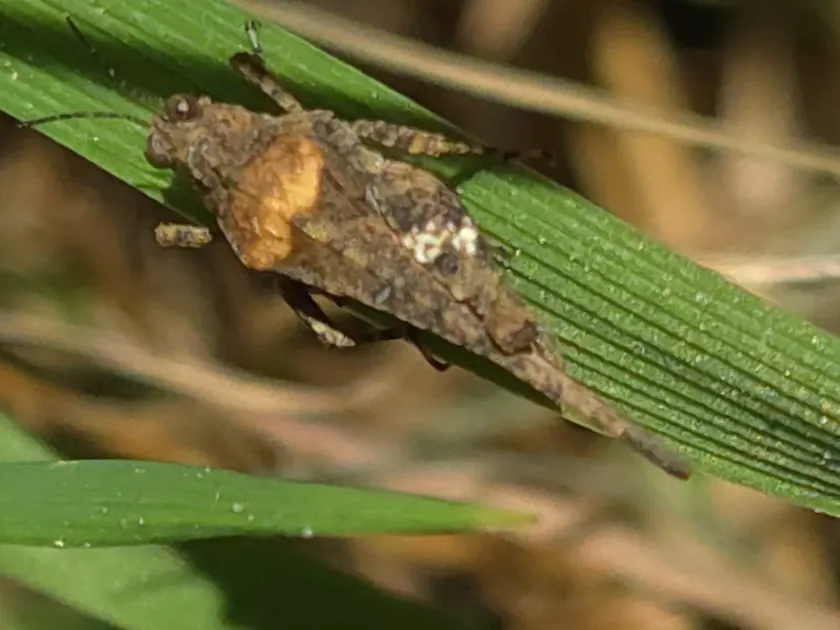
Paratettix is a genus belonging to the Tetrigidae family, commonly known as pygmy grasshoppers. These insects are distinguished by their small size and cryptic coloration, which provides excellent camouflage against soil and detritus.
The most prominent feature is the pronotum, which is extended backwards, covering the entire abdomen and often reaching or exceeding the tip of the hind wings.
Their bodies are generally flattened and robust, allowing them to navigate easily through dense vegetation and over uneven, moist ground surfaces.
Identification often requires careful inspection as their appearance can be highly variable, resembling pebbles or soil particles to evade detection by predators.
Unlike larger grasshoppers, these insects do not possess the same level of mobility or flocking behavior, making them less conspicuous but still significant in certain ecosystems.
What it damages
Paratettix primarily thrives in humid environments, frequently appearing in rice paddies and marshy agricultural lands where moisture levels remain high throughout the season.
While they feed mainly on mosses, algae, and decaying plant matter, they may consume young seedlings when population densities are high, leading to stand reduction.
The damage is usually characterized by irregular grazing of the leaf tissue, which can stress the young plants and potentially introduce pathogens through the wounds.
In highly infested areas, the cumulative impact of their feeding can result in stunted growth and uneven crop development, especially in early vegetative stages.
Though they are generally considered secondary pests, their presence in dense colonies should be monitored to ensure they do not escalate into a major threat for the crop.
When it appears
The biological cycle of Paratettix is highly dependent on humidity and soil temperature, as these factors dictate the success of their development stages.
They undergo incomplete metamorphosis, meaning the nymphs resemble miniature versions of the adults, gradually growing through several molts before reaching sexual maturity.
Activity generally peaks during the warmer months, especially after significant rainfall, which promotes the growth of their primary food sources like algae and mosses.
During the off-season, they enter a dormant state, seeking shelter in the soil or under layers of dense organic mulch to survive lower temperatures.
Multiple generations can occur within a single year if the climatic conditions remain favourable, ensuring the persistence of the population in established fields.
Signs of infestation
The most immediate indicator of their presence is the sudden jumping of small insects upon disturbance of the soil or low-lying vegetation.
Visual observation of the soil surface near the crop base will often reveal these insects, which are expert at remaining motionless to blend in with the background.
Leaf tissue exhibiting nibbled margins or small, irregular holes serves as a clear indication of feeding activity that necessitates further investigation.
In irrigation systems for rice, their presence may be signaled by subtle disturbances on the water surface or movement within the dense canopy during irrigation cycles.
A consistent buildup of debris and a lack of canopy health in moist patches are often linked to the presence of high populations of Tetrigidae.
Control measures
The management of Paratettix is best achieved through integrated agricultural practices that prioritize habitat modification over indiscriminate chemical use.
Proper field drainage is crucial, as reducing excess moisture discourages their proliferation and makes the environment less hospitable for their feeding.
Mechanical operations, such as thorough plowing and soil cultivation, effectively disrupt their overwintering sites and reduce the survival rate of the population.
If population levels cross the economic threshold, targeted application of appropriate insecticides is recommended, focusing on the affected spots rather than broadcast treatment.
Promoting natural biological control agents, such as spiders and ground-dwelling insectivores, is an essential component of a sustainable long-term pest management strategy.
Taxonomy
- Latin name
- Paratettix
- Order
- Orthoptera (locusts)
- Family
- Tetrigidae
- EPPO code
- PTTXSP
Discussion
No discussions yet — be the first.