
Depressotetrix
Depressotetrix
Description
How to identify
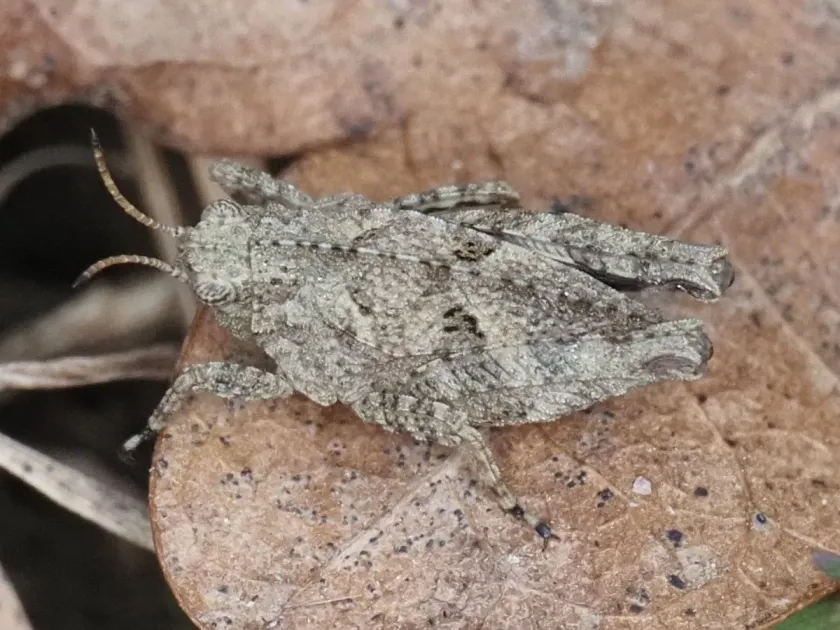
Depressotetrix belongs to the order Orthoptera, family Tetrigidae, also known as grouse locusts or pygmy grasshoppers. These small insects are masters of camouflage, adapting their body color to the soil and leaf litter.
A key morphological feature of this genus is the flattened body and the pronotum, which extends backward, covering the abdomen and usually reaching or exceeding the wing tips.
The head is relatively small with prominent eyes, which is a diagnostic trait for the family. They move primarily by jumping, using their powerful hind legs, but are capable of short, erratic flights.
The biology of Depressotetrix is linked to damp habitats. They are frequently found in low-lying areas, near water bodies, and on fields with poor drainage.
Like other tetrigids, they undergo incomplete metamorphosis, with nymphs appearing as miniature, wingless versions of the adults, developing through several instars.
What it damages
Depressotetrix primarily feeds on detritus, algae, and mosses. However, under high population density, they can become pests by attacking emerging crop seedlings.
The main damage occurs during the early stages of plant development, with the insects feeding on cotyledons and tender young leaves.
Field studies indicate that crops planted in low-lying, poorly drained sections of the farm are the most susceptible to infestation.
Severe infestations can lead to thinning stands, necessitating reseeding if the damage to the apical meristem or leaves is extensive.
While often considered a secondary pest, their presence can be economically significant in years with high rainfall and favorable soil moisture conditions.
When it appears
The active life cycle typically begins in early spring, as temperatures rise and the soil warms up after the winter dormant period.
Adults overwinter in protected sites, such as dense plant debris, soil cracks, or under stones, surviving cold weather due to their cold-hardy nature.
Population activity peaks in mid-summer, coinciding with the development of nymphs, which often feed more actively than the adults.
A second generation may appear in warm autumns, extending the potential window for crop damage until the first hard frost kills off the population.
The migration and distribution of the pest are heavily dependent on substrate humidity, explaining their affinity for damp field margins and low spots.
Signs of infestation
Signs of infestation include irregular holes and notched edges on the leaves of young seedlings, often appearing overnight.
Careful visual inspection of the soil surface in the morning may reveal the presence of jumping insects that quickly blend into the environment once disturbed.
Stunted growth or wilting of young seedlings is a common indirect symptom of heavy feeding by this species.
The presence of frass (insect excrement) around the base of the plant is a definitive indicator of ongoing feeding activity in the area.
Damage is typically focal, appearing in patches where soil moisture levels remain consistently high throughout the early growth stage.
Control measures
Effective management begins with land leveling and drainage improvement to eliminate the damp micro-habitats favored by the pest.
Tillage practices are crucial, as they disrupt overwintering sites and reduce the survival rate of the pest population before the planting season.
Sanitation of the field, specifically the removal of crop residues and vegetation debris, reduces both food availability and protective cover for the insects.
Chemical control should be reserved for high-threshold infestations, utilizing registered insecticides applied as a localized treatment rather than field-wide.
Optimizing planting dates to ensure rapid seedling growth helps plants transition out of the vulnerable stage before peak pest population levels occur.
Taxonomy
- Latin name
- Depressotetrix
- Order
- Orthoptera (locusts)
- Family
- Tetrigidae
- EPPO code
- DPTXSP
Discussion
No discussions yet — be the first.