
Maple leaf cutter
Paraclemensia acerifoliella
Description
How to identify
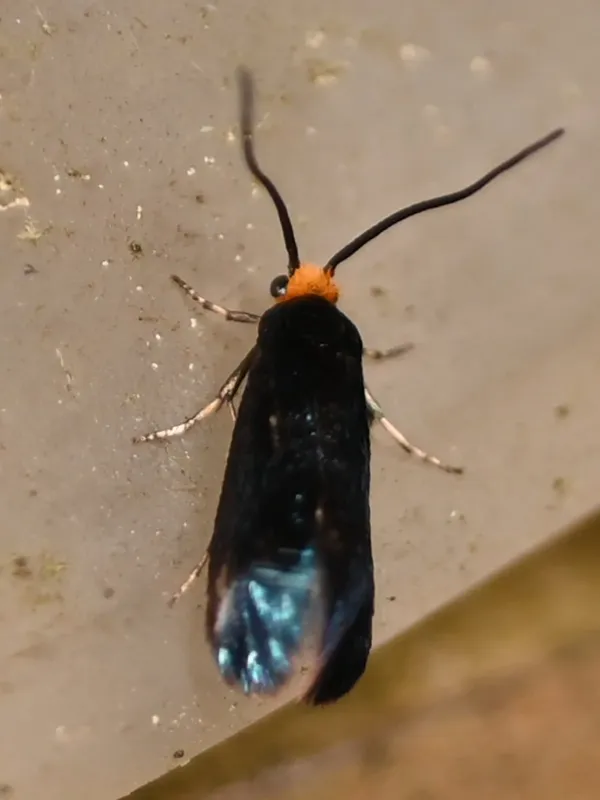
The Maple leaf cutter (Paraclemensia acerifoliella) is a small moth belonging to the family Incurvariidae. Adults are rarely noticed due to their small size and dark, metallic coloration that blends with the bark of the host tree.
The larvae are the most significant stage of the pest. They construct tiny, portable cases made from leaf tissue, which provide protection from predators and environmental stressors during their feeding phase.
The lifecycle is strictly univoltine, meaning there is only one generation per year. Development is closely linked to the phenological stages of maple trees, ensuring larvae have food exactly when needed.
Pupation occurs in the soil or leaf litter, where the insects spend the winter. This behavior makes the moth vulnerable to sanitation practices during the dormant season.
Monitoring the population of this pest requires careful inspection of foliage in the spring and early summer, as larvae are often hidden beneath their protective cases.
What it damages
The primary host for this pest is the sugar maple (Acer saccharum). Larvae feed on the leaf parenchyma, leaving behind transparent "windows" or circular holes in the foliage.
Feeding damage reduces the photosynthetic efficiency of the leaves. In cases of high infestation, the canopy may appear thin, brown, or scorched by mid-summer.
Severe defoliation weakens the tree's overall vigor. Repeated infestations over several years can lead to significant growth suppression and branch dieback in stressed specimens.
While mature, healthy trees can often tolerate moderate defoliation, young or newly planted maples are particularly susceptible to the cumulative stress caused by this pest.
The aesthetic value of maple trees in urban and suburban landscapes is significantly diminished, which often triggers the need for corrective management.
When it appears
Adult moths emerge in late spring, usually coinciding with the completion of leaf expansion. This allows them to lay eggs directly into the leaf tissue for the next generation.
Larval activity spans from late spring through mid-summer. Throughout this time, the larvae move across the leaf surface, creating new protective cases as they grow in size.
By late summer, the larvae finish feeding and descend to the ground, often carrying a portion of the leaf with them to serve as a pupal chamber.
Overwintering occurs within the leaf litter layer, making the winter months the optimal time to break the lifecycle of the moth by removing fallen foliage.
The synchronization of the moth's lifecycle with the host tree's bud break and leaf development is a critical survival strategy for this specific species.
Signs of infestation
The first signs of infestation are tiny, circular holes or transparent patches on the leaves. These often appear in clusters, reflecting the feeding habits of the larvae.
Careful inspection of the undersides of damaged leaves reveals small, flat, disc-shaped cases. These are the portable shelters where the larvae reside.
As summer progresses, the edges of damaged areas may brown and curl, giving the foliage a ragged, unhealthy appearance throughout the canopy.
Premature leaf drop in July or August is a common indicator of a severe infestation that has exhausted the leaf's nutritional capacity.
Clusters of larvae hanging from leaves by silk threads are occasionally observed, which confirms the presence of active feeding populations in the upper canopy.
Control measures
The most effective cultural control is the thorough raking and removal of fallen maple leaves in the autumn. Eliminating the litter removes the overwintering pupae.
Biological control using Bacillus thuringiensis (Bt) is effective when applied early in the larval stage, before the larvae construct heavy cases that shield them.
Systemic insecticides may be used for severe infestations on high-value ornamental trees, though timing is critical for ensuring chemical reach during active larval growth.
Promoting overall tree health through adequate watering and mulch management helps maples recover from defoliation and resist secondary pest attacks.
- Autumn sanitation by removing leaf litter.
- Early season monitoring of canopy foliage.
- Use of biological pesticides like Bt.
Taxonomy
- Latin name
- Paraclemensia acerifoliella
- Order
- Lepidoptera (butterflies)
- Family
- Incurvariidae
- EPPO code
- PRACAC
Discussion
No discussions yet — be the first.