
Garden leaf miner moth
Incurvaria masculella
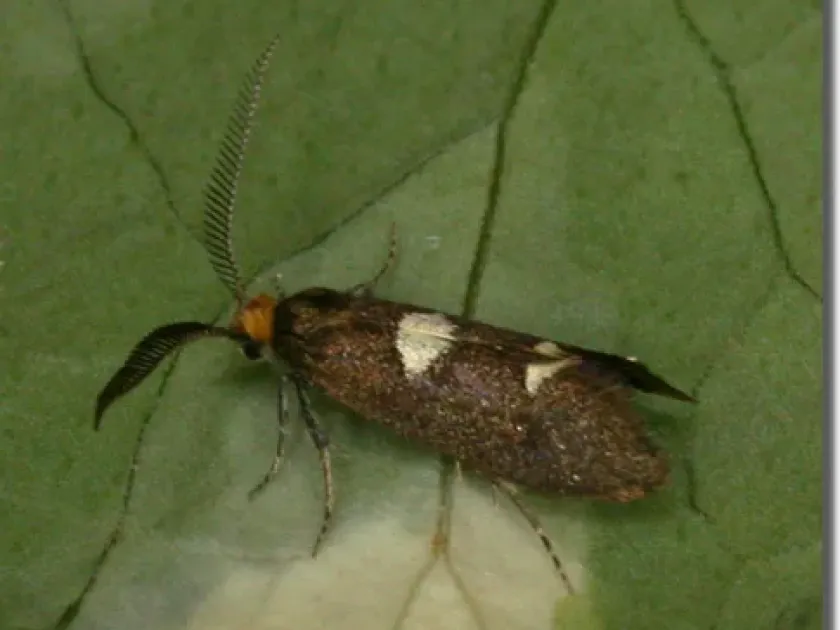
Description
How to identify
The Garden leaf miner moth Incurvaria masculella is a small lepidopteran insect belonging to the family Incurvariidae, known for its distinctive life cycle.
Adult moths are relatively small, typically reaching a wingspan of 10 to 14 mm, with dark, metallic-looking wings that help them blend in with tree bark.
Unlike many other moths that are nocturnal, these insects are primarily diurnal, which often allows them to be spotted during daylight hours in orchards.
The larvae are specialized, starting their development within leaf tissue as miners before transitioning to external feeding as they mature.
Proper identification of these moths is crucial for orchard managers, as early intervention can prevent large-scale population outbreaks.
What it damages
This species primarily attacks a variety of fruit trees, including apple, pear, plum, and cherry, causing economic losses in production.
The larvae cause damage by mining into the leaves in early spring, which eventually leads to the formation of holes and skeletonization of the foliage.
Buds and young flowers are also highly susceptible, leading to decreased fruit set if the infestation occurs during the critical spring growth phase.
In addition to cultivated fruit trees, the species can infest wild trees like hazel and beech, maintaining a population source near agricultural lands.
Severe infestations can lead to premature leaf drop and overall tree stress, which significantly impacts the development and quality of the harvest.
When it appears
The adult flight period typically occurs in the spring, coinciding with the flowering stages of many pome and stone fruit trees.
The species completes one generation per year, with the pupal stage serving as the overwintering form within the soil or ground debris.
As spring progresses, larvae emerge and begin their feeding cycle, which is most intense during the late spring and early summer months.
After reaching maturity, the larvae move into the soil to pupate, remaining dormant until the cycle restarts the following year.
Understanding this precise timeline is essential for timing insecticide applications to ensure they coincide with the most vulnerable larval stages.
Signs of infestation
The earliest signs of an infestation include small, light-colored mines appearing on the leaves, which are caused by young larvae feeding between leaf layers.
As the larvae grow, these mines expand into larger, often ragged holes, giving the foliage an irregular or riddled appearance.
Dark frass, the waste product of the larvae, can often be found within the mined areas or on the surface of affected leaves.
In severe cases, the entire tree canopy may appear yellowed or thin due to significant leaf loss, which is visible from a distance.
Close inspection of the buds may reveal small entry holes where larvae have attempted to feed, often resulting in damaged flower clusters.
Control measures
Cultural control measures, such as autumn soil cultivation, are effective in disrupting the life cycle by destroying overwintering pupae in the soil.
Sanitation practices, including the removal and destruction of fallen leaves in autumn, significantly reduce the potential population size for the next season.
Chemical control should be applied during the early stages of larval emergence, specifically in the green bud or pink bud stage of fruit trees.
Biological control options, such as using Bt-based sprays, provide an effective and environmentally friendly way to manage caterpillar populations.
- Monitor adult activity using pheromone traps to time treatments accurately.
- Maintain tree health through proper fertilization and pruning to increase resilience.
- Encourage beneficial predatory insects that naturally control lepidopteran larvae.
Taxonomy
- Latin name
- Incurvaria masculella
- Order
- Lepidoptera (butterflies)
- Family
- Incurvariidae
- EPPO code
- INCUMU
Discussion
No discussions yet — be the first.