
Beech moth
Incurvaria koerneriella
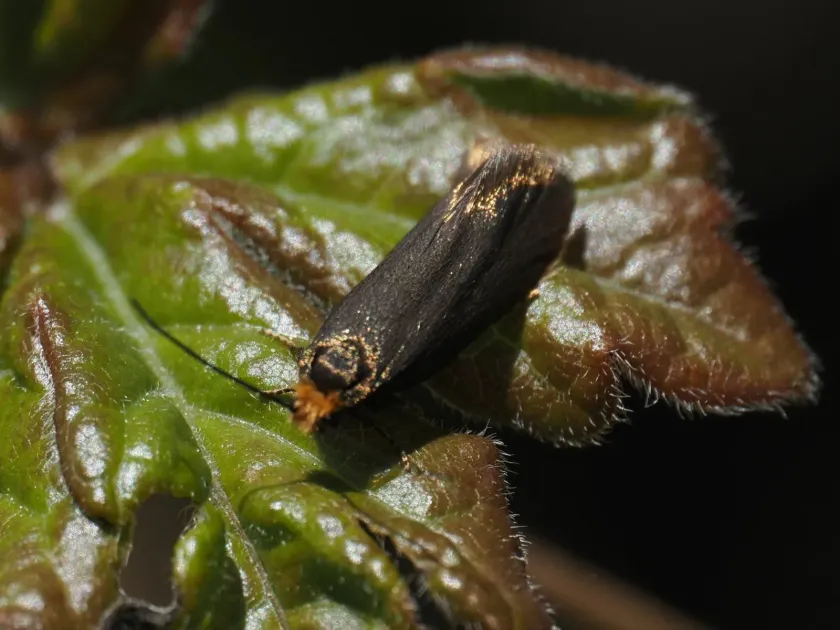
Description
How to identify
The beech moth (Incurvaria koerneriella) is a small lepidopteran species belonging to the family Incurvariidae. Adult moths have a wingspan of approximately 12–15 mm.
The forewings of the moth are yellowish-brown with a distinct metallic sheen and small dark markings. The hindwings are paler with a characteristic fringe of hairs along the margins.
The larvae are small, cylindrical, and possess a dark brown head capsule. They lead a secretive lifestyle, feeding internally within the leaf tissues, which makes them difficult to spot during early development.
Eggs are laid by females directly into the young leaves of beech trees (Fagus sylvatica) during the spring. This timing is closely synchronized with the phenology of the host tree.
The species completes one generation per year. Larvae overwinter in the soil litter, where they pupate in early spring before the emergence of the adults.
What it damages
The beech moth primarily attacks the European beech. During outbreaks, the species can cause significant damage to young shoots and leaves in both forest stands and nurseries.
Larvae consume the leaf tissue, creating mines. This reduces the photosynthetic area of the tree, which can lead to weakened growth and overall tree stress.
Severe infestations cause premature leaf drop, which leaves the trees more susceptible to secondary pests, pathogens, and environmental stressors.
In forestry management, this moth is considered a minor but persistent threat that requires monitoring, especially in young plantations or areas with pre-existing tree damage.
Prolonged defoliation year after year can result in significant biomass loss and impact the health of the beech forest ecosystem.
When it appears
Adult moths are active in late April and May, coinciding with the period of beech bud burst. They are diurnal, often visible in the canopy during sunny weather.
After mating, females deposit eggs in the new foliage. The larval stage follows shortly after, with active feeding occurring throughout late spring and early summer.
Once feeding is complete, the larvae drop to the ground and burrow into the soil litter to pupate and enter diapause, where they remain until the following spring.
Weather conditions significantly influence the population density; late spring frosts can reduce survival rates for the young larvae.
Monitoring efforts are most effective during the adult flight period in spring, as this provides a baseline for predicting potential infestation levels.
Signs of infestation
The most visible signs of infestation are mines on the young leaves, which appear as irregular, yellowish, or brown spots or meandering lines.
Deformed, curled, and brittle leaves are common indicators of larval presence. Close inspection often reveals dark frass (excrement) within or near the mined leaf tissues.
When held up to the light, the tunnels (mines) created by the larvae are clearly visible, serving as a reliable diagnostic feature for identifying this pest.
Affected trees may exhibit a sparse canopy, which is particularly noticeable during the late spring period when healthy trees should be in full, vibrant growth.
Large numbers of fallen, damaged leaves beneath a beech tree in early summer can indicate a significant infestation in the canopy above.
Control measures
Forest protection measures focus on maintaining biological balance and supporting natural enemies, such as parasitic wasps and predatory insects.
Biological control using Bacillus thuringiensis-based sprays can be effective against young larvae if applied at the correct time during their active feeding phase.
In nursery environments, chemical insecticides may be used if the infestation exceeds economic thresholds and threatens the survival of young seedlings.
- Regular forest pathology monitoring of adult flight activity.
- Promoting diverse forest structures to encourage natural pest predators.
- Removing severely infested dead foliage in localized, high-value nursery settings.
Management should always prioritize sustainable practices that do not disrupt the wider insect population, ensuring the long-term health of the forest.
Taxonomy
- Latin name
- Incurvaria koerneriella
- Order
- Lepidoptera (butterflies)
- Family
- Incurvariidae
- EPPO code
- INCUKO
Discussion
No discussions yet — be the first.