
Alloclemensia mesospilella
Alloclemensia mesospilella
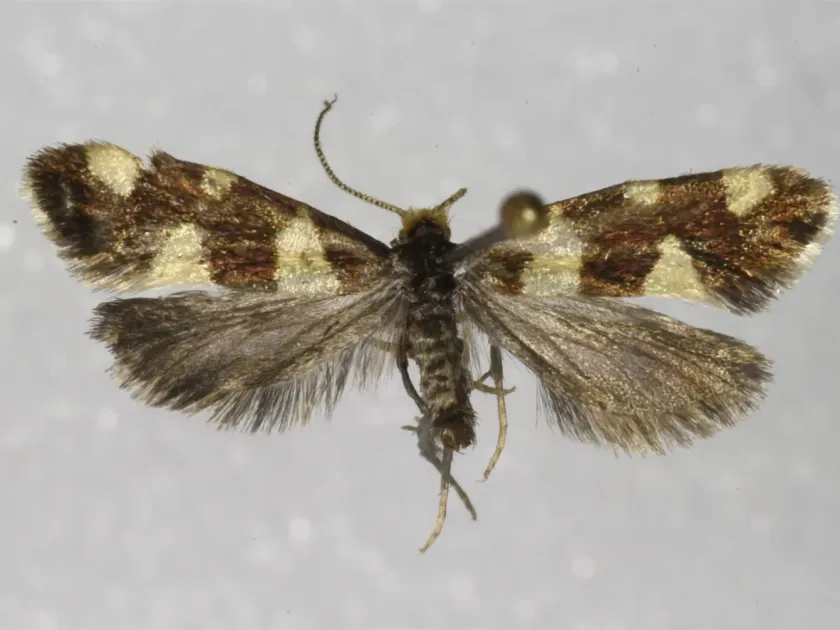
Description
How to identify
Alloclemensia mesospilella is a small moth species belonging to the family Incurvariidae. These insects are known for their leaf-mining larvae, which feed within the tissues of leaves, causing characteristic damage patterns that are essential for their identification in an agricultural setting.
The adult moths are generally inconspicuous, often nocturnal, and possess coloration that provides excellent camouflage against tree bark. Their presence is often overlooked until the damage caused by the next generation becomes visible on the foliage.
As members of the order Lepidoptera, these moths undergo complete metamorphosis. The larval stage is the most critical for farmers, as this is when the insect actively consumes leaf tissue and potentially reduces the overall health of the tree.
Distinguishing Alloclemensia mesospilella from other leaf miners requires an examination of the specific leaf damage patterns and, at times, the morphology of the larva itself. Accurate identification is the first step toward effective integrated pest management.
Biological studies of this species highlight its adaptation to temperate orchard environments, where it exploits the predictable growth cycles of fruit trees to complete its generational development.
What it damages
The primary hosts for the larvae include various fruit trees, most notably apple and pear. The larvae feed on the parenchyma of the leaf, creating distinct tunnels known as mines between the upper and lower epidermal layers.
Feeding damage reduces the photosynthetic capacity of the tree, which can lead to weakened growth and reduced fruit yields. In severe infestations, the cumulative loss of green leaf area can negatively impact the plant's carbohydrate storage.
In addition to cultivated fruit varieties, wild rosaceous plants may act as reservoirs for the pest. This natural spread makes it difficult to completely eradicate the population from large-scale garden areas if wild hedges are present nearby.
Damaged leaves often exhibit browning, curling, and premature senescence. This weakened state can also make the foliage more susceptible to secondary infections by fungi or bacteria entering through the breach in the leaf surface.
The economic threshold for this pest is reached when the percentage of infested leaves interferes significantly with the tree's ability to produce viable fruit, necessitating prompt intervention.
When it appears
The life cycle of Alloclemensia mesospilella is tightly synchronized with the phenology of host trees. Adults emerge early in the spring, coinciding with the swelling and opening of buds, which provides the first resource for the subsequent generation.
The larvae are most active during the late spring and early summer months. The developmental speed is heavily dependent on ambient temperature, which dictates how quickly the moths transition through their larval stages.
Depending on the climatic zone, the pest may complete one or two generations per year. A longer, warmer growing season increases the probability of a second generation, prolonging the duration of potential damage.
Pupation typically occurs either in the soil or within crevices of the bark, where the insect remains in a state of diapause throughout the winter months to survive the cold.
Monitoring the flight of adults using traps or scouting for early larval mines is crucial for timing control measures to coincide with the most vulnerable phases of the insect's life cycle.
Signs of infestation
The most recognizable signs of an infestation are the mines visible on the leaf surface. These appear as irregular, pale tunnels or blotches that stand out against the healthy green tissues of the leaf.
Close inspection of the underside of the leaf may reveal the presence of frass, which is the waste produced by the larvae while feeding inside the leaf. This confirms that the mine is currently occupied.
As the larvae mature, the mines expand in size. In cases of high infestation, the leaves may become so distorted that they wither and drop from the tree prematurely, leading to canopy thinning.
The epidermal layer above the mine becomes thin and translucent, often appearing as a dry, parchment-like patch. This is a clear indicator that the photosynthetic tissue underneath has been consumed.
Gardeners should monitor the tree canopy regularly during the spring. Early detection of a few mines allows for localized control before the infestation becomes widespread across the entire orchard.
Control measures
A successful strategy for managing Alloclemensia mesospilella integrates cultural, mechanical, and, if necessary, chemical methods to reduce population density below the damage threshold.
- Removal and destruction of fallen leaves during the autumn to eliminate overwintering pupae.
- Bark cleaning and trunk maintenance to reduce the number of potential pupation sites.
- Application of bio-rational pesticides targeting the larval stage during active feeding.
- Encouraging natural predators such as parasitic wasps that can regulate moth populations.
- Strategic timing of insecticide applications to catch the adult emergence phase or hatching larvae.
Cultural practices, such as ensuring proper irrigation and nutrient management, help the trees remain vigorous and better able to withstand the stress caused by leaf damage.
Pruning trees to ensure an open canopy allows for better air circulation and light penetration, which are generally unfavorable for the proliferation of leaf-mining insects.
By consistently applying integrated pest management practices, the impact of Alloclemensia mesospilella can be kept to a negligible level, ensuring healthy tree development and good fruit production.
Taxonomy
- Latin name
- Alloclemensia mesospilella
- Order
- Lepidoptera (butterflies)
- Family
- Incurvariidae
- EPPO code
- INCUTQ
Discussion
No discussions yet — be the first.