
Anise swallowtail
Papilio zelicaon
Description
How to identify
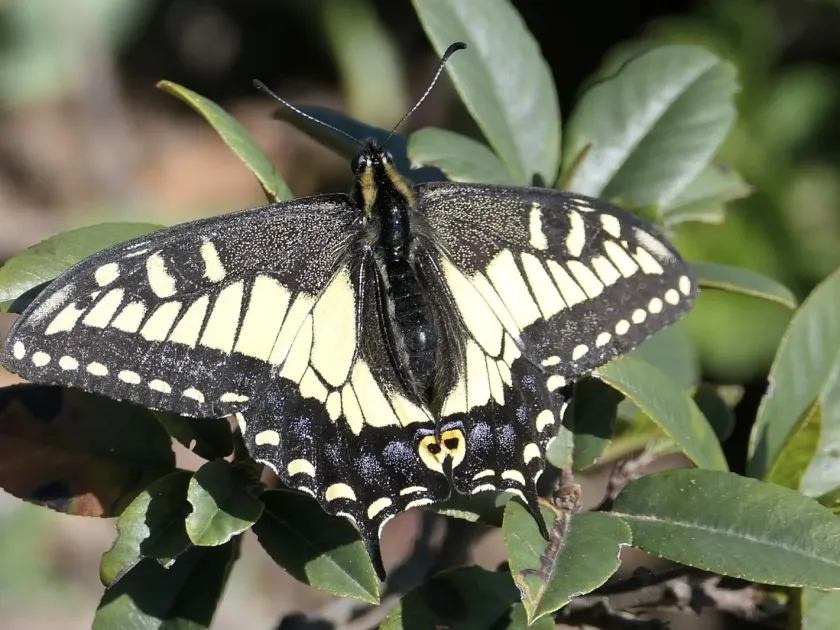
The Anise swallowtail (Papilio zelicaon) is a large butterfly belonging to the swallowtail family. Adults typically feature a wingspan of 8 to 10 centimeters with striking black wings marked by yellow bands and spots.
The larvae, or caterpillars, undergo significant transformations. Early instar caterpillars are dark with white patches, resembling bird droppings, which provides excellent camouflage from potential predators.
Mature caterpillars become bright green with black bands and orange dots on each segment. When threatened, they evert a bright organ called an osmeterium that releases a pungent odor to deter attackers.
Pupae are typically attached to the stems of host plants or other stable surfaces. They exhibit protective coloration, ranging from green to brown, allowing them to blend into their immediate environment.
In warmer climates, this species can produce multiple generations per year. The insect typically overwinters in the pupal stage, which enables it to survive adverse cold weather conditions successfully.
What it damages
The primary hosts for Anise swallowtail larvae are plants in the Apiaceae (carrot) family. In an agricultural context, this poses a significant risk to several cultivated species.
Common crops such as carrots, parsley, dill, fennel, and parsnips are frequently targeted. Larvae consume the foliage, and in cases of high infestation, they can damage flower heads, reducing seed production.
Beyond garden crops, the pest develops on various wild Apiaceae species. This creates a persistent reservoir for the population that can easily migrate to neighboring cultivated fields.
While the adult butterflies are useful pollinators, the voracious appetite of the larvae can be devastating for young seedlings. Severe outbreaks can strip entire patches of herbs.
The economic impact involves the loss of foliage, which weakens the plants, stunts the development of root vegetables, and degrades the overall quality of the harvestable crop.
Signs of infestation
The most common sign of an infestation is uneven, jagged leaf margins. Larvae typically begin feeding at the edge of the leaf and gradually move toward the center as they grow larger.
Small dark granular droppings, or frass, found on the leaves or the soil surface underneath the plant are a clear indication of active feeding by medium or late-stage caterpillars.
Directly spotting the caterpillars is the most straightforward diagnostic method. They are usually found resting on the undersides of leaves or along stems during the cooler parts of the day.
An unusual, unpleasant, or sharp odor emanating from your carrot or parsley patch during inspection is a defensive reaction from caterpillars that have been disturbed.
In advanced cases, leaf skeletonization occurs, leaving only the main stems. This level of damage requires prompt intervention to prevent further spread and crop loss.
Control measures
Hand-picking is the most practical and effective method for small-scale gardens. Since the caterpillars are relatively large, they are easily visible and can be collected and removed.
Biological controls such as products containing Bacillus thuringiensis (Bt) are highly effective against these larvae while remaining safe for most beneficial insects and the environment.
Practicing crop rotation is essential for long-term prevention. Avoiding the planting of Apiaceae family members in the same spot for at least three seasons breaks the life cycle of the pest.
Removing wild host plants (weeds) around the perimeter of the garden reduces the attractiveness of the site to egg-laying female butterflies, lowering the overall pressure.
If chemical intervention becomes necessary due to high populations, utilize registered insecticides, ensuring strict adherence to pre-harvest intervals to ensure safety for human consumption.
Taxonomy
- Latin name
- Papilio zelicaon
- Order
- Lepidoptera (butterflies)
- Family
- Papilionidae
- EPPO code
- PAPIZE
Discussion
No discussions yet — be the first.