
Thoas swallowtail
Papilio thoas
Description
How to identify
The Thoas swallowtail (Papilio thoas) is a butterfly belonging to the family Papilionidae. Adult butterflies are large, with wingspans reaching up to 15 cm and striking black and yellow patterns.
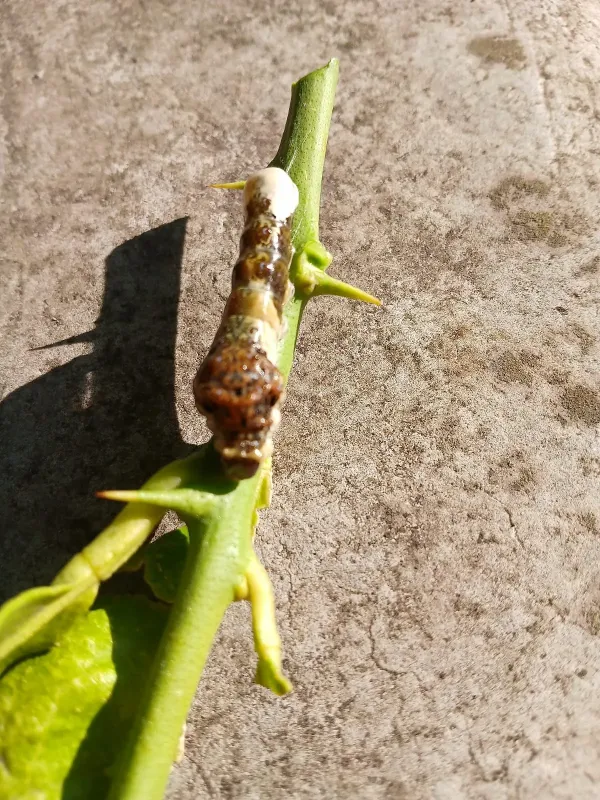
The larvae, or caterpillars, undergo significant changes in appearance. Early instars resemble bird droppings, providing camouflage from potential predators.
As they mature, the larvae turn green with brown or grey markings, mimicking the foliage of their host plants, which makes them difficult to spot.
Like many swallowtail caterpillars, they possess an osmeterium—a fleshy, V-shaped organ located behind the head that emits a foul odor when the insect feels threatened.
The pupal stage is equally cryptic, as the chrysalis resembles a withered leaf or a broken twig, ensuring the insect remains hidden during its transformation phase.
What it damages
The primary food source for the Thoas swallowtail larvae is plants within the Rutaceae family, specifically citrus trees such as lemons, oranges, and limes.
The caterpillars are highly voracious and consume leaf tissue, which can significantly reduce the photosynthetic capacity of the tree if the infestation is severe.
Young trees are particularly vulnerable, as excessive defoliation can severely stunt their growth, weaken their overall vitality, and delay their entry into fruit-bearing age.
While mature trees are generally resilient, large populations of caterpillars can lead to substantial yield losses in commercial citrus groves if left uncontrolled.
Frequent feeding on young shoots can also alter the natural growth habit of the tree, leading to distorted development of the canopy.
When it appears
The Thoas swallowtail is most active during the warmer months when temperatures favor the development of multiple generations within a single season.
Adult butterflies emerge to mate and lay eggs on the leaves of host plants as soon as the weather becomes consistently warm and stable.
The peak presence of larvae usually coincides with the periods of intense vegetative growth of citrus trees, providing abundant nutrition for the developing pests.
As autumn approaches and temperatures drop, the lifecycle slows down, and the species often enters a diapause state as a pupa to survive the winter.
Monitoring for signs of the pest should be conducted throughout the growing season, particularly during the months of maximum foliage production.
Signs of infestation
The most noticeable sign of a Thoas swallowtail infestation is the presence of eaten leaf margins, often leaving the central vein partially exposed.
Dark, granular frass (excrement) found on the leaves or the ground beneath the tree canopy is a clear indicator of larval activity above.
Careful inspection of the foliage often reveals the presence of larvae at various stages, from those mimicking bird droppings to larger green caterpillars.
Missing chunks of leaf material at the edges of young shoots serve as an immediate alert for growers to check for the presence of these caterpillars.
Because these caterpillars are masters of camouflage, they are often found resting along branches or the midribs of leaves, requiring a trained eye to spot.
Control measures
For home gardens, manual removal of larvae is the most environmentally friendly and effective way to manage the population without using chemicals.
In commercial agriculture, biological controls, such as Bacillus thuringiensis (Bt) sprays, are recommended as they specifically target caterpillars while sparing beneficial insects.
- Regular pruning to improve canopy airflow and visibility.
- Encouraging natural predators such as birds and parasitic wasps.
- Using pheromone traps to monitor adult butterfly activity.
- Applying systemic insecticides only during heavy infestations.
- Inspecting young nursery stock for egg clusters before planting.
Chemical intervention should be reserved for cases of severe infestation, and all products should be applied according to label instructions to ensure food safety.
Maintaining a healthy orchard through proper nutrition and irrigation can help trees withstand limited defoliation caused by the occasional presence of this butterfly.
Taxonomy
- Latin name
- Papilio thoas
- Order
- Lepidoptera (butterflies)
- Family
- Papilionidae
- EPPO code
- PAPITA
Discussion
No discussions yet — be the first.