
Western tiger swallowtail
Papilio rutulus
Description
How to identify
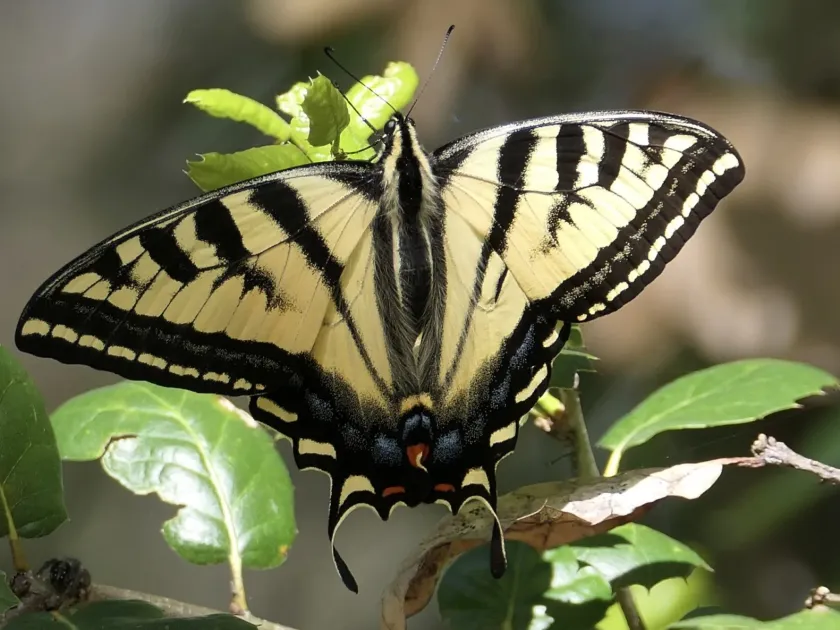
The Western tiger swallowtail (Latin: Papilio rutulus) is a large, conspicuous butterfly of the family Papilionidae, recognized by its bold black stripes on yellow wings.
The larvae progress through several instar stages, initially mimicking bird droppings to deter predators, and later turning a bright green with prominent false eyespots.
Adults are strong fliers and are typically observed in late spring and summer, actively seeking nectar and suitable host plants for oviposition.
The pupae are cryptically colored to resemble twigs or bark, making them extremely difficult to spot during the overwintering phase.
This species is widely distributed in Western North America and prefers riparian habitats, often encroaching into orchards located near these areas.
What it damages
The larvae are foliage feeders, primarily targeting members of the Rosaceae and Salicaceae families, which include many commercially important fruit trees.
Common hosts in agricultural settings include apple, pear, cherry, and plum trees, as well as poplar and willow trees often used as windbreaks.
Heavy infestations can lead to significant defoliation, which severely stresses the tree and reduces the energy reserves required for fruit production.
In nursery settings, damage to terminal buds and young leaves can cause stunted growth and structural deformities in developing saplings.
While the economic impact is often localized, in outbreak years, the cumulative feeding pressure can substantially decrease the vigor of young orchards.
Signs of infestation
Feeding damage typically appears as irregular notches along the leaf margins or complete skeletonization of the leaf tissue by larger larvae.
The presence of silken pads or rolled leaves secured with silk indicates the temporary shelter created by the larva during the day.
Frass (larval droppings) found on leaves or the ground beneath the canopy is a clear indicator of active feeding activity above.
Stunted shoot development and the presence of missing leaf tissue are common diagnostic indicators of a swallowtail infestation.
Careful visual inspection of the canopy, especially on the undersides of leaves, often reveals individual larvae or clusters of eggs.
Control measures
For small-scale orchards or home gardens, hand-picking the larvae is an effective and environmentally friendly control measure.
Biological control using microbial insecticides, such as Bacillus thuringiensis (Bt), provides excellent results against caterpillar stages without harming beneficial insects.
Maintaining healthy orchard hygiene, including the removal of nearby alternative host trees like wild willows, can reduce local populations.
Monitoring adult butterfly activity with traps helps predict egg-laying periods, allowing for targeted and timely intervention if thresholds are exceeded.
Encouraging natural predators such as parasitic wasps and predatory birds is essential for long-term ecological balance within the orchard system.
Taxonomy
- Latin name
- Papilio rutulus
- Order
- Lepidoptera (butterflies)
- Family
- Papilionidae
- EPPO code
- PAPIRU
Discussion
No discussions yet — be the first.