
Common Mormon
Papilio polytes
Description
How to identify
The Common Mormon (Papilio polytes) is a widespread butterfly species of the swallowtail family (Papilionidae). The adult butterflies exhibit significant sexual dimorphism, with females often mimicking unpalatable species.
The life cycle follows complete metamorphosis, consisting of egg, larva (caterpillar), pupa (chrysalis), and adult stages. Females lay eggs singly on the host plant leaves, often choosing young, tender shoots.
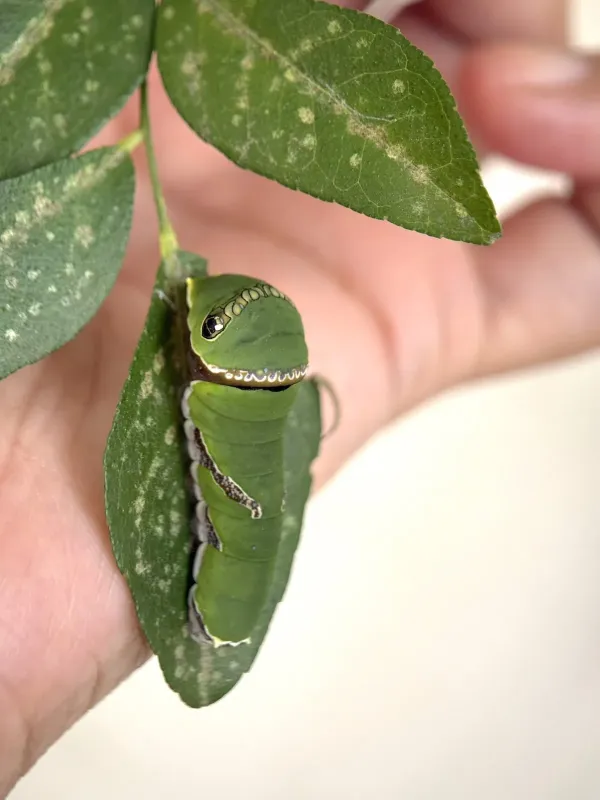
Larvae pass through five instars. Early stages are brown and white, resembling bird droppings to deter predators. As they grow, they transition to a vibrant green color with white and brown markings.
The pupa is typically attached to stems or the underside of leaves using a silk girdle. It is highly camouflaged, blending perfectly with the green stems of the host plant to evade detection.
Understanding these stages is crucial for pest management. Identifying the eggs and early-stage larvae allows farmers to implement control measures before the population reaches a damaging level.
What it damages
The larvae are specialized herbivores that feed primarily on plants within the Rutaceae family. Their impact on citrus orchards can be significant, especially in tropical and subtropical regions.
Caterpillars cause damage by consuming leaf tissue. They are voracious eaters, particularly in their final instar, capable of stripping entire branches of their foliage within a short period.
For young citrus trees, severe defoliation reduces the photosynthetic surface area, leading to stunted growth, weakened immunity, and in extreme cases, the death of the sapling.
In mature orchards, repetitive feeding can impact the tree's energy reserves, reducing overall yield and vigor. The loss of foliage also leaves the fruit more exposed to sunscald and other environmental stresses.
While the primary damage is to the leaves, the larvae may also feed on delicate flower buds, indirectly affecting the subsequent fruit set and leading to commercial losses.
Signs of infestation
The most common sign of an infestation is irregular notches along the leaf margins. As the larvae grow, they consume larger sections of the leaf, often leaving only the midrib intact.
Frass (caterpillar excrement) on the leaves or the ground beneath the canopy indicates the presence of active feeders in the upper foliage where they might be hidden from view.
Significant defoliation is a clear indicator of a mature caterpillar population. Branches that appear sparse or stripped of greenery are typical signs of an advanced infestation.
During daylight, larvae often rest on the underside of leaves or along stems. Their cryptic coloration makes them difficult to spot, but they become more noticeable upon closer inspection of the stems.
Twisted or stunted leaf growth at the terminal ends of branches can also suggest that the caterpillars have been feeding on the new, tender shoots as they emerge.
Control measures
Hand-picking remains the most practical and eco-friendly control measure for small-scale gardens. Removing caterpillars early in the season prevents mass population growth.
Biological control using Bacillus thuringiensis (Bt) is highly effective against Lepidopteran larvae. This bacterium targets the caterpillars specifically while remaining harmless to beneficial insects.
Chemical control involving systemic or contact insecticides may be necessary in commercial citrus production if biological methods prove insufficient to curb population spikes.
Maintaining orchard hygiene, such as clearing weeds and providing balanced irrigation, keeps trees vigorous and better able to withstand or recover from localized herbivory.
Monitoring adult butterfly populations through traps or visual surveys helps growers predict potential outbreaks and apply preventative measures before the larvae start damaging the crop.
Taxonomy
- Latin name
- Papilio polytes
- Order
- Lepidoptera (butterflies)
- Family
- Papilionidae
- EPPO code
- PAPIPO
Discussion
No discussions yet — be the first.