
Lime butterfly
Papilio polymnestor
Description
How to identify
The Lime butterfly (Papilio polymnestor) is a large, striking member of the Papilionidae family. Its wingspan typically ranges from 120 to 150 mm, featuring a velvety black surface with a distinctive iridescent blue or blue-green sheen.
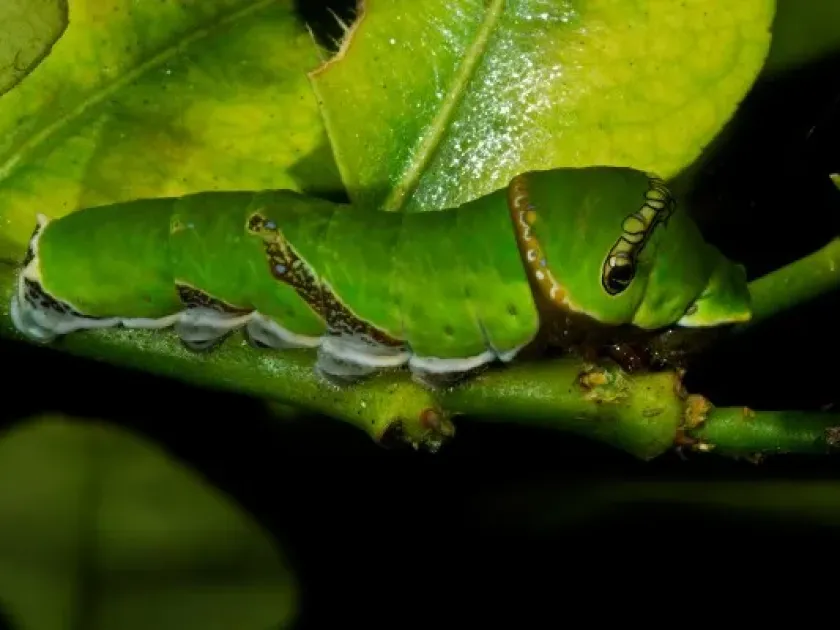
During their early larval stages, the caterpillars employ a fascinating camouflage technique, appearing like bird droppings to deter predators. As they mature, they transition into a bright green color with dark markings that blend perfectly with citrus foliage.
The pupae of this species are masters of mimicry, often shaped and colored like twigs or dried leaves. This biological adaptation makes them extremely difficult for farmers and gardeners to spot during routine inspections of the orchard.
The life cycle encompasses four distinct stages: egg, larva, pupa, and imago. In warmer climates, the butterfly can complete multiple generations per year, creating a continuous challenge for citrus orchard management.
Adult butterflies are highly mobile and active foragers. Their ability to cover large distances ensures that they can locate suitable host plants, facilitating the rapid colonization of new citrus plantations.
What it damages
The primary hosts for this pest are members of the Rutaceae family, especially citrus trees such as lemons, limes, oranges, and pomelos. The caterpillars are voracious feeders, causing significant defoliation of the trees.
Severe infestations can lead to complete loss of foliage. This significantly hampers the tree's ability to photosynthesize, resulting in stunted growth, weakened immunity, and a substantial reduction in fruit yield.
Young saplings in nurseries are particularly vulnerable. Damage to the growing tips and young shoots can cause permanent structural deformities in the crown, which negatively affects the long-term productivity of the tree.
While adult butterflies feed on nectar and are not direct pests, their presence in high numbers can occasionally facilitate the movement of certain plant pathogens between healthy and infected trees.
Economic damage is most pronounced in regions where citrus is a primary crop. Without proper monitoring and control, the loss of photosynthetic leaf area can lead to significant financial setbacks for growers.
Signs of infestation
The most common sign of an infestation is the presence of unevenly chewed leaf margins. Older caterpillars are capable of consuming entire leaves, leaving behind only the tough midribs, which is highly visible upon inspection.
Frass (caterpillar excrement) found on the leaves or the ground beneath the canopy is a clear indicator that the larvae are active. Detecting this debris early is essential for implementing timely control measures.
Stunted growth of new shoots and the premature yellowing of leaves are indirect but critical signs of stress caused by defoliation. A detailed search of the underside of leaves often reveals clusters of eggs or young larvae.
Leaves that appear rolled or tied together often house the pupating caterpillars. Finding these structures confirms that the pest has established itself and is moving through its developmental life stages.
Agronomists should focus their inspection efforts on the apical buds and tender shoots, as these are preferred feeding sites for newly hatched larvae, providing the earliest warning of an ongoing outbreak.
Control measures
Manual collection of caterpillars is the most effective and eco-friendly method for small-scale gardens or backyard orchards. It avoids the need for chemical intervention and preserves beneficial insect populations.
Biological controls, particularly sprays containing Bacillus thuringiensis, are highly effective against larvae. This targeted approach protects the environment while significantly reducing the caterpillar population.
Good agricultural practices, such as maintaining healthy soil conditions and ensuring proper irrigation, enhance the tree's vigor and its natural ability to withstand pest-induced defoliation stress.
Chemical insecticides should only be used as a last resort in large-scale commercial plantations. If required, they must be applied according to strictly defined protocols and pre-harvest intervals to ensure safety.
Monitoring the adult flight activity using light or pheromone traps allows for precise timing of interventions. By targeting the pest before mass hatching occurs, growers can minimize damage and maintain crop health.
Taxonomy
- Latin name
- Papilio polymnestor
- Order
- Lepidoptera (butterflies)
- Family
- Papilionidae
- EPPO code
- PAPIPL
Discussion
No discussions yet — be the first.