
Citrus swallowtail
Papilio nireus
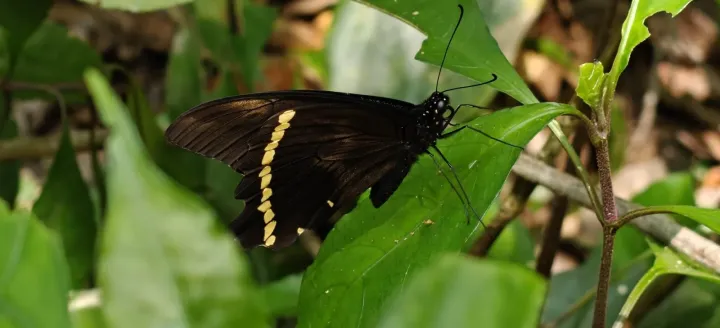
Description
How to identify
The Citrus swallowtail (Papilio nireus) is a large butterfly species belonging to the family Papilionidae within the order Lepidoptera. Adult specimens are known for their striking black wings adorned with prominent emerald-green or blue-green bands.
The larvae go through several developmental stages, exhibiting significant color changes. Initially, they mimic bird droppings to evade predators, while later stages appear bright green with eye-like markings.
Pupation typically takes place on the host plant. The pupae possess a specialized shape that allows them to blend in effectively with twigs and leaves, making them difficult to detect during regular inspections.
The life cycle is heavily influenced by regional climate conditions, with the species being most prevalent in sub-Saharan Africa. The butterfly’s reproductive rate is high, allowing for multiple generations per year in tropical environments.
Understanding the biology of this species is essential for orchard management, as the rapid turnover of generations can lead to sudden population spikes if left unchecked.
What it damages
The primary host plants for Papilio nireus larvae are members of the Rutaceae family. Significant economic damage is often observed in commercial citrus orchards, including lemon, lime, orange, and mandarin trees.
The caterpillars feed exclusively on the foliage, which can cause severe defoliation of young shoots. This is particularly harmful to nursery saplings, as it stunts their growth and hinders overall tree development.
In nursery environments, uncontrolled infestation can lead to significant loss of plant health and diminished growth rates. The loss of leaf surface area reduces photosynthetic efficiency.
While often found on wild citrus species, the pest readily adapts to cultivated varieties. This shift to agricultural crops makes it a critical monitoring target for citrus growers worldwide.
Persistent feeding damage weakens the host tree, leaving it susceptible to secondary bacterial or fungal infections and further stress from other environmental factors.
Signs of infestation
The most prominent sign of infestation is the presence of chewed leaf edges on young foliage. A diagnostic feature is that the larvae often leave the main midrib of the leaf intact while consuming the blade.
The presence of frass (caterpillar droppings) on the leaves and branches is a clear indicator of active feeding activity in the canopy. Growers should check for this sign during routine monitoring.
Eggs are typically laid singly or in small groups on the underside of leaves. Early detection of these eggs is the most successful strategy for preventing large-scale larval outbreaks.
Although caterpillars may hide during the day, the skeletonized leaves are visible evidence of their recent presence. Even at low population densities, these signs are noticeable upon close inspection.
Caterpillars possess a defensive organ called an osmeterium, which emits a strong, distinct odor when the insect is threatened, serving as a secondary indicator of their presence on the tree.
Control measures
Mechanical removal of eggs and larvae is the most environmentally friendly and effective control method for small-scale plantings. Frequent inspection and manual picking are highly recommended for home gardeners.
In the event of a significant outbreak, biological control agents such as Bacillus thuringiensis sprays are highly effective. These products specifically target larvae and minimize harm to beneficial predators.
Systemic insecticides should only be used as a last resort in commercial nurseries when thresholds for damage are exceeded. Strict adherence to rotation strategies is necessary to avoid developing pesticide resistance.
Good orchard management practices, including balanced fertilization and irrigation, help maintain tree vigor. Stronger trees can better tolerate and recover from larval defoliation events.
Encouraging natural predators such as parasitic wasps and predatory birds creates an ecological balance that naturally limits population growth, reducing the overall reliance on chemical interventions.
Taxonomy
- Latin name
- Papilio nireus
- Order
- Lepidoptera (butterflies)
- Family
- Papilionidae
- EPPO code
- PAPINI
Discussion
No discussions yet — be the first.