
Old World swallowtail
Papilio machaon
Description
How to identify
The Old World swallowtail (Papilio machaon) is a butterfly belonging to the Papilionidae family. It is a large, iconic species with a wingspan of up to 90 mm, characterized by yellow wings with black veins, a black border, and distinct tails.
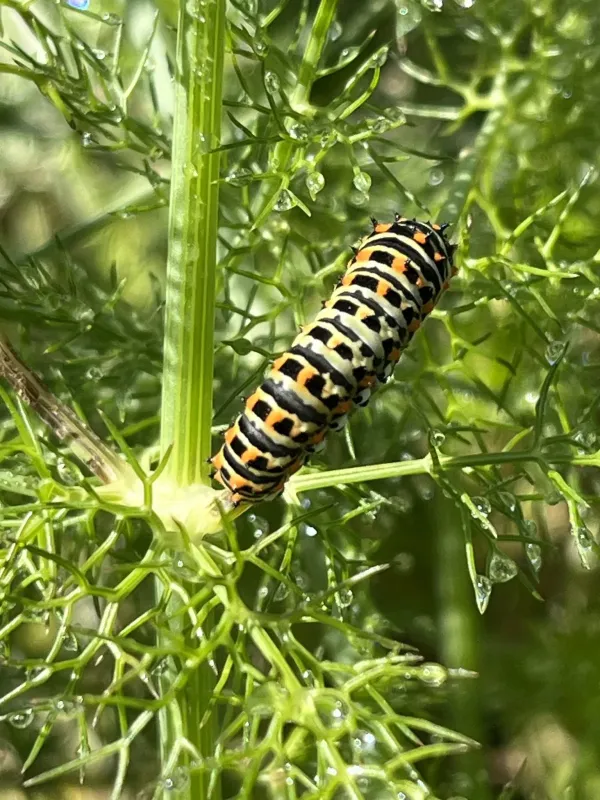
The larvae, or caterpillars, are the stage that affects crops. They are fleshy, bright green with black transverse bands and orange-red spots between the segments. They possess an osmeterium, a Y-shaped gland used for defense that emits a pungent odor.
The life cycle undergoes complete metamorphosis, including egg, larva, pupa, and adult stages. Depending on the climate, the species may complete one to three generations per year.
Pupation occurs on sturdy plant stems or other structures. The pupa is highly resilient to cold temperatures and remains in diapause throughout the winter season.
Although generally viewed as a beautiful insect, in agricultural settings, its larvae can cause significant damage to specific plant groups by feeding heavily on foliage.
What it damages
The larvae are specialized feeders on plants within the Apiaceae (Umbelliferae) family. They consume leaves, stems, and especially flowering parts of the host plants.
Key crops at risk include dill, carrots, parsley, fennel, celery, and parsnips. Commercial fields and home gardens are both susceptible to their presence during the growing season.
Feeding on flowers and seed heads is particularly harmful, as it reduces the yield of seed crops and damages the aesthetic quality of fresh herbs.
In cases of high infestation, the larvae can strip a plant bare, leading to severe defoliation and a significant reduction in the plant's photosynthetic capacity.
Product quality for commercial herb growers is compromised if larval excrement or feeding damage is present on the harvested product.
When it appears
Adults emerge from late spring, typically in May, and remain active through the summer months. They frequent flowering plants for nectar throughout the day.
Eggs are laid singly on the undersides of leaves. After hatching, the larval stage lasts approximately 3 to 4 weeks, during which the caterpillar grows rapidly.
Later generations are often more numerous, coinciding with the peak development phase of root and herb crops in mid-to-late summer.
Temperature dictates the speed of the life cycle. Warmer summers shorten the time between generations, potentially leading to increased larval pressure on crops.
As autumn approaches, the final generation of larvae transforms into pupae, entering a dormant phase to survive the winter and initiate the next cycle in spring.
Signs of infestation
The most evident sign is the physical presence of large, brightly colored caterpillars on the upper parts of plants or flower heads.
Evidence of feeding is characterized by irregularly eaten leaf edges, missing sections of foliage, and damaged flower umbels that may look wilted or stripped.
Larval frass (excrement) in the form of dark pellets on leaves or the soil surface beneath the plant is a reliable indicator of active feeding.
- Stripped carrot tops and dill umbels.
- Visible caterpillar presence on host plants.
- Distorted growth of young plants due to heavy feeding.
Plants affected by significant larval populations may show signs of stunting and overall decline in vigor compared to healthy, undisturbed plants.
Control measures
Hand-picking is the most effective and eco-friendly method for managing swallowtail caterpillars in small-scale gardens, as they are large and easily spotted.
Biological control using Bacillus thuringiensis (Bt) is highly effective against young larvae and is safe for beneficial insects, making it a preferred choice for integrated pest management.
Chemical control should be considered only as a last resort, using registered insecticides and strictly adhering to pre-harvest intervals to ensure safety for human consumption.
Removing wild Apiaceae weeds from the vicinity of gardens can reduce the local population of adults and minimize the number of eggs laid on crops.
Implementing crop rotation and using physical barriers, such as lightweight row covers, can protect susceptible plants from oviposition by adult butterflies.
Taxonomy
- Latin name
- Papilio machaon
- Order
- Lepidoptera (butterflies)
- Family
- Papilionidae
- EPPO code
- PAPIMA
Discussion
No discussions yet — be the first.