
Red Helen
Papilio helenus
Description
How to identify
The Red Helen (Papilio helenus) belongs to the order Lepidoptera and the family Papilionidae, commonly known as swallowtails.
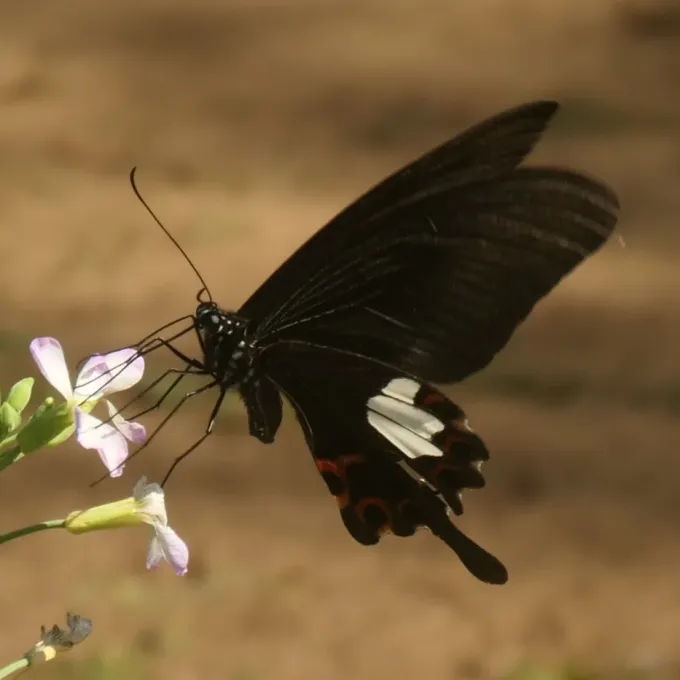
Adults are large butterflies with a wingspan of approximately 100–120 mm, recognized by their black wings with large white spots on the hindwings.
The caterpillars undergo significant changes in appearance, starting as brownish larvae resembling bird droppings and maturing into bright green individuals with dark markings.
Pupae are typically green or brown, blending into the surrounding foliage or bark to avoid detection by predators.
The species is primarily found in various Asian regions, where it is recognized for its preference for Rutaceae host plants.
What it damages
The primary hosts for Red Helen caterpillars are plants within the Rutaceae family, particularly species of the genus Citrus.
Feeding larvae target young leaves and soft shoots, causing significant defoliation that weakens the tree's overall vigor.
Young citrus saplings are particularly vulnerable, as severe feeding can lead to stunted growth or even the death of the plant.
In established fruit orchards, intense infestation leads to reduced photosynthesis, resulting in lower yields and poor fruit quality.
Damage is cumulative, as several generations per year can lead to a sustained decline in tree health if management measures are ignored.
When it appears
The life cycle of the Red Helen is synchronized with the vegetative periods of citrus plants, favoring warm and humid environments.
Egg-laying activity peaks when citrus trees produce new flushes of growth, providing abundant food for emerging larvae.
The duration of the life cycle from egg to adult is relatively short, typically spanning about a month under favorable conditions.
Multiple generations can occur throughout the year, meaning the pest can be present and active across most of the growing season.
Peak populations are usually observed during the late spring and summer months, corresponding with high temperatures and moisture levels.
Signs of infestation
The first signs of infestation include irregular holes or chewed edges along the leaf margins of host plants.
Frass (caterpillar excrement) on the leaf surfaces or below the canopy is a clear indicator of active feeding activity.
Small, solitary eggs attached to the undersides of leaves or on petiole stalks indicate the initiation of a new generation.
Defoliation of specific branches or evidence of skeletonized leaves points to larger, more mature caterpillar presence.
- Chewed leaf margins
- Visible caterpillars on foliage
- Larval frass under branches
- Eggs laid on the undersides of leaves
Control measures
Mechanical removal of larvae and infested leaves is the safest and most effective method for home gardens or small-scale plantings.
Biological control using B. thuringiensis sprays is highly effective against early-instar larvae and minimizes harm to beneficial insects.
Chemical control should be used judiciously as a last resort, prioritizing insecticides that are least toxic to non-target pollinators.
Cultural practices, such as maintaining optimal irrigation and nutrition, ensure trees have the resilience to withstand partial defoliation.
Encouraging the presence of natural predators, including parasitic wasps and insectivorous birds, is key to long-term population regulation.
Taxonomy
- Latin name
- Papilio helenus
- Order
- Lepidoptera (butterflies)
- Family
- Papilionidae
- EPPO code
- PAPIHN
Discussion
No discussions yet — be the first.