
Eastern Tiger Swallowtail
Papilio glaucus
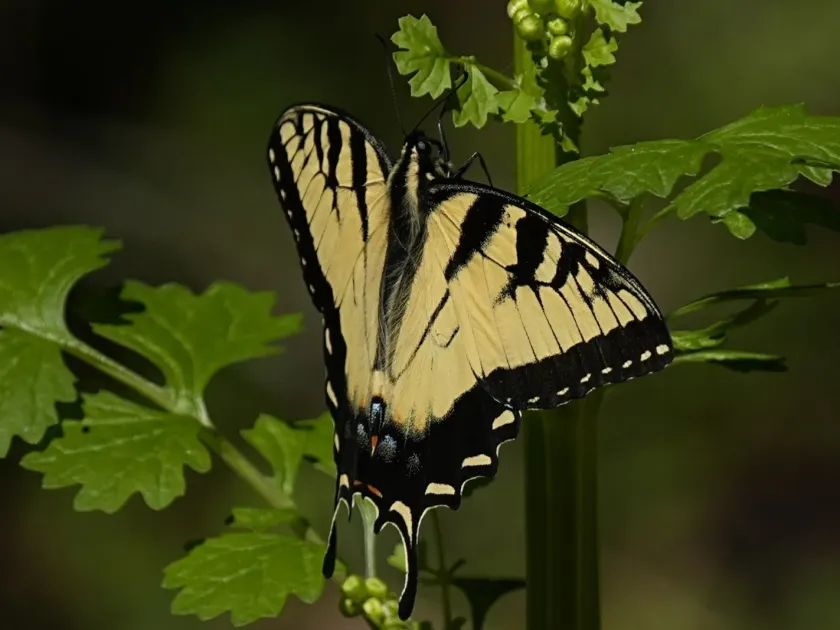
Description
How to identify
The Eastern Tiger Swallowtail (Papilio glaucus) belongs to the Papilionidae family, order Lepidoptera. While adults are iconic, large swallowtail butterflies, their larval stage is what concerns agricultural managers.
Larvae undergo dramatic changes during their development. Early-stage caterpillars resemble bird droppings to deter predators, while mature larvae turn a vibrant green.
A distinctive feature of older larvae is the pair of large, dark eyespots on the thoracic segments. These spots are designed to mimic a larger animal and frighten off avian predators.
When threatened, the caterpillar protrudes a specialized organ called an osmeterium from behind its head, which emits a foul-smelling chemical to ward off threats.
The life cycle encompasses eggs, larvae, pupae, and adults. They typically overwinter as pupae, which are perfectly camouflaged to resemble dry leaves or tree bark.
What it damages
This species is a polyphagous pest, meaning it feeds on a wide range of host plants. It is particularly known for attacking fruit trees belonging to the Rosaceae family.
Key agricultural host plants include apple, cherry, pear, and plum trees. They also commonly feed on other broad-leaved trees such as birch and tulip trees.
Significant infestations can lead to heavy defoliation of trees. This reduction in leaf area directly impacts the plant's photosynthetic capacity and overall vigor.
Young trees in nurseries are at the highest risk. Severe feeding damage can stunt growth, weaken the structural integrity of the sapling, and potentially lead to plant mortality.
While adult butterflies act as pollinators and cause no damage, their presence indicates a breeding population is active, warranting increased monitoring of foliage.
Signs of infestation
The first signs of infestation include scalloped or irregular bite marks along the edges of the leaves. In extreme cases, only the midribs of the leaves may remain.
Locating the larvae is the most accurate way to confirm an infestation. They are often found resting along the main leaf vein, secured by fine silk strands.
The presence of frass (caterpillar droppings) on leaves or the ground beneath the canopy indicates that active feeding is occurring directly above that area.
Damaged leaves that are folded or webbed together serve as hiding spots for larvae, protecting them from weather and predators during the day.
Monitoring bark and twigs in late fall or early spring can reveal the presence of pupae, providing an opportunity to eliminate the next generation before it emerges.
Control measures
Hand-picking remains the most practical and eco-friendly control method for small-scale gardens. Removing larvae as they appear effectively prevents foliage destruction.
Promoting natural biodiversity, such as attracting birds, parasitic wasps, and predatory insects, is vital for long-term population management of swallowtails.
Biological insecticides, particularly those based on Bacillus thuringiensis (Bt), are highly effective and target only the caterpillars, leaving beneficial insects unharmed.
Chemical control with insecticides should be considered a last resort, used only when the economic damage threshold has been exceeded and other methods are insufficient.
Good orchard sanitation, including the removal of leaf litter and dead twigs, helps disrupt the life cycle of the pest by destroying potential overwintering sites.
Taxonomy
- Latin name
- Papilio glaucus
- Order
- Lepidoptera (butterflies)
- Family
- Papilionidae
- EPPO code
- PAPIGL
Discussion
No discussions yet — be the first.