
Lime swallowtail
Papilio demoleus
Description
How to identify
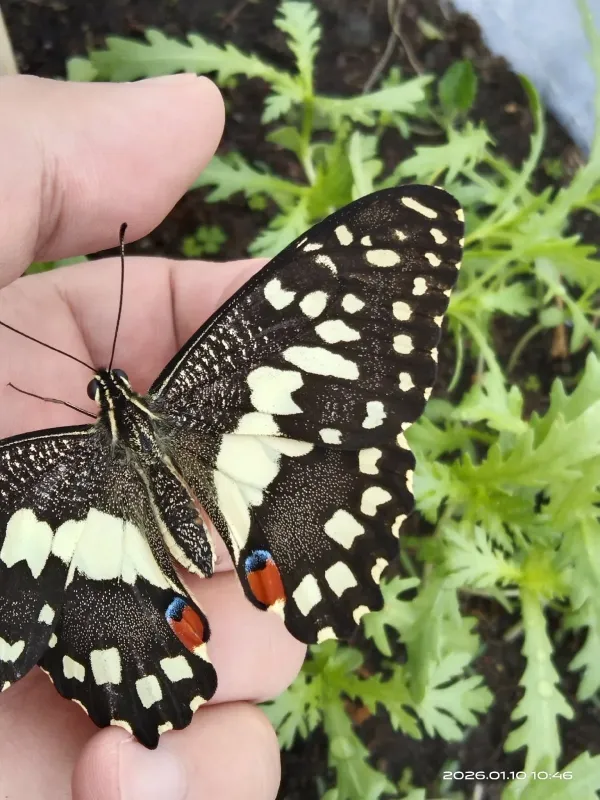
The Lime swallowtail (Papilio demoleus) is a prominent butterfly species belonging to the Papilionidae family. It is recognized by its large wingspan and distinct appearance.
The wings feature a black base color with yellow markings. There are red and blue eyespots on the hindwings, which serve as a defense mechanism against potential predators.
The larval stage passes through several instars. Early larvae resemble bird droppings, providing excellent camouflage against avian predators while feeding on leaves.
Mature larvae are bright green with dark stripes. Their appearance changes significantly as they grow, making them easier to spot during the final stages of development.
The life cycle duration is highly dependent on ambient temperature, allowing the pest to complete multiple generations within a single growing season in warm climates.
What it damages
This species is primarily a pest of the Rutaceae family, with a strong preference for citrus trees such as lemons, limes, and oranges. It can cause devastating damage to young orchards.
Larvae consume large amounts of leaf tissue. In severe cases, they can cause complete defoliation, leaving only the primary leaf veins (skeletonization) on the plant.
Nurseries and young plantations are particularly at risk. Heavy infestations can lead to stunted tree growth and, in some cases, the death of young seedlings.
The reduction in photosynthetic capacity leads to weaker trees and lower fruit yields. Economic losses in commercial citrus orchards can be substantial if not managed.
Apart from citrus, the pest can utilize various other host plants, allowing the population to persist even when citrus growth flushes are limited.
Signs of infestation
Visual confirmation of the pest involves identifying partially consumed leaves, particularly those on new shoots. This is the most common early sign of an infestation.
The presence of dark fecal pellets on the foliage or on the ground below the canopy is a definitive sign that caterpillars are actively feeding above.
Direct observation of the larvae on the underside of leaves or resting on stems during the day is the most accurate way to verify the presence of the pest.
Deformed or damaged buds are another indicator. As the population increases, larvae may move from foliage to more tender parts of the plant, including fruit blossoms.
- Chewed leaf margins and irregular holes.
- Accumulation of frass (excrement) on leaves.
- Visible presence of larvae of varying sizes.
- Reduced vigor and stunted growth of shoots.
Control measures
For home gardens, manual removal of larvae is highly effective. This simple approach prevents damage without the use of chemical sprays or environmental toxins.
Biological control using microbial insecticides, such as those based on Bacillus thuringiensis, is recommended for controlling larvae while preserving beneficial insects.
Chemical control should be reserved for severe outbreaks. Selective systemic insecticides can be applied during the early stages of a population spike to minimize damage.
Encouraging natural enemies, including parasitoid wasps and predatory insects, is a critical component of Integrated Pest Management (IPM) for citrus orchards.
Maintaining a regular monitoring schedule with pheromone traps allows growers to time interventions accurately, ensuring the most efficient and least disruptive control.
Taxonomy
- Latin name
- Papilio demoleus
- Order
- Lepidoptera (butterflies)
- Family
- Papilionidae
- EPPO code
- PAPIDE
Discussion
No discussions yet — be the first.