
Citrus swallowtail
Papilio demodocus
Description
How to identify
The Citrus swallowtail (Papilio demodocus) is a butterfly belonging to the Papilionidae family, known as one of the most significant pests of citrus crops in Africa and parts of the Middle East.
The adult butterfly is large, with a wingspan ranging from 80 to 100 mm. Its wings are black with distinctive yellow spots and markings, and the hindwings feature notable tails and red eyespots.
The lifecycle includes the egg stage, several larval instars, a pupal stage, and the adult butterfly. The female typically lays single eggs on the upper surface of host plant leaves.
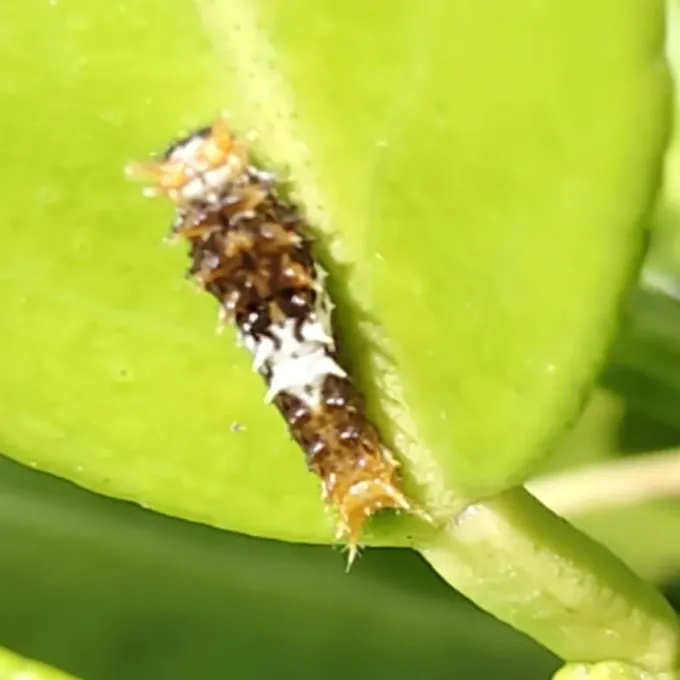
The larvae undergo significant changes during their growth; early instars resemble bird droppings to deter predators, while later stages turn a vivid green with dark stripes.
When threatened, the larva uses its osmeterium—a fleshy, forked organ located behind the head—to release a pungent odor as a defense mechanism.
What it damages
The larvae primarily feed on the foliage of plants belonging to the Rutaceae family, with a strong preference for citrus trees such as lemons, limes, and oranges.
In nurseries and young plantations, the caterpillars can cause severe defoliation, which severely stunts the growth of saplings and can lead to their death if left uncontrolled.
On mature trees, the intense feeding activity reduces the total leaf area available for photosynthesis, leading to reduced vitality and decreased fruit yield.
Beyond citrus, these insects may occasionally feed on other plants, including various species of the Apiaceae family, if they are situated near infested orchards.
Heavy infestations can cause significant economic losses by damaging the canopy, exposing the fruit to sunburn, and weakening the structural integrity of young branches.
Signs of infestation
Signs of infestation include unevenly chewed leaf edges and leaves that have been skeletonized, leaving only the primary veins intact.
Frass (caterpillar excrement) accumulating on the leaves or the ground beneath the tree is a clear indicator that larvae are actively feeding in the canopy.
The larvae themselves are often visible during the day as they sit openly on the foliage, making them relatively easy to identify during routine inspections.
Disturbing a caterpillar may cause it to protrude its osmeterium, which releases a sharp, unpleasant smell detectable in the immediate vicinity.
A severely infested tree will show noticeable thinning of the canopy and, in advanced cases, extensive loss of foliage throughout the entire plant.
Control measures
Manual removal of larvae and pupae is highly recommended for small orchards and home gardens, as it effectively reduces the population without the use of chemicals.
Biological control agents, such as Bacillus thuringiensis, are effective against larvae and offer an environmentally friendly alternative to traditional pesticides.
Chemical insecticides should be used as a last resort, prioritizing selective products that minimize harm to beneficial pollinators and other non-target organisms.
Orchard sanitation, including the removal of weeds and alternative host plants, is crucial to limit the pest's ability to complete its lifecycle near the citrus trees.
Regular monitoring of the trees, especially during peak flight periods, allows for timely intervention before the pest reaches a level that causes economic damage.
Taxonomy
- Latin name
- Papilio demodocus
- Order
- Lepidoptera (butterflies)
- Family
- Papilionidae
- EPPO code
- PAPIDD
Discussion
No discussions yet — be the first.