
Aristodemus Swallowtail
Papilio aristodemus
Description
How to identify
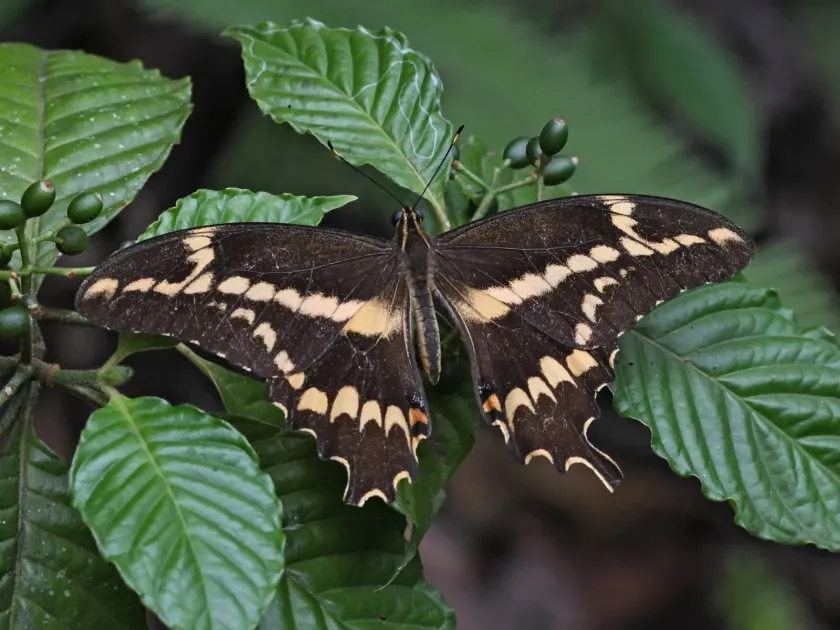
The Aristodemus Swallowtail (Papilio aristodemus) is a striking butterfly species within the family Papilionidae, known for its distinct wing patterns and size.
As a butterfly, it undergoes complete metamorphosis, including the egg, larva, pupa, and adult stages, each being specialized for survival.
The larvae are particularly known for their camouflage strategies, resembling bird droppings during early instars to avoid detection by predators.
The pupae are well-adapted to blend into their environment, often mimicking the appearance of twigs or bark to escape attention from birds and wasps.
Adults are significant pollinators, though in their larval stage, they can pose a threat to specific host plants, primarily in the Rutaceae family.
What it damages
The primary concern for farmers is the feeding activity of the caterpillars, which target the foliage of citrus trees and related species.
Larvae consume leaf tissue, which can lead to significant defoliation of young trees if the infestation is not monitored and managed properly.
Young nursery stock is especially vulnerable to damage, as the loss of leaves affects the plant's ability to photosynthesize and grow efficiently.
Feeding patterns typically involve consuming leaf margins or entire leaves, depending on the age and size of the caterpillar on the host plant.
Persistent defoliation stresses the tree, making it more susceptible to other biotic and abiotic stressors within the agricultural ecosystem.
When it appears
The life cycle of the butterfly is highly influenced by seasonal weather patterns, with activity peaking during the warmer months of the year.
Adult emergence typically follows the onset of favorable spring temperatures, leading to mating and egg-laying on suitable host plants.
The duration of the larval stage is highly temperature-dependent, usually lasting several weeks before the caterpillar is ready to pupate.
Multiple generations can occur within a single growing season, which increases the risk of population buildup if conditions remain stable.
The pupal stage serves as the overwintering mechanism, allowing the species to survive colder periods before emerging in the following cycle.
Signs of infestation
The first indicator of infestation is usually the presence of irregular leaf damage or skeletonized leaves in the upper canopy of citrus trees.
Frass (caterpillar droppings) found on the leaves or the ground beneath the tree serves as a reliable sign of active feeding in the canopy.
Careful visual inspections of leaves can reveal eggs or early-stage caterpillars, which are often found on the undersides of leaves.
Stunted growth or missing leaf tissue on new shoots are strong indicators that the plant is being attacked by leaf-feeding insects.
- Notched leaf edges.
- Presence of larvae on stems.
- Accumulation of frass on lower branches.
Control measures
Integrated Pest Management (IPM) practices are highly recommended, starting with visual monitoring to assess the severity of the infestation.
Manual removal of caterpillars is a practical and effective solution for small-scale gardens or when the population is localized.
Biological control agents, such as microbial insecticides containing Bacillus thuringiensis, provide a targeted way to reduce populations without harming pollinators.
Maintaining tree health through proper fertilization and pruning helps the plants recover faster from minor larval feeding incidents.
Chemical interventions should be used sparingly and timed precisely to minimize negative impacts on non-target beneficial insects in the orchard.
Taxonomy
- Latin name
- Papilio aristodemus
- Order
- Lepidoptera (butterflies)
- Family
- Papilionidae
- EPPO code
- PAPIAP
Discussion
No discussions yet — be the first.