
Andraemon swallowtail
Papilio andraemon
Description
How to identify
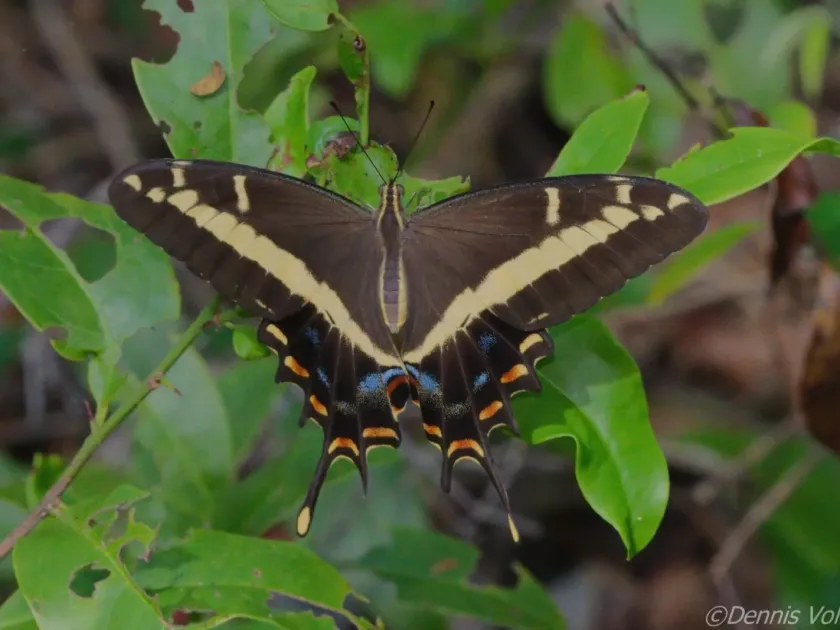
Papilio andraemon, commonly known as the Andraemon swallowtail, is a member of the Papilionidae family. Adults are large butterflies with a wingspan of 9–10 cm, featuring dark wing patterns with distinctive yellow spots and long tails on the hindwings.
The larvae, or caterpillars, undergo significant morphological changes throughout their growth. In their early instars, they mimic bird droppings to effectively camouflage themselves against predators.
As they mature, the larvae become bright in color and develop a specialized organ called an osmeterium. This gland can be everted when the caterpillar feels threatened, releasing a pungent scent to deter enemies.
Pupae of Papilio andraemon are typically shaped like dried leaves or twigs. They attach themselves to the host plant with a silk girdle, providing excellent camouflage against natural predators.
The life cycle consists of the egg stage, five larval instars, the pupal stage, and the adult butterfly. Development is most rapid in warm, humid tropical and subtropical environments.
What it damages
The primary hosts for this pest are members of the Rutaceae family, particularly citrus crops such as lemons, oranges, limes, and grapefruits.
The larvae are voracious feeders, focusing their grazing activities on the tender leaves of young shoots. This feeding habit can rapidly strip a branch of its foliage.
In cases of severe infestation, entire trees can be defoliated. This loss of foliage reduces the plant's photosynthetic capacity, leading to weakened tree vigor and substantial yield loss.
The pest is especially damaging to young nursery saplings, where the destruction of apical buds and new leaves can permanently stunt growth or kill the young trees.
Damage caused by feeding creates entry points for various secondary fungal and bacterial pathogens, which can further jeopardize the overall health of the citrus orchard.
Signs of infestation
The first signs of infestation are ragged leaf edges where larvae have been feeding. In advanced stages, only the central veins of the leaves remain.
The presence of larval frass, appearing as dark, granular pellets on the leaves or beneath the canopy, is a clear indicator of active feeding by the caterpillars.
Close inspection of the underside of young leaves usually reveals the caterpillars, which, despite their size, are often well-hidden due to their cryptic coloration.
Evidence of rolled or webbed leaves on terminal shoots often points to caterpillar activity, as they use silk to secure leaves for protection or pupation.
Observing adult butterflies flying actively around the orchard during sunny days suggests an egg-laying period, indicating that monitoring for fresh egg clusters is necessary.
Control measures
Hand-picking the larvae is a highly effective and environmentally friendly control method for small-scale gardens or when the infestation density is low.
Biological control using Bacillus thuringiensis-based products is effective against young larvae while ensuring minimal impact on beneficial insects and pollinators.
In large-scale commercial citrus production, systemic or contact insecticides registered for citrus use are utilized to manage significant population outbreaks.
Integrated pest management includes regular field scouting and the mechanical removal of infested shoots, which helps prevent the spread of the pest during the season.
Promoting a healthy orchard ecosystem by encouraging natural predators, such as predatory wasps and insectivorous birds, helps to maintain the population at non-damaging levels.
Taxonomy
- Latin name
- Papilio andraemon
- Order
- Lepidoptera (butterflies)
- Family
- Papilionidae
- EPPO code
- PAPIAB
Discussion
No discussions yet — be the first.