
Dainty Swallowtail
Papilio anactus
Description
How to identify
The Dainty Swallowtail (Papilio anactus) belongs to the Papilionidae family, order Lepidoptera. The adult butterfly features a distinct black and white pattern on its wings with vibrant orange and blue spots on the hindwings.
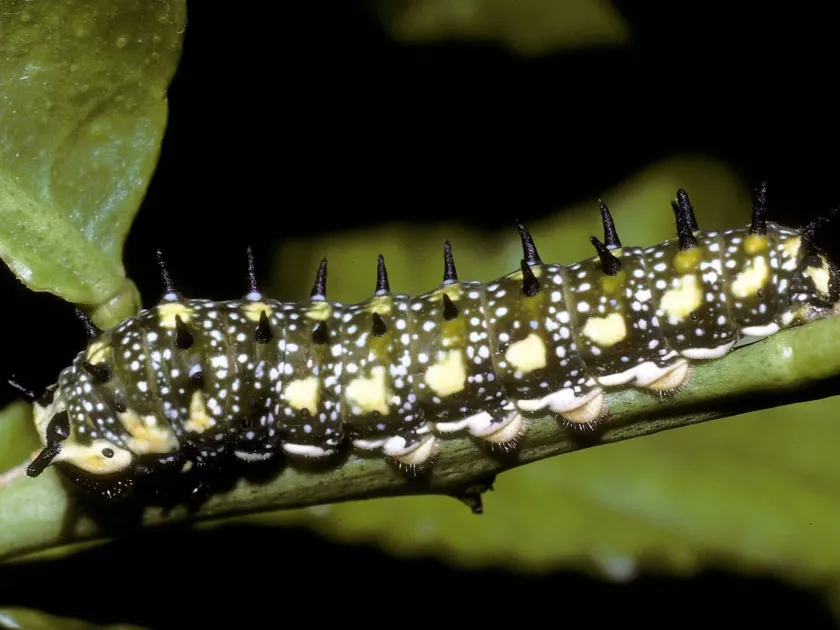
The caterpillars undergo several developmental stages, changing their appearance significantly. In the early stages, they mimic bird droppings, which serves as an excellent camouflage from predators during the daytime.
Adult specimens can reach a wingspan of up to 100 mm. Their bodies are covered in dark hairs, and the wings feature iconic "tails" characteristic of the Papilio genus.
The insect's life cycle includes a complete metamorphosis: egg, larva (caterpillar), pupa, and adult. The duration of this process varies based on local environmental temperatures.
The pupa attaches to the plant stem with a silk girdle. It possesses protective coloration that mimics small twigs or bark, making it highly difficult to spot in a garden setting.
What it damages
The primary hosts for Dainty Swallowtail larvae are members of the Rutaceae family, specifically citrus crops. The pest thrives on lemon, orange, mandarin, and grapefruit trees.
In addition to cultivated varieties, caterpillars can consume the leaves of wild citrus species, allowing the population to persist in areas surrounding private gardens or orchards.
Signs of infestation
The most obvious sign of infestation is defoliation, particularly on young shoots. The caterpillars have a ravenous appetite and can strip a branch of its leaves in a very short time.
The presence of frass (caterpillar droppings) on the leaves is often the first indicator for a gardener that this pest is active on their citrus trees.
Control measures
The simplest and most effective control method for small gardens is manual removal of the caterpillars during the morning or evening, when they are most active on the foliage.
In cases of severe infestation, the use of biological insecticides containing Bacillus thuringiensis is recommended, as they are safer for beneficial insects while effectively targeting lepidopteran pests.
Preventative measures include regular inspection of citrus trees throughout the growing season. Maintaining a clean garden and removing weeds nearby can also help minimize the butterfly's interest in the area.
Taxonomy
- Latin name
- Papilio anactus
- Order
- Lepidoptera (butterflies)
- Family
- Papilionidae
- EPPO code
- PAPIAN
Discussion
No discussions yet — be the first.