
Tailed Jay
Papilio agamemnon
Description
How to identify
The Tailed Jay (Papilio agamemnon) is a prominent member of the Papilionidae family, known for its rapid flight and distinctive appearance.
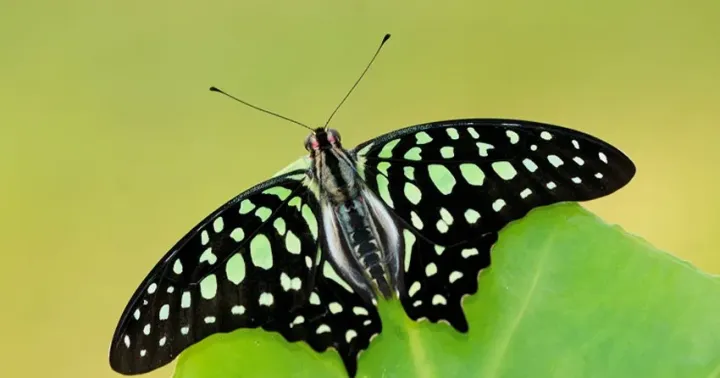
Adult butterflies exhibit a striking pattern of green spots and stripes against a black background, making them easily identifiable in the field.
The larvae are bright green, often with yellow spots, and possess a tapered body shape that helps them blend into the foliage.
The species undergoes complete metamorphosis: egg, larva, pupa, and adult, with the larval stage being the primary cause of damage.
The pupa is uniquely shaped to resemble a leaf, providing excellent camouflage against predators in the canopy of the host tree.
What it damages
The Tailed Jay is primarily a pest of the Rutaceae family, with citrus trees being the most frequent targets for its larvae.
Caterpillars feed voraciously on young, tender leaves, which can lead to significant defoliation of nursery saplings.
In orchards, heavy infestations can reduce the photosynthetic capacity of the plants, negatively impacting overall tree health and vigor.
While mature trees can usually tolerate some feeding, young trees are particularly vulnerable to growth stunting from persistent feeding.
The damage often starts at the tips of shoots, preventing the development of new growth and affecting the architectural balance of the tree.
When it appears
The Tailed Jay is most active in warm, humid climates where its host plants grow throughout the year.
Breeding cycles are closely linked to the availability of new leaf flushes on citrus plants, which provide essential nutrition for larvae.
In seasonal climates, populations peak during the spring and summer months when temperatures are optimal for larval development.
Multiple generations can occur within a single year, necessitating sustained monitoring throughout the growing season.
Emergence of adults typically occurs shortly after the onset of favorable weather, marking the beginning of the egg-laying cycle.
Signs of infestation
The most immediate sign of infestation is the presence of irregular bite marks along the edges of new leaves.
Frass (larval excrement) found on the leaves or the ground beneath the canopy is a clear indicator of active feeding.
Visual observation of the caterpillars, which often rest on the underside of leaves or along the midrib for protection.
Wilting or abnormal curling of young leaves due to structural damage caused by the larvae during their feeding stages.
- Leaves with significant portions missing or skeletonized.
- Tapered, green caterpillars observed on stems.
- Camouflaged pupae attached to leaves or twigs.
Control measures
Hand-picking the larvae is a practical and effective method for small-scale gardens or when infestations are discovered early.
Biological control agents, such as formulations of Bacillus thuringiensis, are highly effective against these caterpillars.
Promoting a healthy ecosystem that supports natural predators like spiders, wasps, and birds can help manage the population naturally.
Chemical insecticides should be reserved for severe outbreaks, ensuring they are applied according to label instructions to protect beneficial insects.
Regular pruning of heavily infested terminals can help remove larvae and eggs, preventing the infestation from spreading to the rest of the tree.
Taxonomy
- Latin name
- Papilio agamemnon
- Order
- Lepidoptera (butterflies)
- Family
- Papilionidae
- EPPO code
- PAPIAG
Discussion
No discussions yet — be the first.