
Old World swallowtail
Papilio
Description
How to identify
The Old World swallowtail (Papilio machaon) is a large, brightly colored butterfly of the Papilionidae family. Adults have a wingspan of 7–9 cm, characterized by yellow wings with black veins, a black border, and blue spots, along with iconic tails on the hindwings.
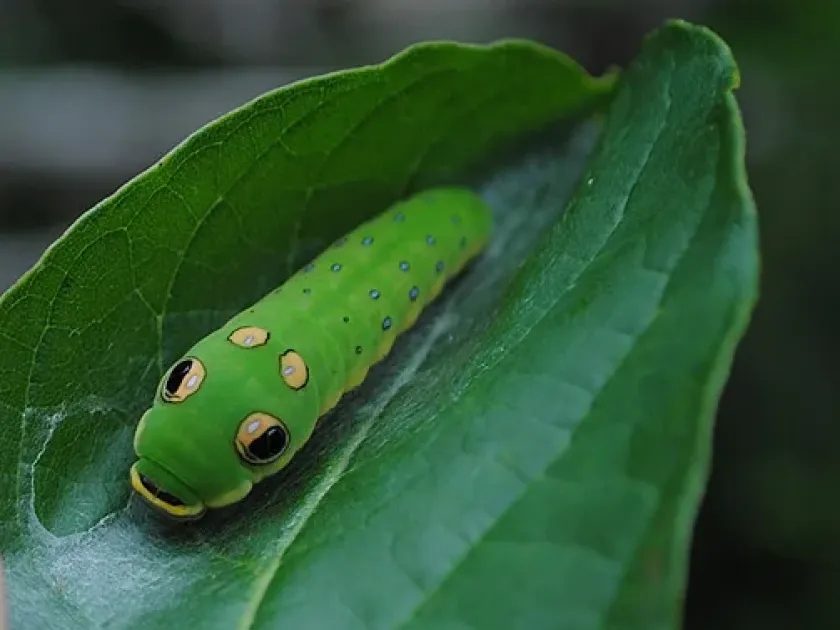
The caterpillar, in its final instar, can grow up to 5 cm long. It features a vivid green body with black transverse bands and orange-red spots, making it distinct and easily recognizable on host plants.
A key defense mechanism of the larva is the osmeterium, a fleshy, Y-shaped organ hidden behind the head. When threatened, the caterpillar protrudes this organ, which emits a foul odor to deter predators.
The pupa is angular in shape and exhibits remarkable camouflage abilities, often changing color to match the surrounding substrate, such as stems or foliage, to remain hidden.
The life cycle encompasses the egg stage, five larval instars, pupation, and the adult stage. Depending on the climate, the species may undergo one or two generations per year.
What it damages
The primary hosts of the swallowtail are members of the Apiaceae (Umbelliferae) family. This includes important commercial crops such as carrots, parsley, celery, dill, fennel, and parsnips.
While the swallowtail is rarely a major agricultural pest capable of causing total crop failure, the larvae can cause localized damage to foliage in home gardens and small-scale farms.
Damage is most pronounced during the active growth phase, as larvae consume foliage aggressively, which reduces the plant's photosynthetic capacity and weakens overall vigor.
Severe defoliation or feeding on the terminal buds can delay root development, impacting both the biomass and the marketable quality of root vegetables like carrots or parsnips.
Wild umbelliferous plants such as wild angelica or hemlock often serve as reservoirs for the population, allowing the species to persist in the vicinity of cultivated fields.
When it appears
The first generation of adults typically emerges in late spring, usually May or June, once temperatures are sufficiently high to support their flight and reproductive activities.
Eggs are laid singly on the underside of the leaves of host plants. The larval development period lasts approximately three to four weeks before the insects transition to the pupal stage.
A second generation of adults usually appears in mid-to-late summer (July-August). This period often coincides with the peak density of larvae on carrot and parsley beds.
The species overwinters as a pupa, securely attached to stems or vertical structures with a silken girdle, remaining in this state until the return of favorable spring conditions.
Agronomists should monitor crops during the peak adult flight periods to identify the onset of oviposition and prevent the establishment of significant larval populations.
Signs of infestation
The primary symptom of infestation is the irregular consumption of leaf margins or internal leaf tissue on umbelliferous crops, often leaving only the larger veins behind.
A tell-tale sign of larval activity is the presence of frass (caterpillar excrement) on the foliage and stems, which can contaminate the harvested parts of the plant.
Visual inspections of the plants are usually highly effective, as the brightly colored caterpillars are conspicuous against the green foliage if they are not actively hiding.
In cases of heavy infestation, plants may show significant defoliation, with stems becoming bare as larvae strip the soft plant tissues from the structure.
During routine garden maintenance or weeding, one may inadvertently trigger the caterpillar's defense mechanism, causing the sudden protrusion of the bright orange osmeterium.
Control measures
For small-scale or garden plots, manual collection and disposal of the caterpillars is the most effective, simple, and environmentally friendly control method available.
The application of biological insecticides, specifically those based on Bacillus thuringiensis, offers effective control of larvae without harming beneficial insects or local pollinators.
Implementing proper weed management by removing wild Apiaceae species near crop fields reduces potential breeding sites and prevents the population from migrating to crops.
In commercial agriculture, chemical interventions are rarely necessary given the species' typically low impact, but selective insecticides can be used if economic thresholds are exceeded.
- Regular crop scouting.
- Crop rotation practices.
- Use of row covers for young seedlings.
- Maintenance of high-quality agricultural practices.
Taxonomy
- Latin name
- Papilio
- Order
- Lepidoptera (butterflies)
- Family
- Papilionidae
- EPPO code
- PAPISP
Discussion
No discussions yet — be the first.