
Panchlora exoleta
Panchlora exoleta
Description
How to identify
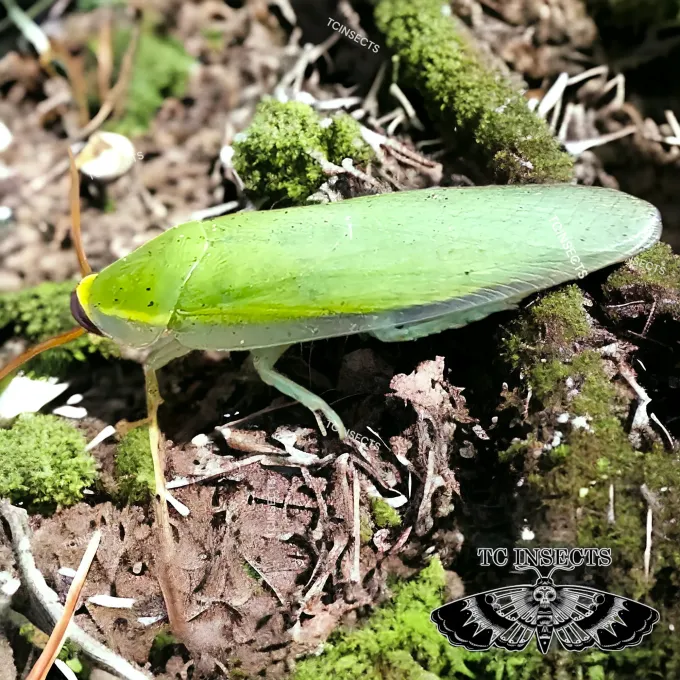
Panchlora exoleta is a species of cockroach belonging to the Blaberidae family. It is distinctively known for its bright green or pale lime coloration, which provides excellent camouflage among foliage.
The adult insect has an oval, flattened body shape, typically measuring between 15 and 25 mm in length, and is capable of flight, allowing it to navigate within greenhouses efficiently.
Nymphs of this species undergo several molting stages, shifting from a darker, brownish hue to the characteristic green appearance of the adults as they mature.
As a tropical and subtropical species, it thrives in warm and humid environments, often colonizing greenhouse facilities where consistent climate conditions are maintained.
Unlike common domestic cockroaches, this species prefers a vegetative environment and is rarely found inside residential buildings unless vegetation is present.
What it damages
The primary damage caused by Panchlora exoleta occurs in greenhouses, where they feed on young shoots, tender leaves, and developing floral buds.
Feeding damage is particularly severe on young seedlings, where the consumption of growing points can lead to stunted growth or total plant deformation.
These insects create irregular holes in leaves, which significantly reduces the aesthetic and commercial value of ornamental plants and flowers.
Beyond direct tissue removal, the feeding sites serve as entry points for secondary fungal and bacterial pathogens, leading to plant tissue decay.
In high-density infestations, the sheer volume of leaf tissue consumption can cause rapid decline in plant health, requiring immediate intervention to protect the crop.
When it appears
In tropical climates, the species is active throughout the year, but in temperate regions, its activity is strictly limited to indoor environments like greenhouses.
The optimal development of eggs and nymphs occurs at temperatures between 25°C and 30°C, with high humidity levels favoring rapid reproduction.
New greenhouse facilities are typically infested through the transport of contaminated soil, potting media, or ornamental plants imported from regions where the species is established.
During colder periods, if the greenhouse temperature drops, these insects move into the substrate or hide within the structural components of the facility.
The breeding cycle is continuous in well-heated greenhouses, allowing the population to increase rapidly if monitoring and control are not maintained.
Signs of infestation
The presence of Panchlora exoleta is often signaled by the appearance of tiny black droppings on the undersides of leaves and on the surface of potting soil.
Ragged, irregular holes in the middle or edges of leaves are a primary diagnostic sign of nocturnal feeding by both nymphs and adults.
Finding cast-off chitinous skins (exuviae) scattered on the soil surface is a clear indicator that a growing population is present and molting.
A nocturnal inspection with a flashlight will reveal the presence of adults, which are sensitive to light and will quickly scuttle away to hide behind stems or leaves.
An unusual, sweet or musty odor may be detected near the plants when the population density becomes high, caused by defensive glandular secretions.
Control measures
Effective management requires a combination of strict sanitation, regular monitoring, and, when necessary, targeted insecticide applications.
Cleaning out plant debris, removing old substrate, and minimizing hiding places are essential first steps in reducing the environmental suitability for the species.
Biological control options, including the use of entomopathogenic fungi or nematodes, can target the larval stages effectively within the soil medium.
Chemical control should be applied with precision, focusing on greenhouse cracks and crevices rather than direct foliar application to minimize chemical footprint.
- Use sticky traps for early detection of pest activity.
- Quarantine all new plant material before introducing it into the greenhouse.
- Seal cracks in greenhouse structures to prevent migration.
- Implement good irrigation management to avoid excessive humidity in the root zone.
Taxonomy
- Latin name
- Panchlora exoleta
- Order
- Orthoptera (locusts)
- Family
- Gryllidae
- EPPO code
- PANCEX
Discussion
No discussions yet — be the first.