
Fall cankerworm
Paleacrita vernata
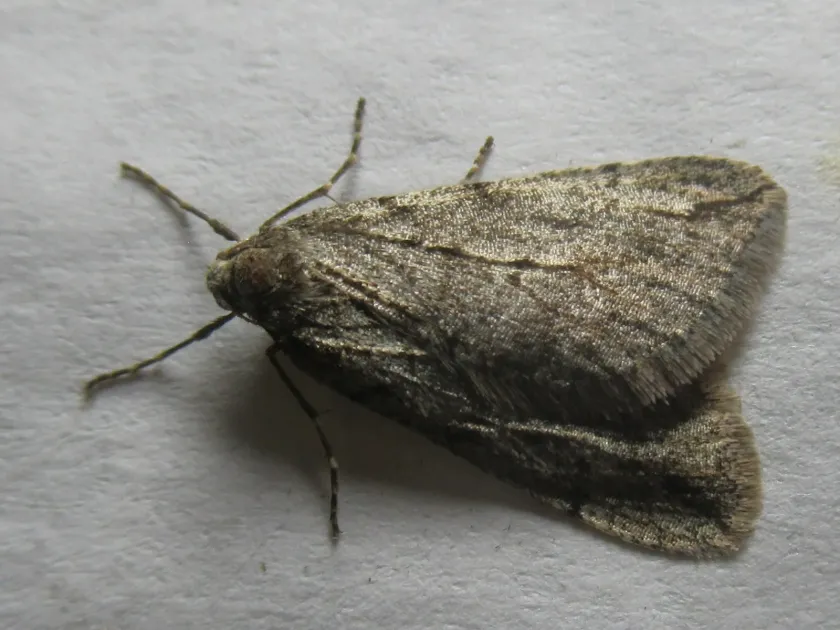
Description
How to identify
The Fall cankerworm (Paleacrita vernata), despite its name, is primarily a spring-feeding pest belonging to the Geometridae family. Adults exhibit distinct sexual dimorphism: males are winged moths, while females are flightless.
The males possess brownish-grey wings with faint, wavy transverse lines. The females, which appear rather spider-like, are wingless and move by crawling up the trunks of trees to lay eggs.
The larvae are classic "inchworms." They exhibit the typical looping movement because they possess only two pairs of abdominal prolegs, a unique trait within the Geometridae family.
Larval coloration varies significantly, ranging from light green to dark brown or even black, often adorned with pale longitudinal stripes along the body.
The pupal stage occurs in soil cells, typically several inches deep, where the insect remains dormant through the warmer months and winter before emerging in the early spring.
What it damages
The Fall cankerworm is a polyphagous defoliator, frequently infesting Rosaceae plants, including apple, cherry, plum, and pear trees, causing significant economic damage.
Beyond fruit trees, this pest is commonly found on various hardwood species such as oak, elm, maple, and linden, serving as a widespread nuisance in both forests and urban landscapes.
Young larvae feed on the tender tissues of expanding buds and unfolding leaves, causing them to appear ragged or stunted early in the growing season.
Mature larvae are voracious feeders that can strip trees completely of their foliage, a phenomenon often referred to as "defoliation," which stresses the plant significantly.
Severe infestations can lead to reduced fruit quality, decreased tree vigor, and, if the defoliation persists over several years, the potential mortality of weaker host trees.
When it appears
The life cycle is tightly synchronized with the early spring growth phase. Adults emerge from the soil as soon as temperatures rise, usually in late winter or very early spring.
Females crawl up the trunks to deposit masses of eggs in crevices of bark, typically near the developing buds, ensuring larvae have immediate access to food upon hatching.
Larval emergence typically aligns with the bud-break stage of host trees, ensuring that the most tender and nutritious plant parts are available for the developing insects.
The larvae continue to feed for about four to six weeks. Once they complete their final larval stage, they drop to the ground using silk threads to pupate in the soil.
There is only one generation per year, meaning the entire population is synchronized, which makes timing for control interventions very precise.
Signs of infestation
The earliest signs of infestation include small, shothole-like feeding punctures in the newly emerging leaves, often accompanied by the presence of silk webbing.
- Ragged leaves resulting from larvae eating away the soft tissue while leaving veins intact.
- Larvae hanging from branches by silk threads, which is a common defense mechanism when disturbed.
- Stunted or damaged flower clusters that may wither and fail to produce fruit.
- Presence of flightless females crawling on the bark during early spring evenings.
- Accumulation of dark, pellet-like frass (excrement) on the leaves or beneath the canopy.
Heavy infestations are easily detected by the thin, gauzy appearance of the tree canopy as the foliage is systematically consumed by the caterpillar population.
Control measures
Sticky bands applied to the trunk in early spring serve as a mechanical barrier, preventing the flightless females from ascending the tree to lay eggs.
Biological control measures, such as the application of Bacillus thuringiensis (Bt), are highly effective against young larvae while remaining safe for beneficial pollinators.
Cultivation of the soil around the base of trees in the late summer or autumn can help disrupt the pupal cells and expose them to predators and desiccation.
Chemical control should be reserved for severe outbreaks and applied during the early larval stages when the caterpillars are most vulnerable to contact insecticides.
Encouraging natural predators, including predatory wasps, beetles, and insectivorous birds, is a sustainable long-term strategy for managing cankerworm populations.
Taxonomy
- Latin name
- Paleacrita vernata
- Order
- Lepidoptera (butterflies)
- Family
- Geometridae
- EPPO code
- PALCVE
Discussion
No discussions yet — be the first.