
Palaeocimbex
Palaeocimbex
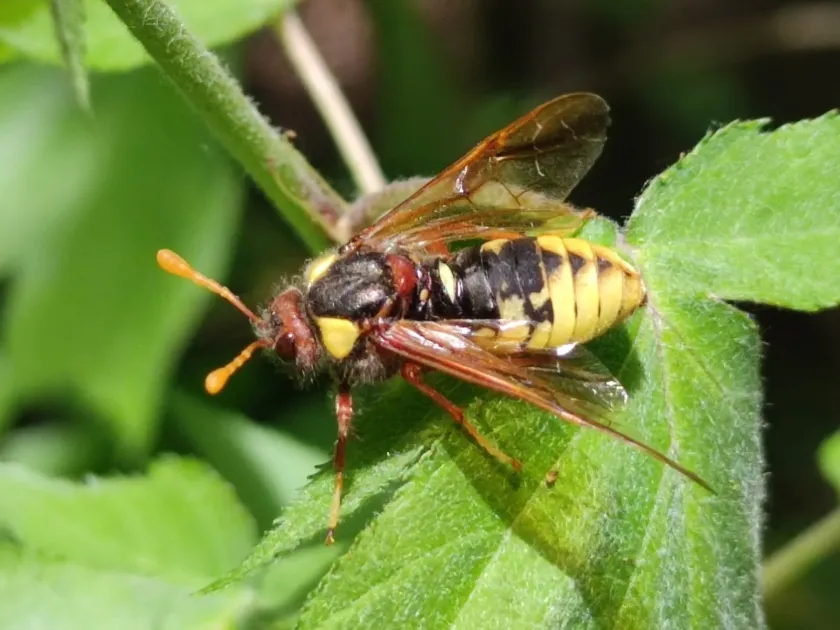
Description
How to identify
Palaeocimbex is a genus of insects belonging to the order Hymenoptera and the family Cimbicidae, commonly known as club-horned sawflies. These insects are relatively large and robust, often mimicking the appearance of bumblebees or large wasps.
Adults possess distinct club-shaped antennae, which is the primary morphological characteristic of the family. Their body coloration is usually dark, sometimes featuring a metallic sheen or yellowish markings on the abdominal segments.
The larvae resemble butterfly caterpillars but can be distinguished by a higher number of prolegs. They generally feed openly on the surface of leaves, making them quite visible during the active feeding stages.
The life cycle is closely linked to deciduous trees and shrubs, which provide the necessary nutrition for larval development. The insect undergoes a complete metamorphosis involving egg, larval, pupal, and adult stages.
Correct identification of this pest is crucial for effective management in gardens and forests, as it ensures that control efforts are specifically targeted rather than directed at harmless or beneficial pollinators.
What it damages
The primary damage is caused by the larvae, which feed voraciously on the leaf blades of host plants. They prefer various deciduous tree and shrub species as their primary food source.
In forest and park environments, this pest can cause significant defoliation when population levels are high. Severe skeletonization of the leaves reduces the plant's ability to photosynthesize, leading to general physiological weakness.
Repeated damage over several seasons can severely hinder the growth of young trees and saplings. This makes them more susceptible to secondary stressors, such as pathogens or environmental changes.
Damage becomes most apparent in mid-summer, the peak period of larval activity. In cases of heavy infestation, trees can experience premature leaf drop, which impacts their overall health and aesthetic appeal.
The economic impact is primarily related to the reduction in growth rates and the loss of aesthetic value in ornamental plantings, often requiring supplemental care to restore tree vitality.
When it appears
Adult Palaeocimbex typically emerge in late spring when stable, warm weather conditions allow for mating and egg-laying on fresh foliage. This timing marks the beginning of the seasonal cycle.
Larval feeding occurs primarily during the first half of the summer, which is the most critical time for monitoring. Rapid growth during this period allows the larvae to consume significant amounts of plant tissue.
After completing their development, the larvae descend to the soil or find protected spots under bark to pupate. Most species follow a univoltine cycle, meaning there is only one generation per year.
Weather patterns, particularly spring temperature and humidity, play a significant role in larval survival and population density. Favorable conditions can lead to rapid outbreaks in specific locations.
Early detection of adult activity in the spring is essential for timely management, allowing for the implementation of control measures before the larvae reach their most destructive feeding stage.
Signs of infestation
The most common sign of infestation is the presence of irregular holes or notched edges on the leaves. Larvae often rest in a curled position, which is a characteristic defense mechanism.
Accumulation of larval frass (droppings) on the leaves or the ground beneath the canopy is a clear indicator that a population is present. This debris can often be seen on lower branches.
Visual inspection of the canopy, especially during morning or evening hours, allows for easy detection of the larvae. Due to their size, they are easily visible to the naked eye.
Infested plants may appear stunted, with visible signs of stress in the leaves and reduced annual shoot growth. In severe cases, partial branch dieback may occur if the plant is under continuous pressure.
The presence of these sawflies may also draw predators to the area, such as birds or predatory insects, which can act as a natural regulator of the pest population.
Control measures
Mechanical control, such as hand-picking the larvae, is highly effective for smaller plants or isolated infestations. This approach is environmentally friendly and requires no chemical inputs.
Biological control using microbial insecticides based on specific bacteria or viruses is an effective method for larger infestations, as these agents target sawflies without harming beneficial pollinators.
Chemical intervention should be reserved for severe outbreaks where plant health is significantly threatened. Always ensure that products are used according to label instructions and local regulations.
Good horticultural practices, including proper irrigation, fertilization, and general tree maintenance, enhance the plant's resilience. Healthy plants are better equipped to recover from pest-related damage.
- Regular inspection of foliage during the spring and summer.
- Promoting biodiversity to encourage natural predators and birds.
- Clearing leaf litter in the autumn to disrupt pupation sites.
- Monitoring for adult presence using visual or pheromone traps.
Taxonomy
- Latin name
- Palaeocimbex
- Order
- Hymenoptera
- Family
- Cimbicidae
- EPPO code
- PALBSP
Discussion
No discussions yet — be the first.