
Palaeochrysophanus
Palaeochrysophanus
Description
How to identify
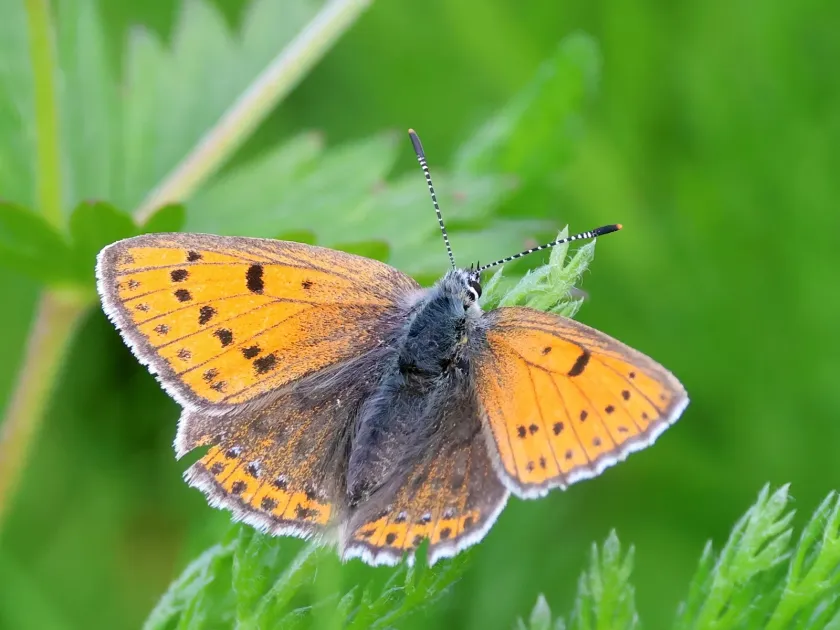
Palaeochrysophanus is a genus of butterflies within the Lycaenidae family that can occasionally act as pests on ornamental or wild plant species. Adult butterflies are characterized by distinct wing patterns, often displaying metallic or coppery hues.
The larvae of this genus possess a typical slug-like shape common to many members of the Lycaeninae subfamily. Their coloration is usually green, which provides excellent camouflage against the foliage of host plants.
The life cycle involves complete metamorphosis: egg, larva (caterpillar), pupa, and adult. While adults feed on nectar, the primary agricultural impact is caused by the larval stage, which consumes vegetative parts of the plant.
Developmental speed is highly dependent on ambient temperature and humidity levels. Optimal conditions promote rapid progression through larval instars, potentially leading to significant population spikes in agricultural fields.
Accurate species identification often requires professional examination of morphological features, such as genital structures, as visual similarities with other Lycaenidae species can complicate field diagnosis.
What it damages
This pest primarily affects various herbaceous plants, including wild species found near field borders. Host plants often belong to the Polygonaceae and Rosaceae families, which are widespread in many regions.
Larvae feed on leaf tissue, starting from the margins or creating holes within the leaf blade. Under high population density, significant defoliation may occur, weakening the overall vigor and physiological health of the plant.
Secondary damage is often caused by the creation of wounds that act as entry points for various fungal and bacterial pathogens, leading to further decay of the plant tissue.
Although large-scale crop failure is rare, the presence of these larvae in nurseries and specialty gardens requires active management. Damage to leaves directly reduces the photosynthetic capacity and market value of plants.
Early instar larvae represent the most significant threat, as their feeding activity is frequently overlooked until substantial damage becomes visible on the foliage of crops or ornamental shrubs.
When it appears
Adult activity typically occurs during the summer months, usually from June through August. The flight period is often extended, depending on the climatic conditions of the specific geographic region.
Egg laying occurs primarily on the surface of host plant leaves. Embryonic development usually takes one to two weeks, heavily influenced by prevailing temperatures during the season.
Larvae exhibit peak feeding activity during daylight hours when temperatures support efficient metabolism. During the night, they often seek refuge in leaf axils or near the base of the plant stem.
Pupation often takes place on the plant itself or within the surface litter, with the pupa sometimes entering a winter diapause state. This makes effective control difficult during late autumn periods.
Monitoring during the peak adult flight period is crucial for agronomic success, as it allows growers to predict egg-laying patterns and manage subsequent larval infestations early.
Signs of infestation
The initial signs of infestation include the appearance of irregular holes on leaf blades. Affected leaves may show signs of tissue thinning, often accompanied by the presence of larval frass.
Careful inspection of the leaf undersides may reveal small eggs, usually laid singly or in small clusters. Detecting these requires close observation with the aid of a magnifying tool.
Leaf rolling or the presence of light webbing can also indicate the presence of larvae. As the larvae mature, they become increasingly conspicuous due to their larger size and more intense feeding activity.
Wilting of specific shoots in the absence of obvious root diseases can sometimes be an indirect indicator of stem or petiole damage caused by the larvae.
The sightings of adult butterflies in or near agricultural fields serve as a prompt to initiate weekly scouting to monitor population dynamics and prevent major outbreaks.
Control measures
Agronomic control methods primarily involve effective weed management, as wild hosts can serve as reservoirs for this pest. Maintaining clean field borders and surrounding vegetation is essential.
Biological control agents, such as formulations containing Bacillus thuringiensis, demonstrate high efficacy against lepidopteran larvae when applied according to the manufacturer’s instructions.
Chemical control is considered a last resort, used only when the economic threshold is exceeded. Systemic insecticides approved for agricultural use are effective when targeted at active larval populations.
- Regular removal of host weeds to break the life cycle.
- Encouragement of natural predators, such as insectivorous birds and parasitic wasps.
- Utilization of pheromone traps to monitor adult presence.
- Timely insecticide application during periods of peak larval feeding.
Integrated pest management, combining systematic monitoring with cultural practices, allows for effective population control while minimizing reliance on broad-spectrum chemical interventions.
Taxonomy
- Latin name
- Palaeochrysophanus
- Order
- Lepidoptera (butterflies)
- Family
- Lycaenidae
- EPPO code
- PALKSP
Discussion
No discussions yet — be the first.