
Grass shrimp
Palaemonetes varians
Description
How to identify
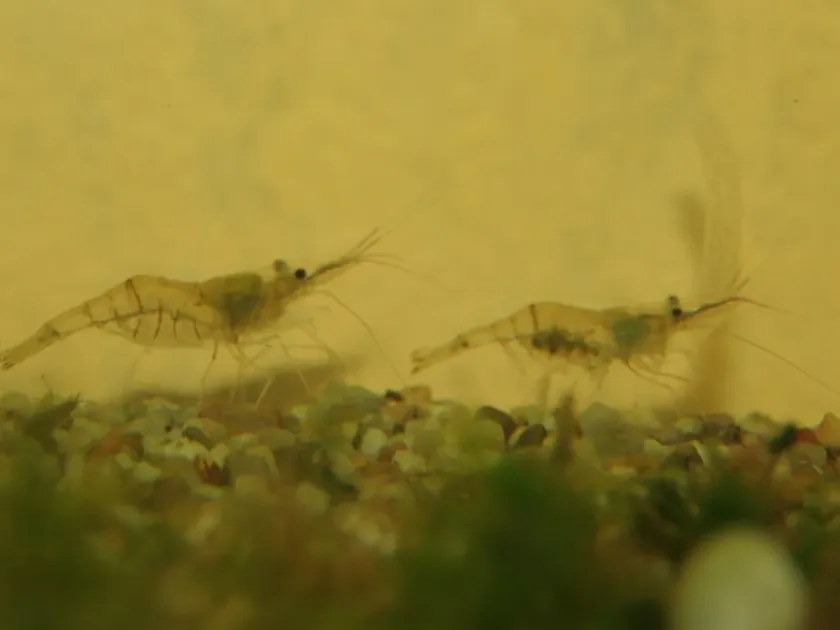
The grass shrimp Palaemonetes varians belongs to the order Decapoda and the family Palaemonidae. It is a small, semi-transparent crustacean reaching 3–5 cm in length.
These shrimps possess an elongated body, a prominent serrated rostrum, and long antennae. Their coloration usually ranges from transparent-gray to greenish, providing effective camouflage.
Reproduction occurs during spring and summer. Females carry eggs on their pleopods until larvae hatch and undergo metamorphosis in the water column.
This species is euryhaline, meaning it survives in both fresh and brackish water, making it highly adaptable to various irrigation water conditions.
High fecundity rates allow populations to rapidly colonize new areas if sufficient organic matter and microbial food sources are available.
What it damages
Primary damage occurs in rice paddies and aquatic nurseries. Shrimps feed on young rice sprouts, damaging the root systems and tender stems during early growth stages.
The damage manifests as gnawing of the roots, which causes seedling lodging and eventual death due to the plant's inability to absorb nutrients.
Beyond direct feeding, shrimp activity disturbs the silt layer and increases water turbidity, which hinders the photosynthesis of submerged plant parts.
High population densities per square meter can lead to total crop failure in specific areas of the paddy due to the destruction of young seedlings.
Furthermore, these crustaceans may act as vectors, transporting pathogens between different parts of the field and worsening the overall phytosanitary status.
Signs of infestation
The first indicator of infestation is the presence of numerous semi-transparent individuals in the water during visual inspections of rice paddies.
Massive gaps in seedling emergence where rice seeds were previously sown indicate that they have been consumed by the crustaceans.
Inspection of damaged plant root systems reveals characteristic gnawed edges, often missing primary root structures entirely.
Unexpected water turbidity, not caused by weather or agricultural machinery, is a common sign of bottom-dwelling pest activity.
Wilted and yellowing young plants, despite adequate water levels, serve as secondary evidence of subterranean damage by the shrimp.
Control measures
The main control method involves comprehensive agrotechnical procedures focused on adjusting the hydrological regime in rice paddies.
Temporary draining of the paddies during critical rice development stages is highly effective as it leads to the desiccation and death of the shrimp population.
Implementation of hydraulic improvements, such as installing protective screens on sluice gates, prevents shrimp from entering the cultivation area.
Biological control, such as introducing predatory fish that feed on crustaceans, significantly reduces pest numbers without chemical intervention.
In severe cases, authorized contact insecticides may be used, provided that strict environmental regulations are followed to protect beneficial aquatic life.
Taxonomy
- Latin name
- Palaemonetes varians
- Family
- Palaemonidae
- EPPO code
- PALMVA
Discussion
No discussions yet — be the first.