
Green crab
Carcinus
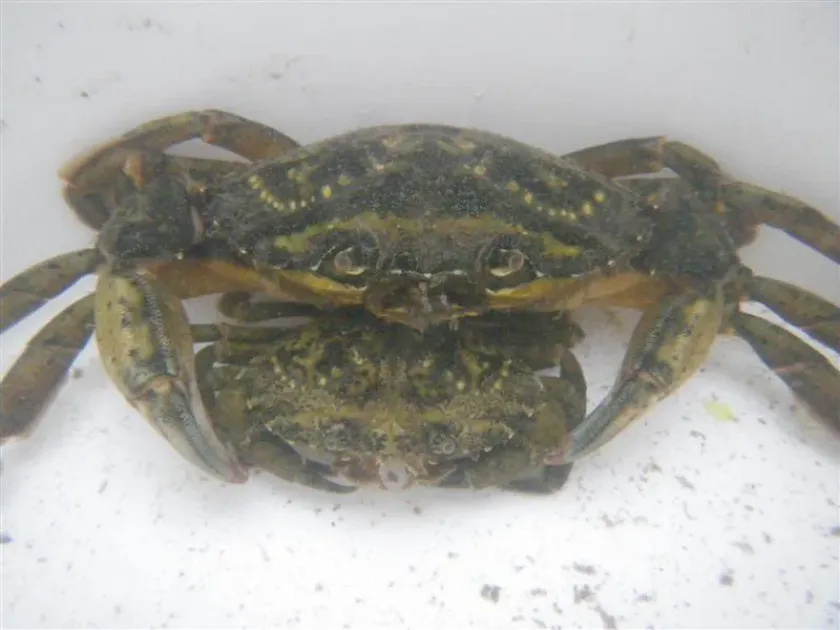
Description
How to identify
The green crab (Latin Carcinus maenas) is a member of the Decapoda order and the Carcinidae family. It is a highly invasive species known for its hard carapace with five distinct teeth on each side.
Adult crabs typically reach a carapace width of about 9 to 10 centimeters. Their color varies from dark green to orange-red depending on their molting phase and environmental conditions.
They possess an impressive ability to adapt to varying water salinities, allowing them to thrive in estuaries, coastal marshes, and rocky intertidal zones.
The morphology includes unequal claws: a large "crusher" claw for opening shells and a sharper "cutter" claw for manipulating soft tissues.
As a widely spread invasive species, it significantly alters the balance of marine ecosystems by outcompeting native crab and fish species for food and shelter.
What it damages
The green crab is a notorious pest in the aquaculture industry, specifically targeting bivalve mollusks such as mussels, oysters, and scallops.
By using their crushing claws, they can easily breach the shells of young mollusks, leading to substantial losses in commercial farming operations.
Beyond direct predation, green crabs damage infrastructure by cutting through nylon netting and plastic mesh used to protect the cultivated organisms.
Their burrowing behavior disrupts the stability of bottom substrates, which can harm the growth of seagrasses and other benthic organisms critical to the ecosystem.
Competitive behavior limits the available resources for native species, causing an overall decline in local biodiversity and farm productivity.
When it appears
Green crab activity is highly dependent on water temperature. They are most active and feed voraciously when temperatures rise above 10-15 degrees Celsius.
During the spring and summer months, they migrate toward shallower waters to feed and mate, increasing their interaction with aquaculture sites.
Reproduction occurs during the warmer season, resulting in planktonic larvae that can spread across vast distances via ocean currents.
As water temperatures drop in the winter, crabs often migrate to deeper, more stable environments, although they remain active in some regions throughout the year.
Understanding these seasonal movements is essential for timing preventative measures and setting up traps effectively before the peak feeding season.
Signs of infestation
The most evident sign of green crab presence is the discovery of broken or neatly opened bivalve shells near the cultivation plots.
Regular night-time monitoring with specialized lights often reveals high concentrations of crabs near nets and oyster bags.
A sudden decline in the density of young mollusks in a managed farm, when disease is ruled out, is a strong indicator of crab predation.
Catching specimens in traps placed specifically for population assessment provides direct confirmation of an infestation in the area.
Visible damage to cage integrity, such as fraying or holes in netting, points to the presence of large, aggressive crabs attempting to reach the content inside.
Control measures
Trapping is the primary control method; using baited traps requires frequent inspection and removal of captured crabs to keep the population density low.
Physical exclusion is effective: wrapping oyster bags or mussel socks in heavy-duty, small-mesh wire cages prevents crabs from reaching their prey.
Commercial harvesting and finding market uses for green crabs (such as in fishmeal or as specialty food) can provide economic incentives for population control.
Strict biosecurity measures, such as cleaning equipment and avoiding the transfer of water from infested areas, are crucial to preventing further spread.
Continuous monitoring programs using standardized catch-per-unit-effort data help managers decide when to escalate control efforts during the peak growth season.
Taxonomy
- Latin name
- Carcinus
- Family
- Palaemonidae
- EPPO code
- CRCNSP
Discussion
No discussions yet — be the first.