
Green crab
Carcinus maenas
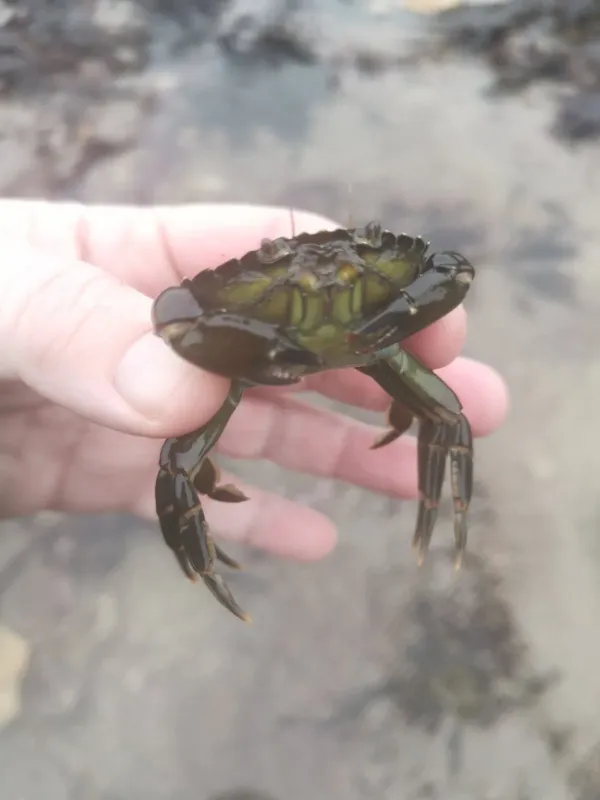
Description
How to identify
The green crab (Latin Carcinus maenas) is a member of the Decapoda order and the Carcinidae family. It is a highly invasive species known for its ability to survive in varying environments.
Adult crabs feature a carapace reaching up to 9 cm in width, typically appearing green, brown, or red, allowing them to blend seamlessly into their rocky or muddy habitats.
The life cycle involves a pelagic larval stage, which allows the species to travel long distances via ocean currents, making them notoriously difficult to eradicate.
Green crabs reach sexual maturity quickly and have a high reproductive rate, with females producing hundreds of thousands of eggs per spawning season.
Equipped with powerful claws, these crustaceans are highly aggressive predators that dominate their surroundings, often outcompeting native marine life for resources.
What it damages
The green crab causes significant damage to coastal vegetation by uprooting seagrasses, such as Zostera, while searching for prey or building burrows in the seabed.
In aquaculture, these crabs are a major threat to shellfish farms, as they use their strong claws to crack the shells of young mussels and oysters, causing substantial losses.
Their constant digging and burrowing activities disrupt the substrate stability, leading to increased erosion and the loss of essential rooting areas for marine plants.
By consuming native prey species and destroying plant cover, green crabs destabilize the entire local ecosystem, making it unsuitable for commercial cultivation.
The cumulative effect of their presence is a reduction in biodiversity and habitat degradation, which negatively impacts the long-term health of coastal environments.
Signs of infestation
A primary indicator of a green crab infestation is the discovery of fragmented bivalve shells scattered around aquaculture equipment or along the shoreline.
Visible excavations, burrows, and disturbed sediment areas near plant roots indicate high crab activity, leading to the exposure and eventual death of vegetation.
- Shattered mussel or oyster shells found in growing areas.
- Evidence of tunnels or holes in the bottom substrate.
- Damaged mesh or netting on aquaculture cages and pens.
- A noticeable decline in submerged aquatic vegetation density.
- Direct observation of crabs during nighttime monitoring efforts.
Control measures
Trapping is the most effective and common method for managing green crab populations, utilizing specially designed traps to capture and remove individuals from vulnerable areas.
Implementing physical barriers, such as durable mesh netting, helps protect young shellfish and sensitive plant habitats from direct predation by the crabs.
Regular monitoring of the site allows for early detection, enabling farmers to implement removal strategies before the population reaches an uncontrollable level.
Biological control, including the encouragement of native predators that feed on juvenile crabs, can serve as a sustainable long-term population management tool.
Strict biosecurity protocols during the transportation of equipment and stock are essential to prevent the accidental introduction of green crabs to new geographical locations.
Taxonomy
- Latin name
- Carcinus maenas
- Family
- Palaemonidae
- EPPO code
- CRCNMA
Discussion
No discussions yet — be the first.