
Grass shrimp
Palaemonetes elegans
Description
How to identify
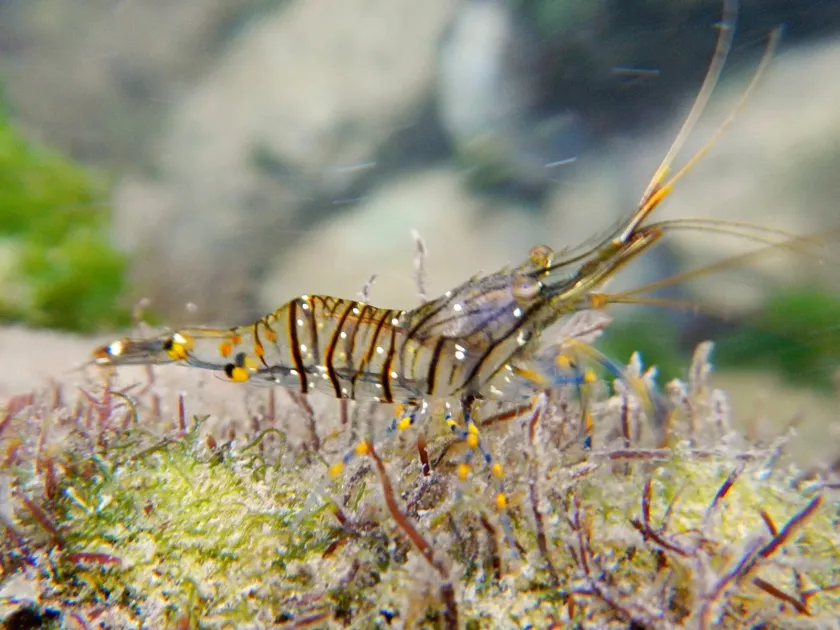
The grass shrimp (Palaemonetes elegans) belongs to the order Decapoda and the family Palaemonidae. This small crustacean typically measures between 3 and 6 centimeters in length and is characterized by a transparent body.
The species can be identified by the specific serrated rostrum and its ability to adapt to a wide range of salinities and water temperatures. These physical features make it highly effective at concealing itself in aquatic vegetation.
The life cycle involves larval stages that develop in the water column. Females carry their eggs on their pleopods, ensuring the protection of offspring until they are ready to transition to a benthic lifestyle in the water body.
Due to their high ecological plasticity, these shrimp thrive in artificial water systems, such as flooded rice paddies, where they find abundant organic matter and protection from larger predators.
The reproductive rate is high during warmer months, which often coincides with the initial growth stages of rice, leading to potential clashes between the crustacean's habitat and agricultural goals.
What it damages
Grass shrimp are known to cause significant damage to young rice seedlings. They graze on the delicate roots and developing shoots of the rice plant, leading to stunted growth or the total loss of seedlings.
High population densities of Palaemonetes elegans can result in sparse rice stands, requiring farmers to perform re-seeding, which leads to increased production costs and delays in the harvest cycle.
In addition to direct damage, these shrimp compete with other aquatic organisms for food resources, which is particularly problematic in integrated rice-fish farming systems where productivity is paramount.
Damage to the base of the stems often introduces secondary infections, accelerating the decay of the rice plants and further reducing the overall yield and quality of the final crop.
Furthermore, the burrowing and foraging activities of the shrimp disturb the sediment layer of the paddies, which can interfere with the nutrient uptake of the rice plants and degrade water quality.
Control measures
The most effective strategy for managing grass shrimp in rice cultivation is the implementation of a controlled drying cycle for the paddies. Briefly draining the water effectively reduces the population.
Biological control methods include introducing predatory fish species that feed on crustaceans. This approach helps maintain ecological balance while keeping the shrimp population below damaging levels.
Chemical control is considered a measure of last resort due to the potential toxicity to the broader aquatic ecosystem. If used, only selective and environmentally approved compounds should be applied.
Mechanical maintenance of irrigation channels, such as removing excess aquatic weeds, is essential as these plants provide critical habitats and breeding grounds for the shrimp population.
Good agricultural practices, such as proper land leveling and strictly regulated water management, create an environment that is less favorable for the colonization and proliferation of grass shrimp.
Taxonomy
- Latin name
- Palaemonetes elegans
- Family
- Palaemonidae
- EPPO code
- PALMEL
Discussion
No discussions yet — be the first.