
Mississippi grass shrimp
Palaemonetes kadiakensis
Description
How to identify
The Mississippi grass shrimp (Palaemonetes kadiakensis) belongs to the order Decapoda, family Palaemonidae. It is a small freshwater crustacean native to marshes and stagnant water bodies in North America.
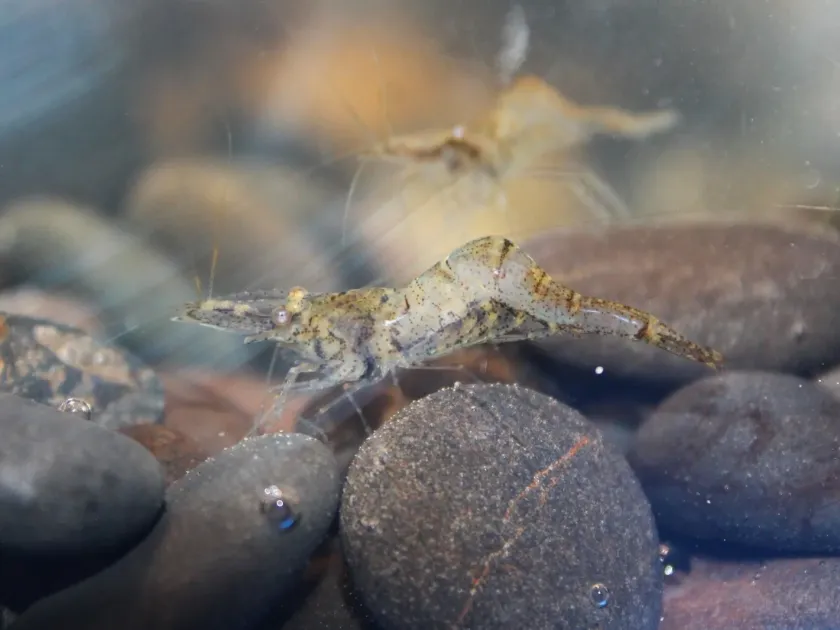
The body is mostly transparent with slight yellowish or greenish tints, allowing it to blend perfectly into submerged aquatic vegetation. Adult specimens typically reach lengths of 3 to 5 centimeters, making them relatively small but highly mobile.
A key identification feature is the sharp rostrum, which is armed with specific serrations on both the upper and lower edges. Females are generally larger than males and possess a broader abdomen, which is used to carry eggs until hatching.
Their biology is highly dependent on water temperature and oxygen levels. These shrimp show remarkable adaptability, enabling them to survive in diverse and often harsh environmental conditions that would exclude other species.
The life cycle includes a planktonic larval stage that undergoes several molts before transitioning to the juvenile form. This development is strictly regulated by the availability of food sources and the nutrient quality of the water column.
What it damages
The primary agricultural impact occurs in flooded fields, particularly in rice cultivation. When populations reach high densities, these shrimp aggressively feed on young rice seedlings.
The shrimp use their appendages to cut through the tender stems of newly emerged plants. This behavior often results in significant stand reduction and the loss of entire crop patches, forcing growers to replant.
In addition to consuming foliage, they disturb the substrate by digging at the roots of young seedlings in the soft mud. This root damage hinders nutrient uptake, causing the plants to lose vigor and become stunted.
Their feeding and movement patterns increase water turbidity by stirring up bottom sediments. This turbidity reduces the light penetration essential for the proper photosynthesis of young rice plants.
In integrated rice-fish farming systems, these shrimp compete directly with commercially raised fish for food. Despite being a prey item, their overpopulation significantly alters the ecological balance of the water body.
When it appears
Activity levels follow the seasonal flooding of rice fields. As soon as the fields are inundated in the spring, the shrimp begin their reproductive cycle and start to expand their range.
The period of peak damage coincides with the early vegetative growth of rice, specifically during May and June. At this stage, young seedlings are highly vulnerable to the mechanical damage inflicted by the shrimp.
As water temperatures rise during the summer months, the metabolic rate of the shrimp increases, leading to more aggressive feeding behavior. Consequently, the rate of crop loss typically accelerates during mid-summer.
When autumn temperatures begin to decline, the activity of the shrimp decreases. They tend to retreat into deeper layers of the mud, entering a state of reduced activity in preparation for the dormant season.
In regions with milder climates, activity can persist throughout the year, posing a continuous threat to various aquatic crops. This ability to remain active makes them a formidable pest in tropical and subtropical agricultural zones.
Signs of infestation
The first indication of an infestation is the presence of severed rice stems floating on the surface of the water. This is a clear signal that the shrimp population has begun grazing on the submerged portion of the crop.
Visible thinning or bare patches in the rice field are common indicators. These areas expand rapidly if the population density is high and no protective measures are implemented.
Abnormal water turbidity that cannot be attributed to rainfall or irrigation changes often points to crustacean activity. The constant churning of the bottom sediment is a localized sign of high shrimp concentration.
The accumulation of molted exoskeletons on floating vegetation or at the field edges provides evidence of a growing and thriving population. These remains indicate that the shrimp are successfully transitioning through their developmental stages.
Observing groups of shrimp near the base of young plants during early morning or evening hours confirms their presence. Their active movement around seedling clusters is a primary sign of an imminent or ongoing infestation.
Control measures
Effective management begins with the complete drainage of rice fields before planting. This practice removes the environment necessary for the shrimp to survive the off-season or successfully reproduce.
Maintaining clean irrigation channels and removing excessive aquatic vegetation is crucial, as these areas serve as primary hiding spots and breeding grounds for the pests.
- Introducing predatory fish species into the water system to naturally regulate the shrimp population.
- Applying selective aquatic-safe pesticides when monitoring reveals that the population has crossed the economic injury threshold.
- Adjusting water levels precisely to create conditions less favorable for crustacean survival.
A holistic management approach is required to balance pest control with the environmental health of the rice-fish ecosystem. Over-reliance on chemicals should be avoided to prevent harm to the overall aquatic biodiversity.
Regular monitoring of fields throughout the critical development phase of the rice is essential. Early detection allows for targeted interventions, minimizing the damage and reducing the cost of control measures.
Taxonomy
- Latin name
- Palaemonetes kadiakensis
- Family
- Palaemonidae
- EPPO code
- PALMKA
Discussion
No discussions yet — be the first.