
Pachybrachius pallicornis
Pachybrachius pallicornis
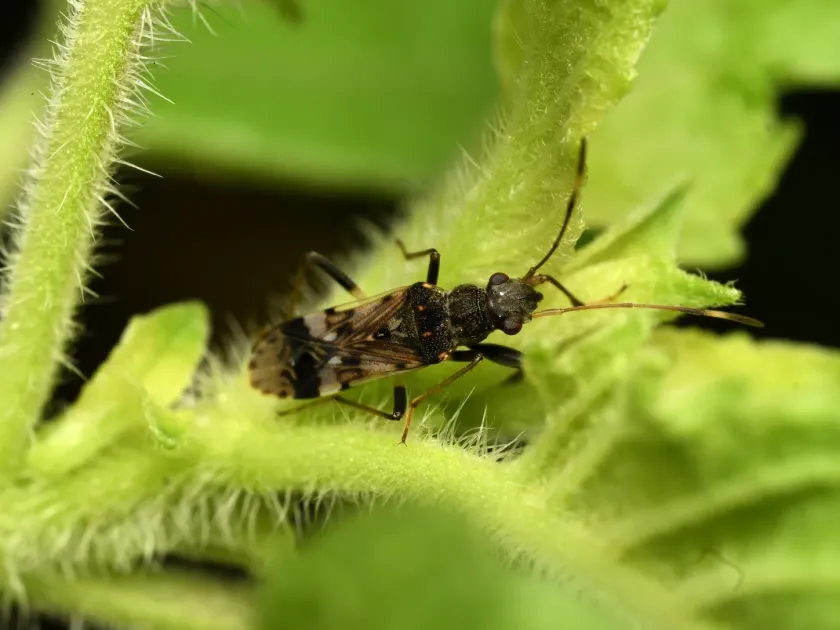
Description
How to identify
Pachybrachius pallicornis belongs to the Rhyparochromidae family, part of the order Hemiptera. This is a small insect that often remains unnoticed in field conditions due to its secretive and nocturnal lifestyle.
Adult specimens feature an elongated body, typically dark in color with distinctive pale antennae, which is the source of its scientific species name. The head and pronotum are usually darker, and the wings display a characteristic pattern.
The insect goes through several larval stages, during which the nymphs undergo significant morphological changes. Early-stage nymphs often have a lighter coloration compared to mature adults.
The pest prefers to dwell in the basal zone of plants, often hiding in plant debris or under soil crusts. This survival strategy provides protection from temperature fluctuations and direct exposure to sunlight.
Accurate identification in agronomic practice requires the use of sweep nets or soil sampling. When inspecting crops, experts should focus on the lower canopy and the base of the stems.
What it damages
This species specializes in attacking various cereal and grass crops. The insect feeds on the sap of stems and seeds, particularly during the milk stage of kernel development.
The most significant damage occurs at the seedling stage, where the pest attacks the roots and the base of the stems. High populations can severely stunt the growth of young crops during early development.
Beyond direct sap-sucking, this insect often acts as a vector for secondary infections. Pathogenic fungi and bacteria can easily enter the plant tissues through the puncture sites made by the insect's mouthparts.
Economic damage is highest during years with long, warm springs, as the insect's activity peaks during critical growth phases of the crops. Damaged plants often lose turgor and show signs of growth inhibition.
In intensive farming, crops infested by this pest show decreased yield quality and productivity. Factors such as lower thousand-kernel weight are common due to the impairment of the plant's vascular system.
When it appears
The life cycle of the pest is closely linked to regional climatic conditions. Typically, adults overwinter in the surface layer of the soil or under leaf litter on the field edges.
In spring, as the soil warms up, adults emerge from diapause. The activity period begins with the appearance of the first seedlings or wild grasses, which serve as initial food sources.
During the summer months, the population reaches its maximum size, coinciding with the flowering and grain-filling stages. During this time, insects feed intensively to accumulate resources for the next reproductive cycle.
The insect produces multiple generations depending on the length of the warm season. Females prefer to lay eggs in the soil or at the base of stems to ensure the survival of their offspring.
As average temperatures drop in autumn, the insects migrate to overwintering sites. Moving into the soil is an essential adaptation for surviving the cold winter period successfully.
Signs of infestation
The first sign of infestation is the appearance of yellowing patches in the field. Plants may look stunted, and leaf tips might dry out prematurely, even with adequate soil moisture.
Close inspection of the basal zone often reveals the presence of both adults and nymphs. Small, dark puncture marks on the stems are characteristic indicators of feeding activity.
Early-stage infestations often result in sparse seedling stands. Feeding on young shoots by nymphs can lead to plant mortality, creating visible bare spots within the field.
During grain filling, indirect signs of damage include the development of shriveled, poorly formed seeds. Spikes may appear underdeveloped, and internal tissue necrosis may be present upon examination.
In dry years, symptoms of damage become apparent much faster as plants cannot compensate for sap loss. The effect of wilting often spreads in patches across the field, typical of localized pest proliferation.
Control measures
Effective control starts with proper agricultural practices. Deep autumn plowing is a highly effective method to bury the overwintering population, significantly reducing the pest load for the next season.
Controlling weeds is another critical measure. Wild grasses often act as reservoirs for the pest before the main crop emerges, making field margin maintenance essential for containment.
When the economic threshold is reached, chemical insecticides become necessary. Contact and systemic insecticides are effective for rapid population reduction in infested hotspots.
Implementing crop rotation helps significantly in limiting the pest buildup in the soil. Changing host crops disrupts the pest's food supply and prevents successful population cycles.
Integrated pest management, including monitoring with pheromone traps and regular field scouting, is crucial for timely decision-making regarding potential chemical or biological interventions.
Taxonomy
- Latin name
- Pachybrachius pallicornis
- Order
- Hemiptera (bugs, aphids, leafhoppers)
- Family
- Lygaeidae
- EPPO code
- PACBPA
Discussion
No discussions yet — be the first.