
Pachybrachius
Pachybrachius
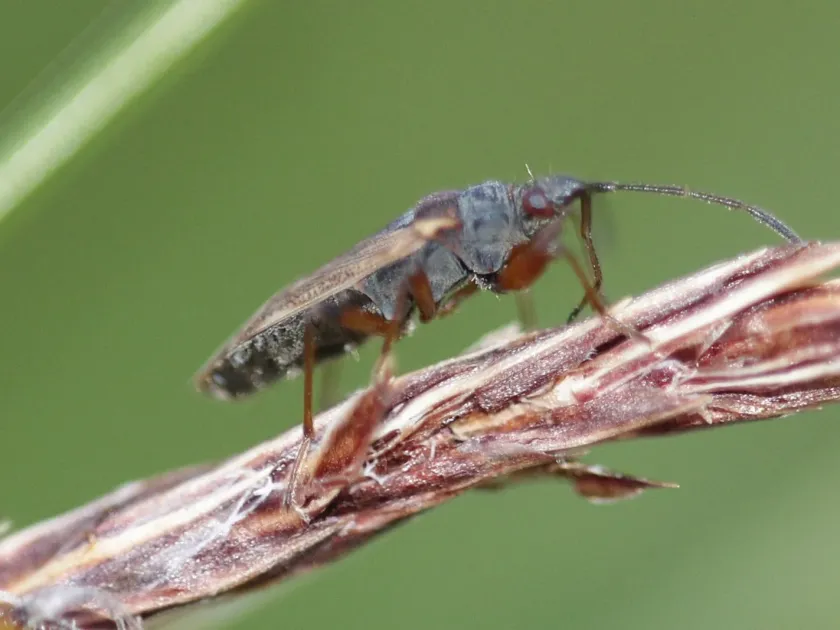
Description
How to identify
Pachybrachius is a genus of insects belonging to the seed bug family (Rhyparochromidae) within the order Hemiptera. These insects typically feature an elongated, dark-colored body that allows them to blend into soil litter and debris effectively.
Adults possess well-developed wings, enabling significant mobility when searching for food sources. They have moderate-sized heads with prominent compound eyes and four-segmented antennae.
Morphologically, they resemble other members of the Rhyparochromidae family but are distinguished by the specific structure of their fore-femora, which may bear small spines or thickenings.
Nymphs resemble the adults but lack functional wings and are generally smaller. Depending on their developmental stage, their coloration ranges from light brown to deep black.
Because these insects lead a cryptic lifestyle, identifying them in the field usually requires soil sampling or the use of pitfall traps to monitor their activity levels accurately.
What it damages
The primary diet of Pachybrachius consists of seeds from various agricultural and wild plants. Bugs pierce the seed coat and extract nutrients, which often kills the embryo or severely reduces the seed's viability.
These pests pose a significant threat to cereal crops and various grasses. During outbreaks, they can damage young seedlings by feeding on tissues near the root collar, leading to stunted growth.
The pest typically thrives in fields with sparse vegetation or areas heavily infested with weeds, which serve as reservoirs for population development.
The economic impact involves decreased yields, lower quality of harvested grain (poor germination rates), and the additional costs associated with chemical control measures.
Furthermore, Pachybrachius can act as a vector for various fungal infections, introducing pathogens into seeds and plant tissues through their feeding punctures.
When it appears
The activity of Pachybrachius is closely linked to soil temperature and moisture conditions. In temperate climates, they emerge from diapause in the spring once the topsoil warms up.
Population peaks are typically observed in mid-summer, coinciding with the maturation of seeds in most agricultural crops.
As temperatures drop in autumn, adults and older nymphs migrate deeper into the soil or seek shelter under crop residues to survive the winter months.
Their life cycle involves incomplete metamorphosis with several nymphal stages, the duration of which is dictated by local environmental factors and available food supply.
Dry years often witness population explosions, as drought-stressed or damaged seeds become easily accessible for these bugs to exploit.
Signs of infestation
A primary indicator of an infestation is the presence of empty or shriveled seeds within the ear or flower head. Close inspection reveals tiny entry holes from the bug's proboscis.
Seedlings affected by these bugs may exhibit yellowing and wilting without obvious signs of disease. Examining the root zone often reveals clusters of bugs near the soil surface.
Fields may show uneven plant stands, as feeding often occurs on seeds still in the soil before germination, causing failure to sprout.
Accumulated dark excrement spots on plant debris are another common sign of a localized population concentration.
Pitfall traps are the most effective method for detecting these bugs at night when they are most mobile and active across the soil surface.
Control measures
Effective control relies on robust agronomic practices, specifically the elimination of weeds that provide both food and overwintering sites for the bugs.
Deep autumn plowing significantly reduces the overwintering population by disrupting their habitat within the soil profile.
Implementing proper crop rotation helps minimize risks by ensuring that the pest does not have a stable food source year after year in the same location.
- Application of approved systemic insecticides during peak nymph emergence.
- Use of high-vigor seeds to ensure rapid germination and seedling establishment.
- Boundary treatment of fields when migration from adjacent infested areas is observed.
Biological control strategies should focus on protecting natural predators, such as ground beetles, which actively hunt and consume soil bug nymphs.
Taxonomy
- Latin name
- Pachybrachius
- Order
- Hemiptera (bugs, aphids, leafhoppers)
- Family
- Lygaeidae
- EPPO code
- PACBSP
Discussion
No discussions yet — be the first.