
Pachodynerus nasidens
Pachodynerus nasidens
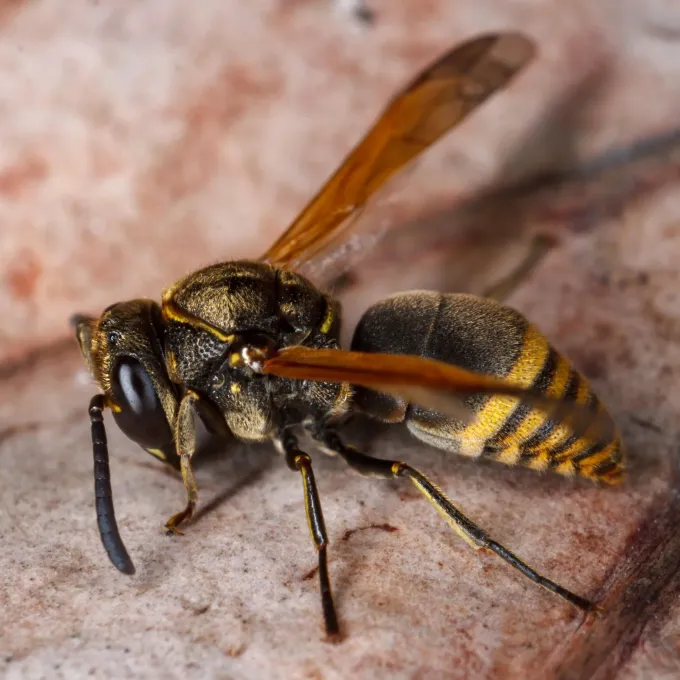
Description
How to identify
Pachodynerus nasidens is a species of solitary wasp belonging to the Vespidae family, often found in both natural and urbanized environments.
Adult wasps are characterized by a dark body with distinct yellow markings on the abdomen and thorax, reaching a length of approximately 8 to 12 millimeters.
These wasps are known for their habit of using pre-existing cavities to build their nests, making them common visitors to man-made structures.
The species is highly adaptable and has successfully invaded many regions, posing potential challenges for agricultural facilities and irrigation systems.
Larvae develop within mud-sealed cells, feeding on insects provided by the female wasp until they reach the pupal stage.
What it damages
The primary agricultural impact of this species is the obstruction of irrigation equipment, as wasps plug nozzles and tubes with mud, sand, and clay.
These blockages lead to irregular water distribution, which can cause significant stress to crops and decrease overall yield during the growing season.
Furthermore, nest building inside mechanical components of greenhouses can cause technical malfunctions, leading to increased maintenance costs.
Pachodynerus nasidens can also affect the ecosystem by preying on pollinators, thereby reducing the efficiency of natural pollination processes.
The presence of wasp debris within delicate equipment can lead to corrosion and mechanical failures in long-term agricultural infrastructure.
When it appears
Adult activity typically begins in the spring when temperatures consistently rise above the threshold required for insect metabolism.
Peak nesting activity occurs during the summer months when environmental conditions are most favorable for reproduction and brood development.
The species can produce multiple generations within a single season if the regional climate remains warm enough to support continuous development.
As autumn approaches, activity levels drop, and the wasps look for protected locations to overwinter until the next active season.
In greenhouses and other controlled environments, the breeding cycle may continue throughout the year if the temperature is kept stable.
Signs of infestation
The most visible sign of infestation is the discovery of hardened mud or clay plugs inside irrigation nozzles, pipes, or structural gaps.
Observation of solitary wasps showing persistent interest in small holes, cracks, or gaps in agricultural equipment is a clear indicator of nesting.
Sudden malfunctions or pressure drops in irrigation lines are common consequences that indicate the presence of internal obstructions.
Presence of exterior debris, such as dried mud deposits on the frames of greenhouse structures, often points to recent nesting attempts.
Opening an obstructed nozzle may reveal cells filled with prey items, which confirms that the equipment has been colonized by the wasps.
Control measures
Effective management includes sealing all unused holes and gaps in irrigation systems and greenhouse frames to prevent wasps from building nests.
Installation of fine mesh screens over ventilation openings and pipe ends is a highly effective way to keep these insects away from equipment.
Regular maintenance inspections of irrigation systems should be performed to detect and remove nest material before it fully hardens and blocks the flow.
If necessary, physical cleaning methods or traps can be employed in high-risk areas to manage the population without the excessive use of pesticides.
- Use of protective caps.
- Installing fine mesh.
- Regular equipment checks.
Taxonomy
- Latin name
- Pachodynerus nasidens
- Order
- Hymenoptera
- Family
- Vespidae
- EPPO code
- PACDNA
Discussion
No discussions yet — be the first.