
Pachodynerus
Pachodynerus
Description
How to identify
Pachodynerus is a genus of solitary wasps belonging to the family Vespidae. Unlike social wasps, these insects do not build large communal nests, but rather act individually to secure a place for their offspring in various cavities.
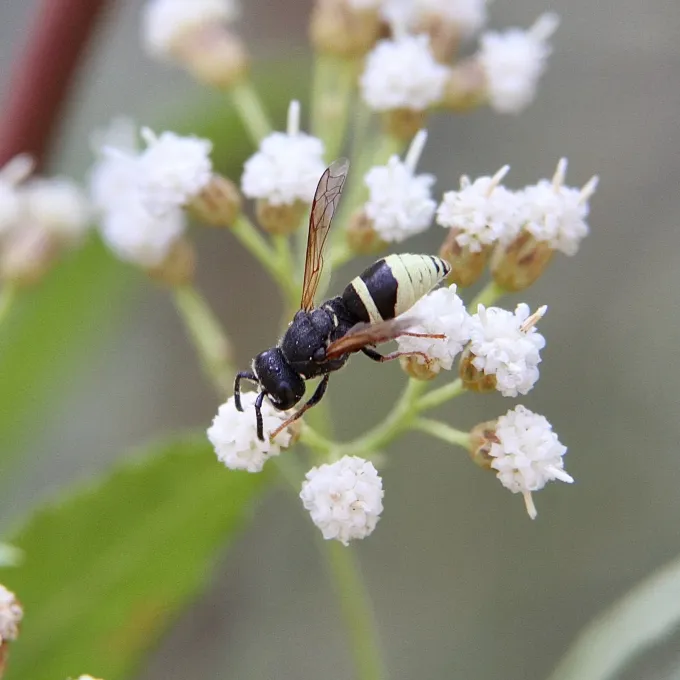
Adult Pachodynerus are typically marked with distinct yellow or white patterns on a dark, slender body. They possess well-developed mandibles and wings, making them efficient at navigating and manipulating materials for nest construction.
The life cycle involves complete metamorphosis: the female selects a cavity, such as a hollow stem or a tube, and partitions it into cells. Inside each cell, she provides food in the form of paralyzed prey for the developing larva.
After the larva consumes the prey, it pupates within the cell. Once development is complete, the adult emerges, ready to start the next cycle. This behavior makes them frequent inhabitants of man-made structures.
They are generally not aggressive towards humans unless directly threatened, but their presence near agricultural operations can cause logistical and maintenance challenges.
What it damages
The primary concern regarding Pachodynerus in an agricultural context is their tendency to colonize irrigation infrastructure. By blocking drip irrigation tubes with mud nests, they effectively stop the flow of water and nutrients.
This disruption of the irrigation cycle leads to localized water stress in crops, which can result in reduced growth rates, yellowing of leaves, and decreased yields if the problem is not identified and resolved in time.
In addition to blocking irrigation, their activity can cause structural damage to delicate plant stems if the wasp chooses them for nesting, potentially allowing fungal infections to enter the plant tissue.
Their presence in storage facilities or near sensitive machinery can also impede day-to-day farming operations, requiring time and resources to clean out nests and repair blocked equipment.
Although they do not feed on crops themselves, their role as an indirect pest by damaging technical support systems makes them a factor that farmers must monitor to ensure maximum production efficiency.
Control measures
The most effective strategy for managing Pachodynerus is the use of physical barriers. Installing fine-mesh screens on all open ends of drip irrigation lines prevents the wasps from accessing the tubing.
Good sanitation practices are essential, as removing debris, hollow wood piles, and unnecessary building materials from the perimeter of fields reduces the available nesting sites, discouraging the wasps from settling nearby.
Regular monitoring of irrigation equipment during the spring and summer months allows for the early detection and removal of incipient nests before they become firmly established or fully plugged.
If chemical control is deemed necessary, it should be applied with extreme caution to avoid harming non-target organisms, especially beneficial insects like bees and predators that keep other pests in check.
Integrated Pest Management (IPM) techniques should focus on prevention rather than reaction, ensuring that infrastructure remains clear and that the environment is less conducive to the wasps' life cycle.
Taxonomy
- Latin name
- Pachodynerus
- Order
- Hymenoptera
- Family
- Vespidae
- EPPO code
- PACDSP
Discussion
No discussions yet — be the first.