
Ruddy duck
Oxyura jamaicensis
Description
How to identify
The Ruddy duck (Oxyura jamaicensis) is a compact diving duck belonging to the Anatidae family. The breeding male is easily identified by its bright chestnut-colored body and distinctive sky-blue bill.
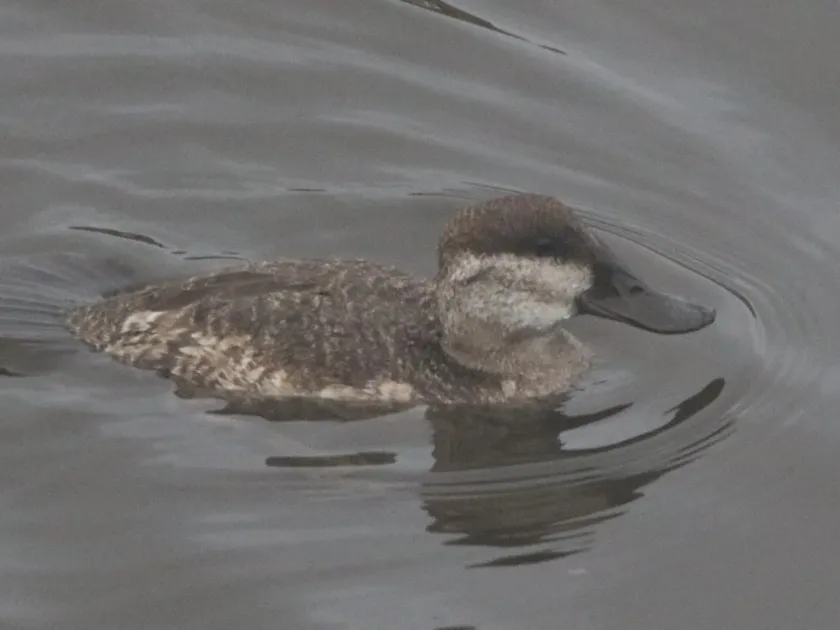
Females and juveniles possess a duller, brownish-grey plumage, which serves as effective camouflage in dense wetland vegetation such as reeds and cattails.
A notable morphological feature of this species is its stiff, narrow tail feathers, which the bird frequently cocks upright when resting or swimming on the water.
While native to North America, it has become a serious invasive threat in Europe, primarily due to its aggressive mating behavior and propensity for interspecific hybridization.
The Ruddy duck is a highly skilled diver, capable of staying submerged for extended periods, making it elusive and challenging to survey in its natural habitat.
What it damages
The primary concern regarding this species is ecological rather than agricultural; it competes aggressively with native waterfowl for limited nesting sites and food resources.
In aquaculture environments, these ducks can cause disruption by consuming feed intended for fish and contaminating ponds with their heavy waste production.
Intensive feeding on aquatic vegetation can degrade the quality of wetland habitats, potentially reducing the food supply available for indigenous aquatic species.
The most significant impact is the genetic threat posed to the White-headed duck through hybridization, which risks the extinction of the native population.
Their presence can lead to a decline in overall biodiversity within managed wetlands, as they are capable of dominating smaller bodies of water.
When it appears
The breeding season typically begins in the spring, during which males become highly territorial and perform elaborate displays to attract females.
During the summer months, the birds undergo a molting period, becoming flightless and retreating into secluded, thick vegetation to avoid predation.
Autumn migration occurs as the birds seek suitable water bodies that remain ice-free throughout the winter months, often congregating in larger flocks.
In winter, populations concentrate on larger lakes, reservoirs, and estuaries, continuing their foraging activities in both freshwater and brackish environments.
Active monitoring is most crucial during the breeding and nesting season to prevent the establishment of new colonies in sensitive wetland areas.
Signs of infestation
The emergence of hybrid individuals displaying intermediate characteristics between Ruddy ducks and native species is a definitive sign of an invasive presence.
The distinct, bubbly, and rhythmic vocalizations of males during the breeding period serve as a strong auditory indicator of the species' presence.
The discovery of nests built low among reeds, sometimes on floating platforms of vegetation, confirms active reproduction within the area.
Visual confirmation of the male's vibrant blue bill during the spring season remains the most reliable method for site identification.
Increased levels of aggressive behavior among existing waterfowl populations at a pond often suggest the arrival of this invasive competitor.
Control measures
Lethal control, including shooting and trapping, is the primary method employed by conservation agencies to manage invasive populations and protect native species.
Legislation restricting the import, sale, and keeping of Ruddy ducks in private collections is essential to prevent further escape into the wild.
Coordinated monitoring programs across multiple jurisdictions are necessary to detect and mitigate the spread of the species in high-risk zones.
Public awareness campaigns help inform pond owners about the ecological risks, encouraging the removal of captive birds from private ornamental ponds.
Environmental management practices, such as reducing dense cover in non-native regions, can make specific sites less attractive for nesting.
Taxonomy
- Latin name
- Oxyura jamaicensis
- Family
- Anatidae
- EPPO code
- OXURJA
Discussion
No discussions yet — be the first.