
Northern pintail
Anas acuta
Description
How to identify
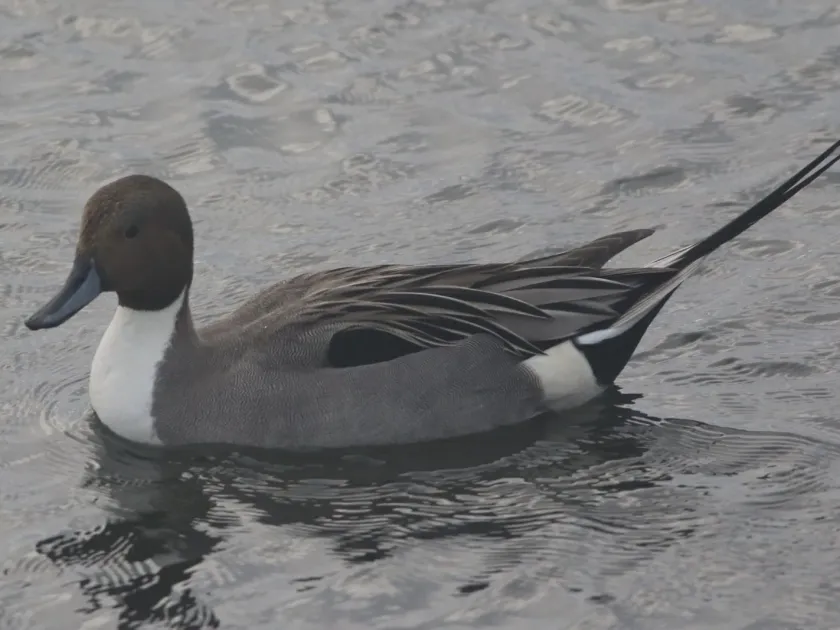
The Northern pintail (Anas acuta) is a widespread species of duck belonging to the family Anatidae and the order Anseriformes, recognized by its long, slender tail.
Males are characterized by a striking appearance with a dark brown head and a thin white stripe extending up the neck, while females have mottled brown plumage for camouflage.
This species is highly mobile and aquatic, yet they frequently frequent agricultural fields during migration periods, seeking accessible food sources after exhausting natural supplies.
Their flight silhouette is distinct due to their long necks and graceful shape, making them identifiable even from a distance when moving between water and cropland.
Biologically, their life cycle involves long-distance migration, during which agricultural fields often serve as vital refueling stops, inadvertently causing harm to young crops.
What it damages
The primary agricultural damage caused by the Northern pintail involves feeding on cereal crops such as wheat, barley, and rice during the germination and seedling stages.
Pintails can destroy vast areas by pulling up freshly sown seeds or consuming the tender green sprouts, leading to severe thinning of the stand and yield loss.
Trampling is another significant issue, as large flocks gathering on muddy or waterlogged fields compact the soil, causing physical damage to the emerging plants.
While they primarily target cereals, other crops like rapeseed or legumes located near ponds or drainage systems may also experience foraging damage.
The economic impact is often concentrated in fields closest to wetlands, where birds can return repeatedly until the crops are no longer palatable or accessible.
When it appears
The most critical season for damage is the spring migration, when flocks rely on winter-planted crops as a key source of high-energy food before nesting.
Autumn migration is another high-risk period, as flocks assemble in large numbers and frequently visit agricultural land before moving to warmer wintering grounds.
Feeding activity is typically nocturnal or concentrated during twilight hours, as birds utilize the safety of dark conditions to feed without being disturbed by humans.
Weather patterns significantly influence their movement; overcast or rainy days often see increased activity levels as the birds feel safer and less exposed.
The temporal window of vulnerability aligns with the crop growth cycle, peaking during the most tender growth stages of the season's first seedlings.
Signs of infestation
Presence of feathers and droppings in the field is a clear indicator of avian activity, often found on the edges of fields bordering water sources.
Bare patches or irregularly shaped areas of thinned vegetation provide evidence of where the flock has been foraging, with visible patterns of trampled plants.
Distinctive webbed footprints left in the moist soil serve as definitive proof of waterfowl activity, particularly near irrigation ditches or water-logged spots.
Observation of birds taking flight in the early morning is a primary indicator, as they move from foraging fields back to larger water bodies for the day.
Physical inspections of the seeds and shoots reveal sharp, biting damage patterns typical of duck bills, distinguishing their work from other pests or rodents.
Control measures
Integrated management is essential to mitigate damage, focusing on deterrents that discourage birds from settling on protected agricultural land.
- Utilizing visual deterrents such as raptor decoys, reflective tape, or strobe lights that disrupt the birds' sense of security.
- Deploying acoustic deterrents, including propane cannons or loudspeakers broadcasting distress calls, to mimic predator threats.
- Installing physical barriers or temporary fencing to block easy access points between wetlands and vulnerable fields.
- Adopting agronomic practices like deeper seed placement to reduce the visibility and accessibility of grains to foraging birds.
- Implementing regular field monitoring and hazing programs during the peak migration periods to discourage long-term flock habitation.
Taxonomy
- Latin name
- Anas acuta
- Family
- Anatidae
- EPPO code
- ANAXAC
Discussion
No discussions yet — be the first.