
European mouflon
Ovis gmelinii
Description
How to identify
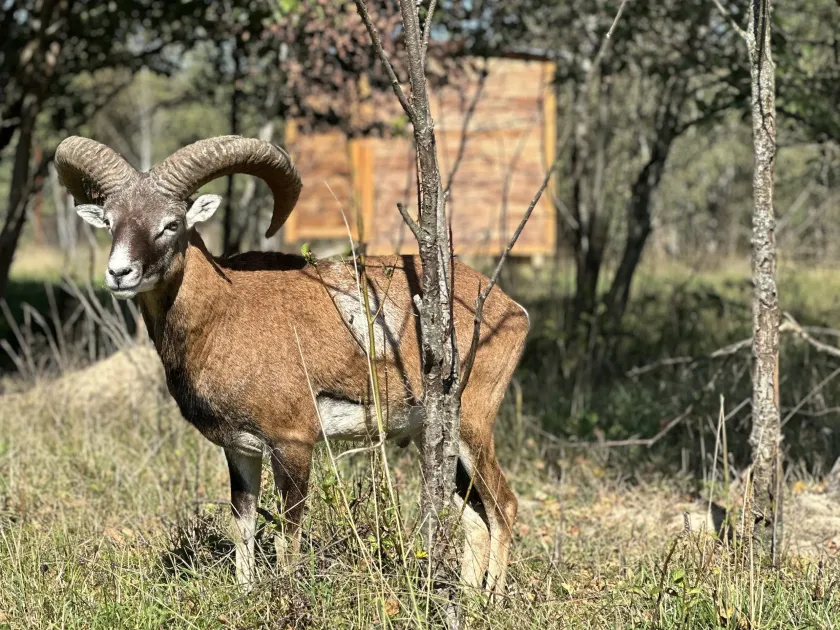
The European mouflon (Ovis gmelinii musimon) belongs to the family Bovidae and is known as the smallest wild sheep species in Europe.
Adult males are recognized by their large, curled horns, which can grow up to 80 cm in length, whereas females generally have smaller or absent horns.
These animals are characterized by a muscular body and excellent climbing skills, allowing them to navigate rocky terrain and farm fences with ease.
Their coat color changes with the seasons, ranging from reddish-brown in the summer to a darker, thicker coat during the winter months.
They are gregarious animals, usually moving in herds, which significantly increases the grazing pressure on any agricultural area they visit.
What it damages
The European mouflon is a herbivore that poses a significant threat to various agricultural and horticultural crops when natural food is scarce.
Cereal crops, particularly winter wheat and barley, suffer greatly as mouflons graze on the young green shoots, thinning out the stand.
Orchards are highly vulnerable, as mouflons consume the buds and strip the bark of young fruit trees, often causing the death of the saplings.
Vegetable gardens are also targeted, with leafy greens and root vegetables being easily accessible and preferred food sources for foraging herds.
- Winter cereal crops.
- Young fruit trees and saplings.
- Leafy vegetables and tubers.
- Vineyards and soft-stemmed plants.
When it appears
The danger is most acute during winter and early spring when mouflons move to lower elevations or open fields to find food.
During the growing season, they may frequently raid fields during dusk and dawn, leading to significant biomass loss before harvest.
Late autumn, during the mating season (rut), mouflons are more active and prone to wandering onto farm properties, causing accidental damage.
Periods of extreme drought also force these animals to seek out irrigated agricultural lands where lush crops provide necessary moisture.
The overall impact is cyclical, driven by the seasonal availability of wild forage versus the nutritional content of farm-grown products.
Signs of infestation
The presence of mouflons is identified by distinct hoof prints in the soil, which are sharp and clear, often appearing in groups indicating a herd.
Vegetation damage is marked by shredded edges on plant leaves and stalks because they lack upper incisors and pull the grass to feed.
Paths through tall crops and patches of bare, flattened soil are clear indicators of herds moving across a field to graze.
Fecal matter, characterized by small, dense, dark pellets, can be found scattered throughout the damaged sections of the field.
Bark peeling and high-level browsing on orchard trees serve as secondary signs of mouflon activity in the immediate vicinity of the plantation.
Control measures
Installing high-tensile wire mesh fencing is the most effective long-term solution to prevent mouflons from accessing agricultural land.
Electric fencing systems (electric shepherds) are highly effective at discouraging mouflons and training them to avoid fenced fields.
Visual and acoustic scarers can be utilized, though they should be rotated or changed periodically to prevent the animals from becoming accustomed.
The application of odor-based repellents on tree stems can help protect individual valuable trees in orchards from winter browsing damage.
Collaboration with game management authorities is essential for controlling the population density in regions where mouflons threaten food security.
Taxonomy
- Latin name
- Ovis gmelinii
- Family
- Bovidae
- EPPO code
- OVISAM
Discussion
No discussions yet — be the first.