
Bighorn sheep
Ovis canadensis
Description
How to identify
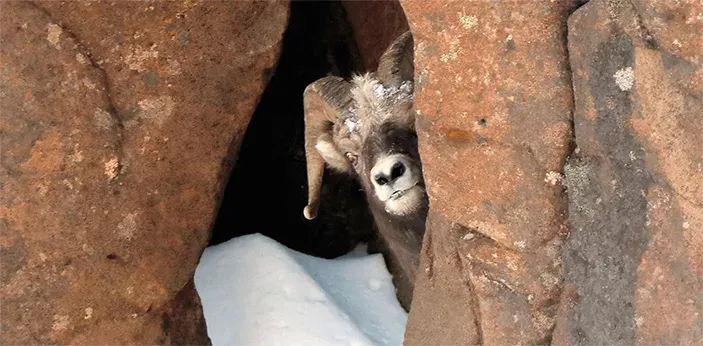
The bighorn sheep (Ovis canadensis) is a large bovid species notable for its substantial curved horns, which are particularly impressive in mature males.
These animals are adapted to rugged, mountainous terrain but are highly opportunistic when it comes to accessing high-quality forage in lower valleys.
Physically robust and social, they live in herds, which significantly increases their collective impact on any vegetation they choose to graze.
Their coat color typically blends into rocky or brushy landscapes, making them difficult to spot until they are already present on agricultural land.
The species exhibits high mobility, allowing them to traverse large distances to locate suitable feeding grounds throughout the changing seasons.
What it damages
Bighorn sheep are primarily grazers, feeding on a wide variety of grasses, forbs, and shrubs that often overlap with forage crops.
When they gain access to cultivated fields, they can quickly cause significant losses by consuming crops such as winter wheat, alfalfa, or young fruit trees.
Trampling damage is a secondary but critical issue, as the weight of the herd can compact soil, reduce aeration, and hinder future crop germination.
Competition for forage is a significant problem for livestock farmers, as these wild sheep consume resources that would otherwise support domestic animals.
Repeated foraging can lead to the thinning of vegetative cover, inviting weed encroachment and further soil degradation in the affected area.
When it appears
Spring is the most active season for damage, as animals migrate down from the peaks to exploit the flush of nutrient-rich new plant growth.
During the summer, they typically reside in higher elevations, but they may return to lower agricultural lands during particularly dry periods.
The autumn rutting season increases the movement and unpredictability of bighorn sheep, raising the probability of conflicts with agricultural assets.
Winter forces the herds to seek food at lower altitudes, where they are most likely to impact winter cereal crops or browse on dormant tree bark.
Feeding patterns are strongly correlated with plant phenology and the availability of forage in their historical range versus surrounding farmland.
Signs of infestation
One of the clearest indicators of bighorn sheep presence is the characteristic cloven hoof print, which is broader than that of many deer species.
Stubble fields or pastures will show uneven, cropped vegetation where the animals have used their teeth to shear plant stems close to the ground.
Damaged fencing, particularly sections that have been pushed over or climbed by the animals, often indicates a high-traffic entry point to a field.
Significant amounts of droppings left in piles within or near grazing areas are a clear sign of persistent feeding activity.
Bark stripped from trees or chewed shrub branches at heights manageable for a bighorn sheep indicate their dietary behavior in orchard-like environments.
Control measures
Physical exclusion through high-tensile wire fencing or tall woven-wire netting is the most effective method for protecting valuable crop areas.
Strategic use of motion-activated lighting or acoustic deterrents can deter herds from approaching fields during the vulnerable night-time hours.
Herding or using livestock guardian dogs can serve as a biological barrier to keep the wild animals moving toward their natural habitats.
Landscape modification, such as removing cover near fields, can make areas less attractive to bighorn sheep and reduce the likelihood of them staying.
Coordinating with wildlife management authorities is essential for population control and implementing long-term strategies to mitigate human-wildlife conflict.
Taxonomy
- Latin name
- Ovis canadensis
- Family
- Bovidae
- EPPO code
- OVISCA
Discussion
No discussions yet — be the first.