
Domestic sheep
Ovis aries
Description
How to identify
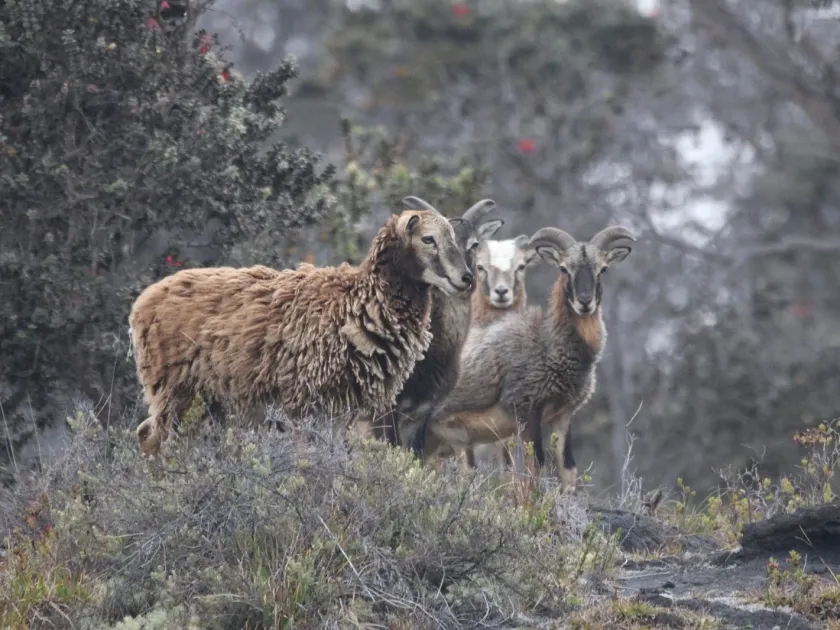
The domestic sheep (Ovis aries) is a member of the Bovidae family and the order Artiodactyla. It is a ruminant herbivore widely recognized for its thick wool and social herd structure.
In agronomy, sheep are viewed as a source of intense grazing pressure. Their biological adaptation to cropping grass close to the ground makes them potentially destructive in an uncontrolled agricultural environment.
They are characterized by strong herd instincts, meaning that when they enter a field, the impact is concentrated and can lead to rapid denudation of the vegetation cover in a specific area.
Taxonomically, they are herbivores, but their impact on modern agricultural systems goes beyond natural grazing, often turning them into non-native pests in delicate crop production zones.
Their mobility and ability to adapt to various terrains allow them to enter fields that might be considered inaccessible to other livestock, necessitating robust preventative strategies.
What it damages
Sheep cause damage by feeding on a variety of crops, including cereals, legumes, and vegetable crops, often consuming the plant biomass to the point where recovery is impossible.
Mechanical damage caused by trampling is severe; the impact of heavy hooves on moist soil leads to compaction, which hinders root respiration and disrupts the nutrient absorption process of plants.
Young seedlings are particularly vulnerable. When a herd moves through a newly planted field, they can destroy entire rows of crops in a very short period, leading to substantial yield loss.
In nursery environments and orchards, sheep frequently target the bark of young trees, stripping it away and causing tree mortality or making the tree susceptible to secondary diseases.
Additionally, the spread of weed seeds through the animals' digestive tracts and the contamination of fields with manure pose significant risks to the quality and sanitation of the agricultural produce.
When it appears
The risk of damage is highest in early spring when winter crops begin to grow, but natural pasture resources remain scarce, forcing the sheep to seek out nutrient-rich green shoots.
During the summer months, if overgrazing has depleted local pastures, sheep may actively look for agricultural fields, especially those under irrigation, which remain green and lush.
Autumn is another critical period, as the harvesting season leaves fields open, and sheep entering these areas can graze on winter cover crops or newly sown seedlings.
In winter, when grazing is limited and food sources are scarce, sheep may turn to eating bark from trees and shrubs, which can be devastating to tree plantations.
The intensity of damage is highly correlated with the quality of the surrounding forage; well-managed farms with sufficient natural feed have a significantly lower risk of sheep-related crop damage.
Signs of infestation
The primary sign of sheep presence is the appearance of cloven hoof prints on the soil, which are distinct in shape and size, usually occurring in clusters representing a herd path.
Plants subjected to sheep grazing often show a clean, straight cut near the ground level, reflecting the animals' use of their lower incisors to bite off the vegetation.
The appearance of "grazing patches" where the crop has been removed down to the soil level is a common indicator of a herd's recent activity in the area.
Manure droppings, which are small, firm, and pellet-like, are frequently scattered throughout the damaged areas of the field.
Physical evidence on perimeter fences, such as wool tufts stuck to wire or mesh, provides clear confirmation that the herd has breached the protected zone.
Control measures
The most effective strategy for protection is the installation of permanent fencing using high-tensile wire or woven mesh, which provides a physical barrier against herd intrusion.
Electric fencing is a highly recommended and flexible solution for modern farms, as it effectively deters sheep while allowing for easier land management and rotational grazing.
Implementing a strict grazing management plan, including the use of trained herding dogs or shepherds, ensures that flocks are constantly monitored and kept away from sensitive areas.
Utilizing repellent strips or buffer zones planted with crops that are unpalatable to sheep can act as a secondary defensive layer to discourage the animals from entering the main fields.
Regular maintenance and patrol of field boundaries are crucial to identifying potential breaches in fencing before they lead to massive damage by a straying flock.
Taxonomy
- Latin name
- Ovis aries
- Family
- Bovidae
- EPPO code
- OVISAR
Discussion
No discussions yet — be the first.