
Muskox
Ovibos moschatus
Description
How to identify
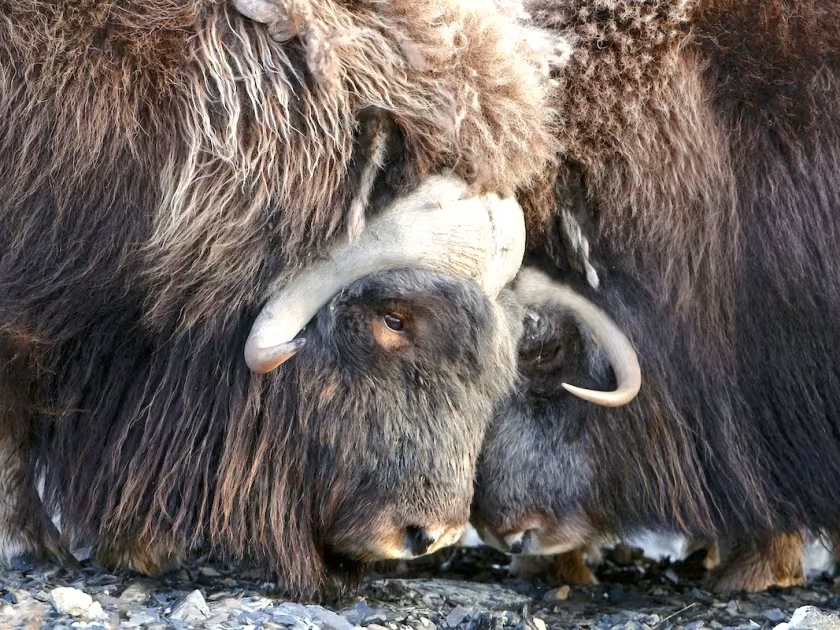
The muskox (Ovibos moschatus) is a large, cold-adapted ungulate of the Bovidae family, native to the Arctic. Adults can weigh up to 400 kg and are characterized by their long, thick, insulating coat.
The animal has a robust body and short, sturdy legs designed for stability. Males possess impressive horns that meet in the center of the forehead, forming a protective, thick plate known as a boss.
Taxonomically, it belongs to the order Artiodactyla. Muskoxen are social animals that live in herds, a survival strategy that provides defense against predators but leads to concentrated grazing pressure.
Their biology is uniquely tied to the harsh Arctic environment. They are highly efficient at energy conservation and utilize seasonal movements to find sparse but vital food sources.
Their size and herd behavior mean that even small populations can significantly influence the composition of tundra plant communities if they remain in one area for too long.
What it damages
The primary damage is caused by overgrazing and trampling of fragile tundra vegetation. Muskoxen consume sedges, grasses, arctic willows, and dwarf birch, often stripping areas clean.
Trampling has a severe impact on the ground cover, particularly on lichens and mosses. These slow-growing plants are easily crushed and can take decades to recover once destroyed.
By consuming willow twigs and shoots, muskoxen prevent the natural regeneration of woody plants, which alters the landscape structure and affects the habitat of smaller arctic wildlife.
Mechanical destruction of the tundra mat by sharp hooves exposes the underlying permafrost to direct sunlight, which frequently leads to thermokarst and erosion processes.
On managed farms or enclosed areas, muskoxen can quickly degrade productivity by compacting the soil and consuming all edible biomass, necessitating a structured rotational grazing system.
When it appears
The most intense feeding activity occurs during the short Arctic summer. During this time, muskoxen are driven by the need to build fat reserves for the coming winter.
In spring, when the snow begins to melt, the herds move to areas with early-sprouting vegetation. This is the period when plants are most susceptible to grazing-related damage.
Winter feeding involves digging through the snow to reach dry grasses and sedges. While less intense than summer grazing, the digging process causes physical disturbances to the frozen ground.
The autumn season often sees increased movement across the tundra as herds transition to wintering grounds, leading to dispersed but widespread trampling effects.
Overall, the cycle of feeding is strictly controlled by the availability of biomass and the climatic window of the Arctic growing season.
Signs of infestation
Clear evidence of muskox presence includes large amounts of dung and deep, sharp hoof prints left in soft soil or muddy tundra patches. These indicate recent feeding activity.
Visible patches of bare earth where the lichen carpet has been removed serve as a primary indicator of overgrazing. These bare spots are highly susceptible to further environmental damage.
Ragged, bitten-off twigs on willow and dwarf birch shrubs are characteristic signs. Unlike rodents or insects, muskoxen leave distinct, robust tooth marks and broken branches.
The presence of coarse, long guard hairs caught on shrubs or rocks along migratory trails confirms the frequent use of a specific area by the herd.
- Patches of destroyed ground cover
- Broken and browsed woody shrubbery
- Soil compaction along common herd trails
- Characteristic fecal pellets in concentrated areas
Control measures
In the wild, management focuses on population monitoring and habitat protection. Licensing and selective relocation are used to prevent overpopulation in sensitive areas.
Physical barriers and electrified fencing are the most effective methods to protect critical botanical reserves from muskoxen encroachment during the growing season.
Agronomic strategies involve controlled grazing regimes that ensure specific pastures have sufficient time to recover before herds are returned to them.
Providing attractants or alternative feeding zones away from sensitive ecological sites can successfully divert herds from areas requiring environmental protection.
Ensuring a balanced carrying capacity is essential for modern wildlife management to maintain the integrity of arctic vegetation while sustaining healthy muskox populations.
Taxonomy
- Latin name
- Ovibos moschatus
- Family
- Bovidae
- EPPO code
- OVIBMO
Discussion
No discussions yet — be the first.