
Apricot longhorn beetle
Osphranteria suaveolens
Description
How to identify
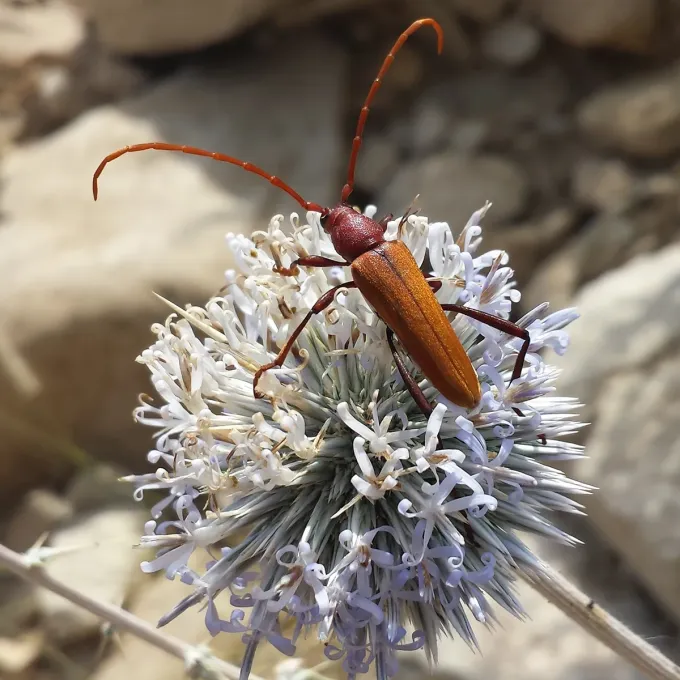
The apricot longhorn beetle (Osphranteria suaveolens) belongs to the Cerambycidae family. The adult beetle is characterized by a slender body, usually measuring 15–25 mm in length, often with metallic or patterned coloration that camouflages it against tree bark.
The life cycle involves an egg stage, a larval stage that bores into wood, a pupal stage, and the adult phase. Adult beetles are primarily active during warm summer months, seeking out suitable trees to mate and lay eggs in bark crevices.
The larvae are legless, white, and equipped with strong mandibles designed for tunneling through wood. They spend most of their life cycle inside the branches or trunks of host trees, protected from most environmental factors.
Because the development cycle can span over several years, the pest can reside in a tree long before the signs of structural damage become obvious to a grower.
Identifying adult beetles in the orchard during the flight period is an important indicator that the population is active and management actions should be initiated immediately.
What it damages
This beetle primarily attacks stone fruit trees, with apricot being the most susceptible host. It can also cause significant damage to peaches, plums, and cherries if they are planted in proximity to infested apricots.
The larvae tunnel deep into the sapwood and heartwood, disrupting the vascular system of the tree. This process cuts off the transport of water and nutrients, leading to the decline of the affected branches.
The damage often results in the sudden wilting of foliage on individual limbs during the height of the growing season, a phenomenon that can significantly reduce the tree's overall vigor.
Structurally, the galleries created by the larvae weaken the wood, making branches highly susceptible to breakage under heavy fruit loads or during windstorms, leading to limb loss.
Beyond direct damage, the entry points created by the beetles facilitate the spread of secondary pathogens, including fungi and bacteria, which can accelerate the eventual death of the tree.
Signs of infestation
One of the most reliable signs of infestation is the presence of small, round exit holes on the bark, accompanied by sawdust-like frass (a mixture of wood shavings and larval excrement).
In mid-summer, a grower may notice localized wilting or premature yellowing of leaves on specific branches. This is a tell-tale sign that the vascular integrity of that limb has been compromised by larval feeding.
Upon closer inspection of the bark, you may find loose or bulging areas. Removing small sections of dead bark often reveals the complex, winding tunnels created by the larvae beneath.
The presence of adult beetles crawling on the main trunk or scaffold branches during the summer is a definitive sign of infestation and should trigger a monitoring program.
Overall canopy thinning and stunted annual growth are long-term indicators of a serious infestation, suggesting that the tree has been supporting a larval colony for a significant amount of time.
Control measures
The most effective mechanical control is the systematic pruning and burning of infested wood. All branches showing signs of larval tunnels should be removed promptly to prevent the adult beetles from emerging.
Applying white latex paint or lime-based washes to the trunks can deter female beetles from laying eggs in the bark, providing a simple yet effective barrier for younger trees.
Chemical control focuses on the period of adult activity. Targeted insecticide applications on the trunk and primary limbs can effectively reduce the population before eggs are successfully laid.
Maintaining high orchard hygiene and optimal tree health through proper fertilization and irrigation is essential. Healthy trees are better at resisting and recovering from the initial stages of borer attacks.
Integrated Pest Management (IPM) strategies, including the use of pheromone traps for monitoring flight dates, allow for precise timing of interventions, which minimizes unnecessary chemical usage.
Taxonomy
- Latin name
- Osphranteria suaveolens
- Order
- Coleoptera (beetles)
- Family
- Cerambycidae
- EPPO code
- OSPHSU
Discussion
No discussions yet — be the first.