
Arabian oryx
Oryx leucoryx
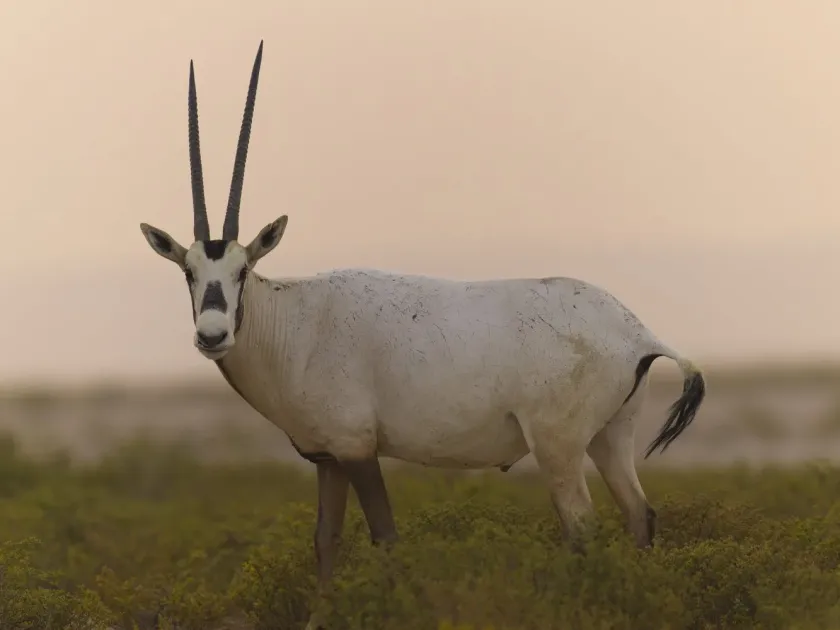
Description
How to identify
The Arabian oryx (Oryx leucoryx) is a large bovid belonging to the Artiodactyla order, specifically designed for harsh arid environments.
This antelope is characterized by its brilliant white coat, which helps it reflect sunlight and maintain thermal balance in hot climates.
The species is equipped with long, straight or slightly curved horns that can reach up to 70 cm, making it a powerful presence in the wild.
Adult Arabian oryx weigh between 65 and 80 kilograms, requiring a significant amount of vegetation to maintain their health.
Their morphological adaptations allow them to travel long distances, which brings them into direct conflict with agricultural activities.
What it damages
As a herbivorous animal, the Arabian oryx can cause significant damage to crops, particularly during severe droughts when natural resources decline.
They are known to consume a variety of cultivated plants, including cereals, alfalfa, and vegetables grown in irrigated plots near desert fringes.
The impact is twofold: they directly consume the biomass and physically trample the fields, destroying the integrity of the soil structure.
In addition to crop consumption, these animals often damage irrigation equipment, such as drip lines and sprinkler heads, by stepping on them.
Their habit of living in groups (herds) exacerbates the damage, as multiple individuals feed on the same area simultaneously, leading to total crop loss.
When it appears
The frequency of oryx incursions into farmlands is closely tied to the seasonality of rainfall and the availability of desert forage.
During the peak dry season, the lack of wild grasses forces these antelopes to seek out the nutrient-rich vegetation on farms.
Their activity patterns are usually nocturnal or crepuscular, meaning they cause damage primarily during the twilight hours or at night.
The duration of the damage period is directly correlated with the length of the dry spell and the effectiveness of local pasture recovery.
In years with erratic weather patterns, the oryx may remain near agricultural zones for several consecutive months until rain arrives.
Signs of infestation
The presence of an oryx herd is identified by their distinct, elongated hoof prints found near the perimeter of damaged fields.
Visible signs include patchy grazing patterns where entire sections of the crop have been wiped out down to the ground level.
Discarded excrement and signs of trampled vegetation around the feeding sites are clear indicators of recent oryx presence.
The plants themselves often show clean-cut damage to their stems, indicating the presence of a grazing animal rather than a pest insect.
Physical breakage of low fences or signs of entry points along the farm boundary confirm the animal's path into the fields.
Control measures
Constructing high-tensile wire fences or reinforced mesh barriers is the most effective way to prevent oryx entry to sensitive crop areas.
Implementing sensor-based lighting and acoustic deterrents can discourage herds from approaching the farm boundaries during the night.
Creating buffer zones with non-palatable native vegetation can help distract the animals before they reach the main crop fields.
Collaboration with local conservation authorities is recommended to implement sustainable wildlife management and potential relocation programs.
- Regular maintenance of boundary fencing.
- Use of ultrasonic repellents.
- Strategic water placement away from cultivated crops.
Taxonomy
- Latin name
- Oryx leucoryx
- Family
- Bovidae
- EPPO code
- ORYXLE
Discussion
No discussions yet — be the first.